2025 Daiwa Saltiga : Bow to The King
Hola pescadores folks, or something
In 2020 Daiwa made the rare and radical decision to completely scrap the existing Saltiga platform, 19 years old at that point, and release a reel built from scratch on a fresh foundation having no compatibility or interchangeability with any previous Saltiga. The magnitude of that move might not be instantly apparent, but it actually goes beyond some factory retooling by Daiwa and its external suppliers;
The interchangeability of components between different generations, primarily the spools, is a cash cow that essentially guarantees brand loyalty by discouraging anglers from switching to the competition and persuading them to buy the same brand's next model instead. In the premium reel sector the average cost of an OEM spool is around US $200, and much higher for aftermarket spools, so when a fisherman already owns 3 or 4 Saltiga compatible spools that came with his reels or were purchased over the years, he'll very likely feel pressured into buying the next Saltiga model in order to continue using this accumulated treasure of spools. Add a few compatible handles, grips, and drag knobs to the mix, and switching to reels from competing brands becomes an extremely painful decision that few can push through with.
That's why Daiwa's decision to end many years of compatibility by introducing the principally new 2020 Saltiga was such a major move, something I applauded as it allowed them to rebuild the reel from the ground up integrating concepts that wouldn't have fit into the previous 2 decades old platform.
The 2020 Saltiga might have clicked the reset button, yet thankfully it retained the soul of the series which is adopting the simplest and most practical mechanisms and refining them to maximum degree possible; a locomotive oscillation, a drag fully contained within in the spool's arbour in the simple stack arrangement, and a bail powered by a mechanism directly attached to the bail arm. Maintaining the Saltiga's distinct character is on its own a valued quality, but it additionally preserved the exciting contrast with competing reels for an interestingly varied market as a whole; Shimano's counterpart falls at the opposite end of the spectrum by adopting the most complex mechanisms. while Okuma's flagship spinner carves its own path with a forged, machined, and anodised build with little in common with the other two. Life would be very boring if everyone does the exact same things with a few superficial tweaks.
Anyhow, Daiwa's bet paid off, and the 2020 model was a significant achievement in modern reel design which received raving reviews and a good word of mouth among anglers, making that reel a huge sales success surpassing previous models when accounting for the number of years each remained in production. Not basing this on vague perceptions, rather it's from dealers and retailers who told me about the surprising demand despite the pandemic suppression.
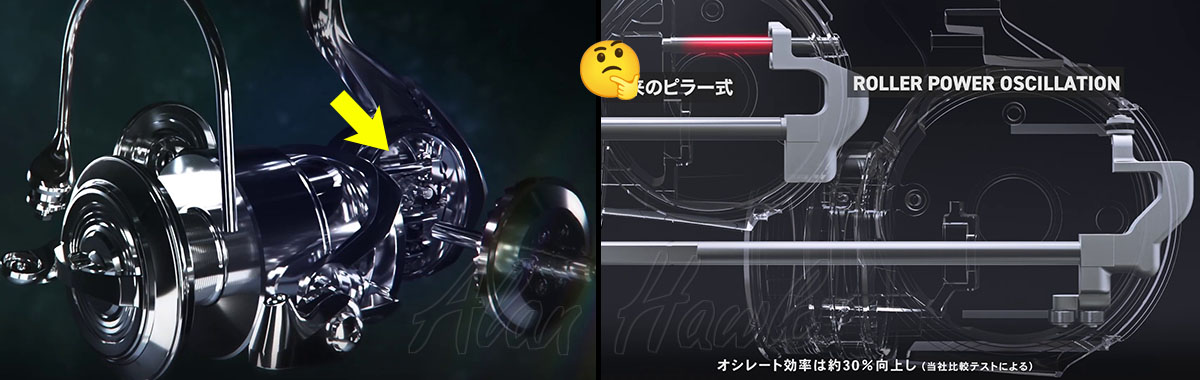
This is why I was quite surprised when one morning late 2024 this short teaser popped up, announcing the impending arrival of a replacement Saltiga a mere 5 years after the debut of the completely refreshed and exceedingly popular 2020 version. I hadn't seen the usual indications from Daiwa, who have a habit of introducing new glorified features in other models during the couple of years preceding a new Saltiga, often describing these features as the absolute best without exceptions, making the current Saltiga feel outdated and laying the ground for an inevitable next generation adopting these features; the mag-seal, the Zaion rotor, and the "monocoque" all debuted in other models first before being adopted in Saltigas, just to name a few examples. This is a different approach to the competition who usually debut their new features in the flagship model then it trickles down to lower models over the time, but that's a story for another time. The only thing remotely similar that Daiwa did this time was the "spherical" rotor that first appeared in the 2022 Exist bearing the name "Air Drive" and described as the ultimate rotor design, but I immediately dismissed it as a possible candidate for the offshore Saltiga for reasons that you'll see later, therefore I remained without a clue or an indicator and never saw this new Saltiga coming.
Shaking off the surprise, I began wondering what sort of technological leaps were made quietly by Daiwa for them to be ready to retire a reel that was created with a blank sheet only a handful of years earlier? The 2020 model still felt new, highly advanced, and remained an extremely balanced package that I could not fathom being improved upon only 5 years on. Actually, make this 4 years!
In an interview with Daiwa's creative team they stated that this replacement was originally scheduled for 2024 but delayed for a year due to some technical issue. This information only appeared in a print book with limited distribution in Japan and I'm making it available here for the very first time on the web in any language. That original 2024 release date would've made the best Saltiga of all time the shortest lived one at only 4 years, beating even the 2010 model which was replaced only symbolically in 2014 with the release of just two Expedition sizes but not fully replaced until 2015 when the entire lineup was replaced.
Having a lot of confidence in Daiwa, who had delivered two magnificent Saltiga generations in 2014 and 2020, I expected to be bedazzled by the breakthroughs in metallurgy and mechanical engineering Daiwa must have achieved that rendered the 2020 model obsolete effectively in 4 years only. With such a compelling build up I felt that there is a very real possibility that I'll end up calling this upcoming model "the best there is", and having already said that about two consecutive generations of Saltiga I began formulating some jokes in my head to pre-empt the expected accusations that I’m being bribed by Daiwa, and I had one semi finished where I indignantly declare that I won't sell out for all the money in the world but then follow up that for women though I'd throw you under the nearest bus and allude to Daiwa wrapping me around their fingers by sending a cute Japanese masseuse to my hotel room wearing a Kimono and nothing else underneath! I was as giddy as a kid waiting for a Christmas gift, counting the days till the new Saltiga came out, and that day finally arrived....
The initial release came in Spring 2025 in two size classes; the medium class comprising 8000/10000/14000, and the large class 18000/20000/25000. A year later they were joined by the 30000, which I place in a size class that I named "Mammoth". The small reels were once again absent, having been relegated to separate series since 2020 keeping this Saltiga lineup purely offshore oriented. The last time small reels were included in this big Saltiga lineup was in 2015.
The 25000 is a new size, going above the 20000 which was the biggest reel of the previous generation. It has the same body and rotor as the 18000/20000, with a spool of the same height as these two since it shares their exact oscillation stroke, only being wider to accommodate more line. The 30000 is also a new size, going even above the 25000, but it has a dedicated body and rotor as well as its own internal mechanism that's been reinforced and resized to fit the reel's intended extreme jobs as well as its unique approach to line capacity; instead of increasing the spool's width until it holds the desired amount of line, they increased its width only moderately then increased its height a lot. This meant it needed a new main shaft and oscillation mechanism to provide extended spool lift.
This makes the Saltiga 30000 a rarity, since the common approach for designing Mammoth class reels is to just increase the spool's width (diameter) and give it its own wider rotor but leave everything else identical to large size class. Even in the few cases where the Mammoth reel got its own larger frame, the internal mechanism remained the same one from the large class. I am therefore almost tempted to inaugurate a whole new class just for this 30000 Saltiga, like "Super Mammoth" or something, but I'd rather hold back for now in case someone makes a 40000 sized reel or something!
The addition of two new Saltiga sizes had an effect extending beyond the series itself;
It allowed Daiwa to add a 20000 size to the lineup of the 2026 Certate SW, the second tier companion series for the 2025 Saltiga made on the same foundation with many parts shared. The previous Saltiga stopped at 20000 therefore the previous Certate SW stopped at 18000 to create a clear supremacy for the Saltiga, but now that the flagship model went up to 30000 its new second tier companion could go a size up while still maintaining a gap between the two.
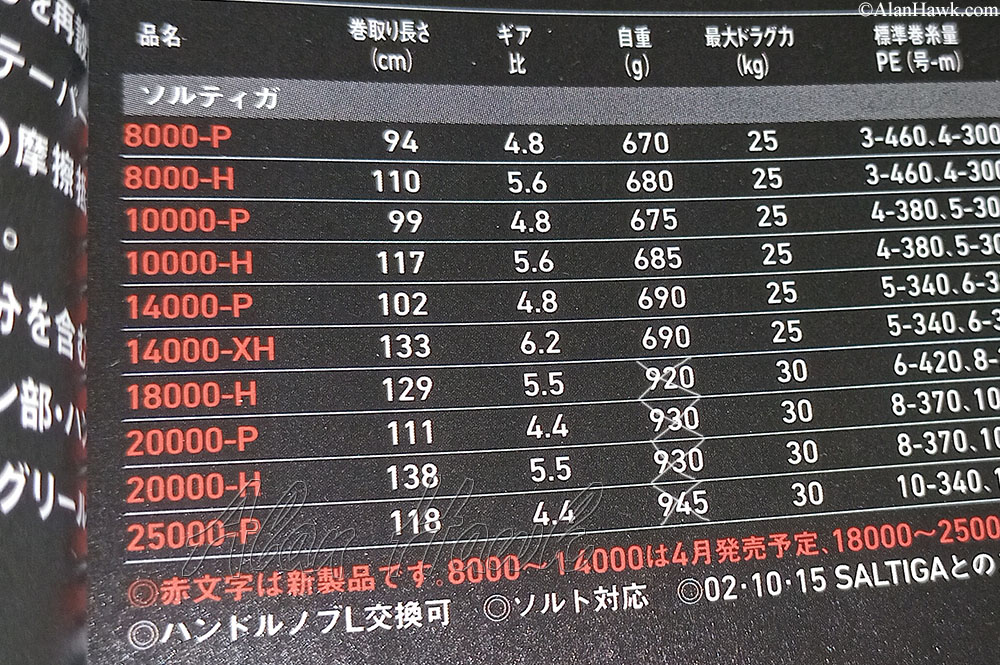
Daiwa initially published this set of specifications of the reels online and printed them in catalogues and magazines. They showed an increase in weight of all sizes, something that wasn't expected neither in principle nor in magnitude considering how the previous model had also gone up in weight to what I personally consider the reasonable limit above which I'd call the reels "heavy". The standards change with time, and what I would 10 years ago call "too heavy" became today's average as people accepted more weight for elevated toughness capable of handling increasingly demanding fishing, yet even by today's permissive standards the 2025 Saltiga is too heavy. Actually the increased weight of this reel created an unprecedented situation in which, for the first time ever, the Saltiga is the heavier reel when compared to its contemporary Shimano Stella SW model, in all sizes (advertised weight of the Saltiga 10000-P is wrong, I weighed it at 882 g). Throughout both models' histories the Saltiga was always the lighter reel due to Stella's more complex structure and higher number of components, now that situation has been reversed for the first time ever. Take a moment to absorb this historical event.
I took the photo above of my own printed catalogue instead of showing a screenshot from the web to show that these weights were finalised figures and not some flexible early estimates, and I crossed out the 4 bottom figures because this happened;
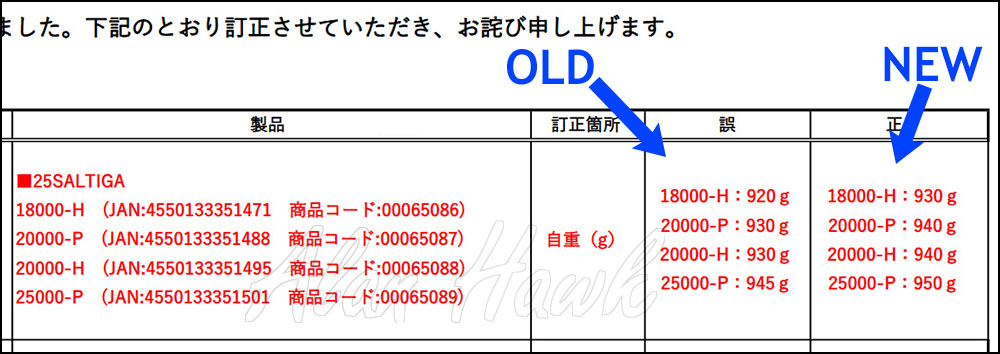
When the reels went into actual production, the 4 big models became even heavier and Daiwa issued this statement raising their weights.
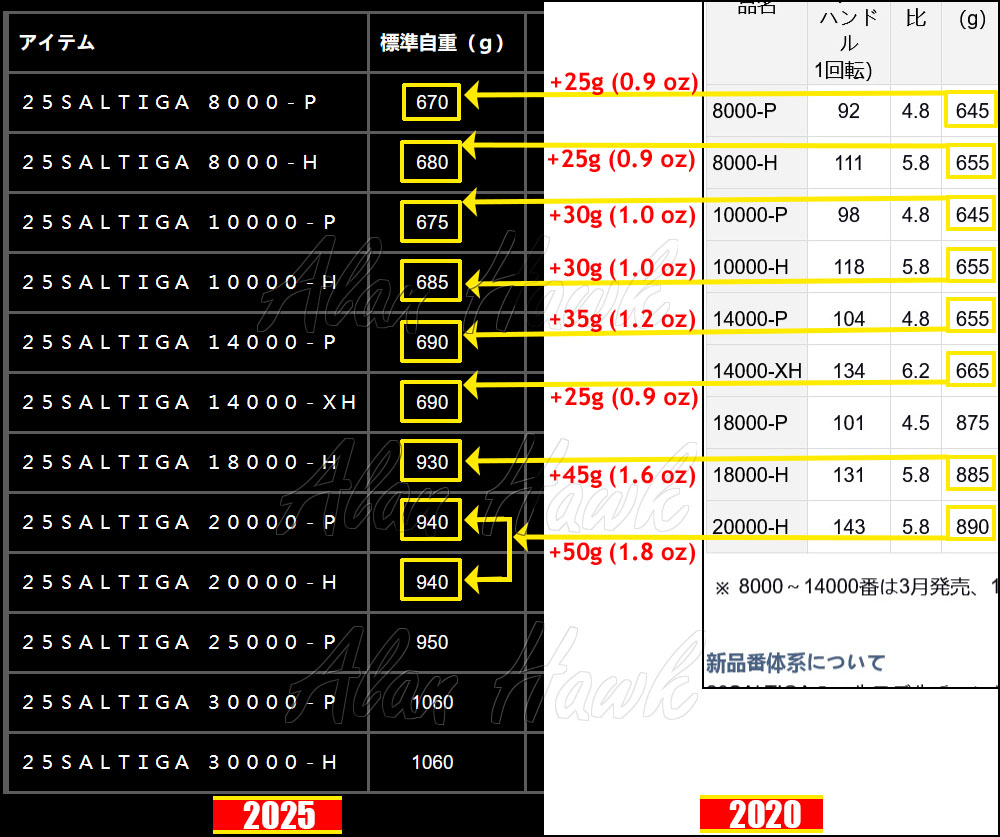
These are the final claimed weights of the 2025 Saltigas (left), and to the right the weights of the 2020 model for comparison. The new 30000 has no close counterpart in the 2020 series, and pretty much nowhere else at this enormous weight. Even Shimano's 30000 weighs 65 g less (2.3 oz) despite holding slightly more line than this Saltiga.
The price went up as well, starting at 155,000 Japanese Yen (US $980) for the 8000 model and going to 200,000 Yen (US $1270) for the 30000 before tax. Their global pricing varies based on regional considerations and local taxes, for example in America the 8000 retails for US $1,250 while the 30000 is priced US $2,000 according to Daiwa's official US site at the time of writing. If you're reading this in the future prices and JPY exchange rates might be different.
The price hike reflects the increased cost of materials globally, particularly aluminium which almost doubled in price since the previous Saltiga of 2020, as well as the high cost of specialised Japanese labour. To me it's a straightforward case of a premium product sold at a premium price for those who can afford it, yet this didn't stop the shock wave going through the fishing public once the prices were announced, surprisingly even in the Japanese market;
The first 3 are a selection of the early reactions I have spotted the pricing of the Saltiga, and the last 3 are about the price of the Stella SW which I included to show the impact of the double blow on anglers in Japan. One comment plays on Saltiga's moto "Break Your Record", and another expresses pain over Stella's price, which is even higher than the Saltiga's, in a quintessentially Japanese way using Manga. Seeing Japanese anglers balk at the price of these new flagship reels was a unique experience since people over there have high purchasing power thanks to their culture of saving and low debt. I guess we're all stepping into vastly different times now.
Almost certainly motivated by the high cost, Daiwa made the unprecedented decision to effectively split the series into two tiers; a top tier comprising the 18000, 20000, 25000, and 30000 equipped with the new drag system Daiwa calls DRD (Dura Roller Drag), and a lower tier consisting of the 8000, 10000, and 14000 models, coming with the same carbon fibre drag of the 2020 model called "ATD Tough" (Automatic Tournament Drag), to be referenced as just ATD for the rest of the review since "tough" is a later nonsensical addition that doesn't serve to differentiate two distinct designs or anything.
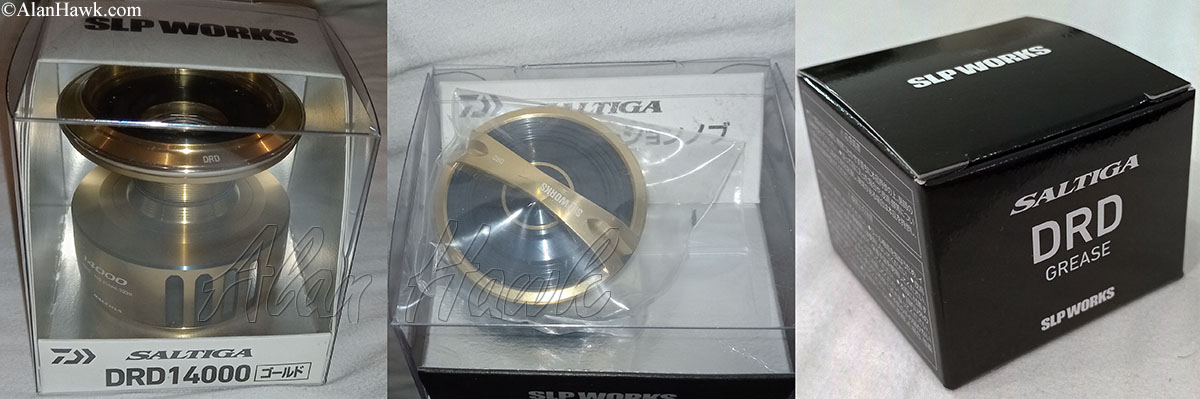
To elevate the 8000/10000/14000 to top tier specifications, Daiwa offers an upgrade kit through its SLP-Works
The kit consists of the 14000 DRD spool which fits the bodies of the 8000/10000/14000 Saltigas and costs about US $250, the DRD knob needed for the spool to work priced at around US $135, and the special DRD grease which is absolutely indispensable, costing about US $50. These items aren't officially sold in the US as I type this in Spring 2026, so the prices stated here are average street prices and not official ones. This means that upgrading the second tier Saltiga 8000/10000/14000 to first tier specifications would cost ~US $435 on top of the original price, therefore an 8000 upgraded would end up costing almost US $1,700. Even if the angler manages to sell the original ATD spool to recover some of that money, it would remain a steep jump from the price of the 2020 Saltiga 8000 which retailed in America for US $1,000 at the time it closed out early 2025. Considering that the 8000/10000/14000 are the backbone of the series and the overwhelming majority of reels sold, it makes financial sense to attempt to make them more affordable in order not to stifle the sales of the entire series, but to practically downgrade them to second tier standards is the wrong approach in my book.
I'm calling it a downgrade because it manifestly departs from the normal downscaling in which smaller reels are sometimes equipped with less capable components than their larger siblings, fitting their lighter use and following intuitive and logical patterns without sacrificing performance or creating redundancy. For instance fewer brake discs in smaller reels whose frames can't handle the drag pressure of their bigger siblings, shorter handles not to stress their smaller gears, omission of backup anti-reverse in the smallest sizes which can be hand controlled if an emergency arises, etc. None of these reels ever came with optional kits to raise the drag washer count or add a backup anti-reverse because that's unneeded. On the other hand, the medium 2025 Saltigas can be converted to DRD if extra money is paid while the bigger Saltigas don't have the option to convert to ATD, a clear acknowledgement by Daiwa that they view the DRD as a superior option that would boost the performance of the medium reels. This is antithetic to the nature of a flagship model which is supposed to come configured to the highest standards by default. Do you know what else comes with an ATD? The 2026 Certate SW, the official second tier reel whose lack of DRD in all sizes is its preeminent downgrade from the Saltiga series. I'll leave it at that.
Before the reels were available for purchase, I polled you on the model you want to see featured in the review, and while I secretly wished you'd pick the 25000 due to my eternal fascination with big powerful reels, plus it would've been the cheaper option for me, but you picked the 14000-XH by a clear margin with the 8000-P a distant second. I was once told by a sales manager of an outdoors' chain that for every big reel sold three medium ones are. That's a single anecdote and not a precise market survey, but it certainly explains the tendencies that made it impossible for a big reel to win my review poll.
Picked the 14000-XH indeed, opting for the JDM (Japanese Domestic Market) version for reasons you'll see in a minute. Daiwa continues to make the Saltiga is two versions; the Japanese market one coded "25SALTIGA" followed by reel's size as seen on the bottom right corner of my box here, and another export version for the rest of the world coded "25SALTIGA(G)" followed by the reel's size (inset). The JDM version is sometimes sold in a few other countries but it remains mainly for the domestic Japanese sales.
As discussed earlier the 14000 comes with a carbon fibre ATD drag, and since there is no way I'd review the 2025 Saltiga without testing the DRD I opened my wallet again and let more money fly away and into Daiwa's pockets....
Bought the SLP Works 14000 DRD spool, DRD drag knob, and the special grease. Why couldn't you have chosen the 25000 and saved me $300? Actually $250 since I still would've bought DRD grease for itt, but still! Just kidding, you're certainly worth the spending and I'm here to give you what you want and not what I personally prefer. I mean if it was up to preference I'd be reviewing and rating bikini scenes of my babe Naomi Watts instead of these glorified lumps of aluminium and plastic that will never hold me close at night and whisper "let's make babies" like Naomi will be doing once we finally get married, which we WILL despite all the dismissive sneering by jealous haters. But I digress....
Time for the Saltiga to strike her best poses for the camera
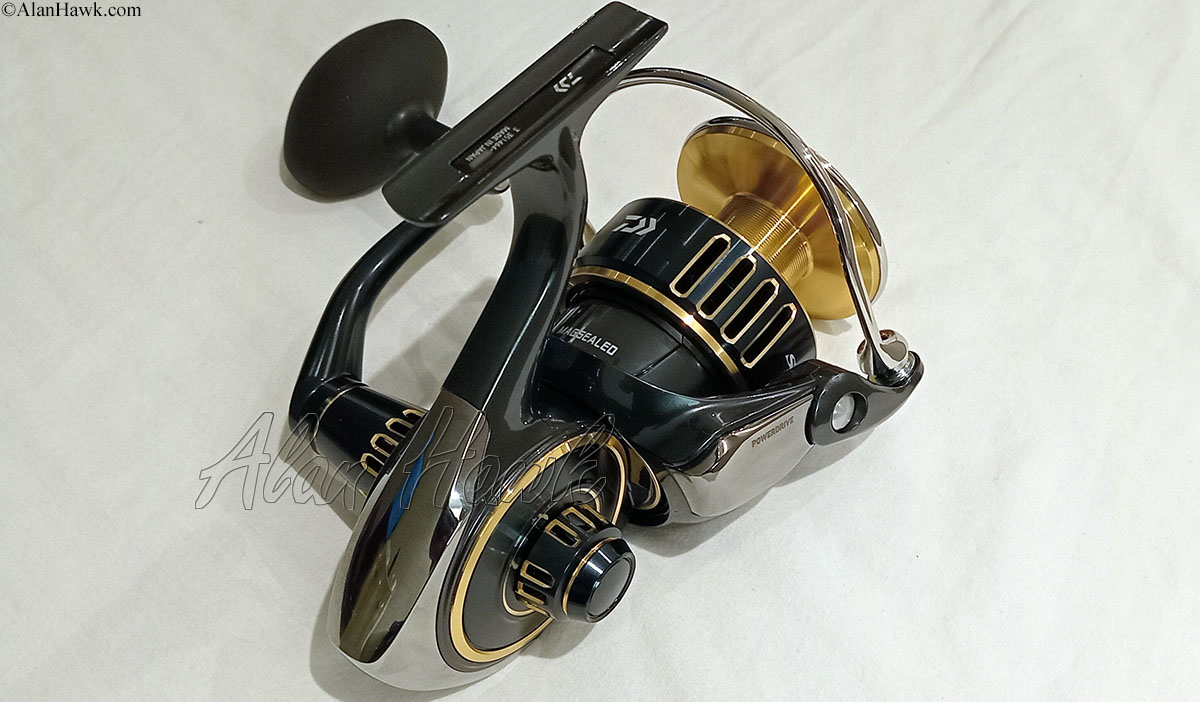
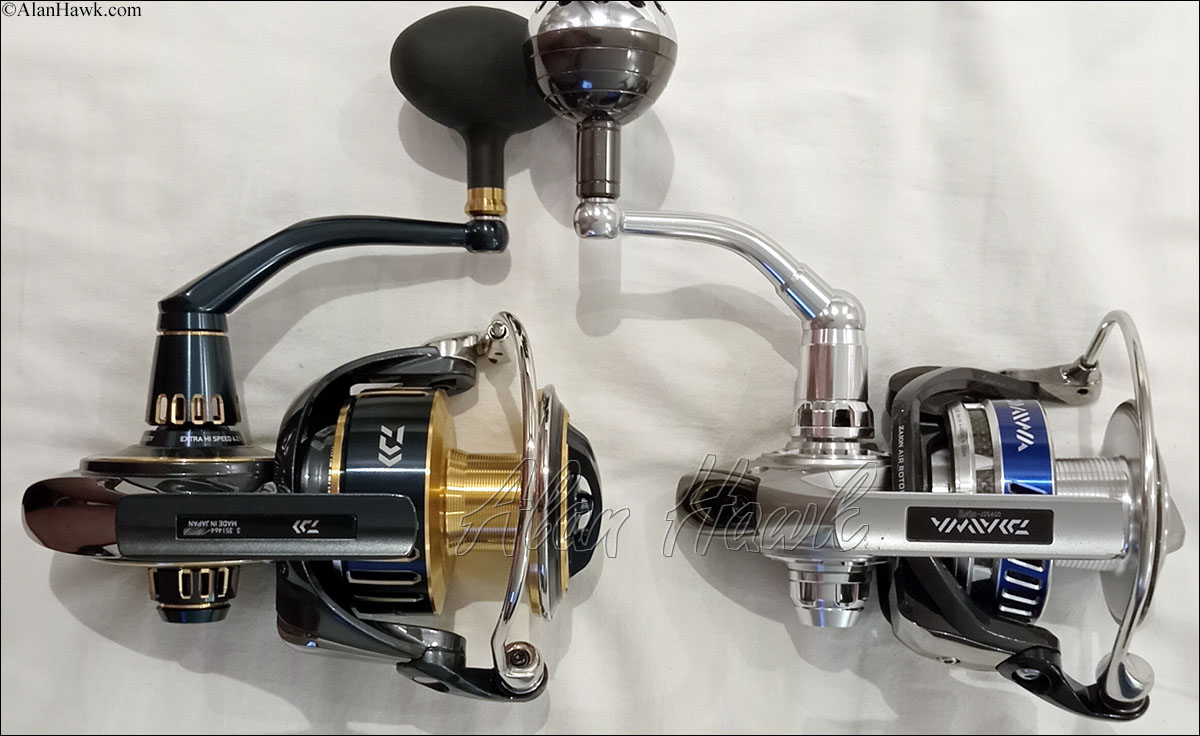
The rare full reset having already happened in 2020, the appearance of this 2025 model returns to being a reworking of the previous model's, establishing its own aesthetic character while maintaining the same core design. The visual changes that stand out the most are the enlarged frame and the smaller rotor, as well as the colour scheme, which retains the golden accents but replaces the glittery deep blue of the 2020 model with a muted grey that, the more I look at it, the more boring it becomes to my eyes. The anodising of the two screw-in plates, which have grown to occupy almost 80% of the frame's surface, has metallic blue hues that stand out against the surrounding grey, with no nearby matching colours to subdue their optical invasiveness.
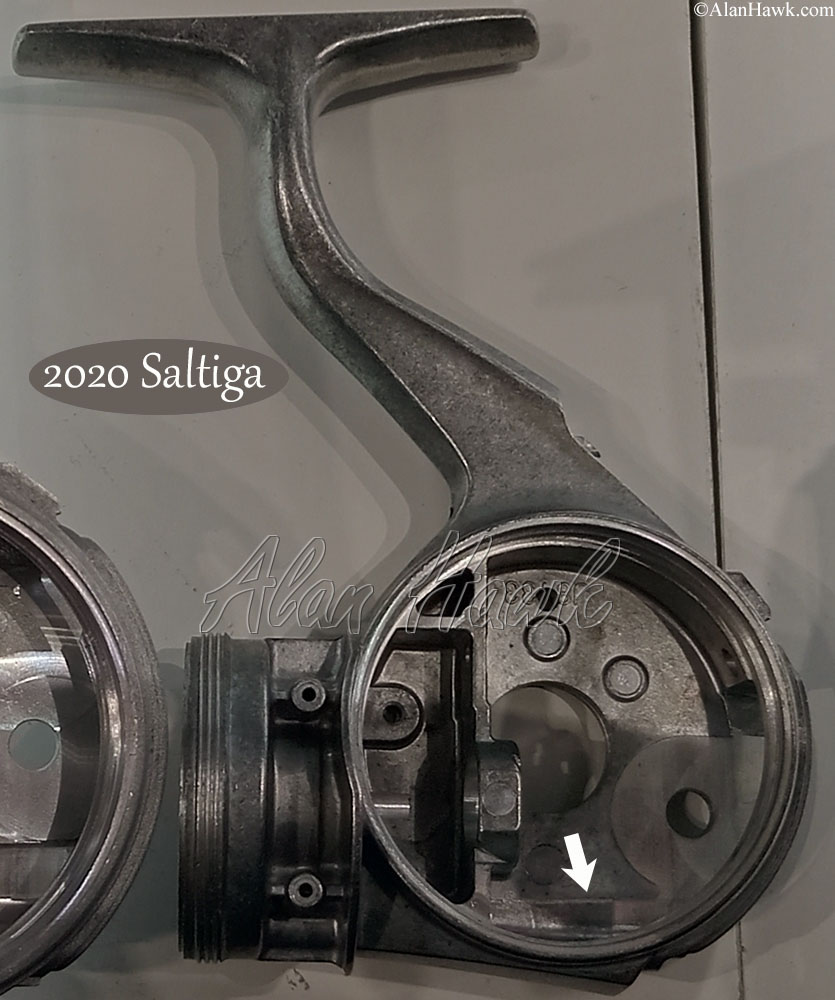
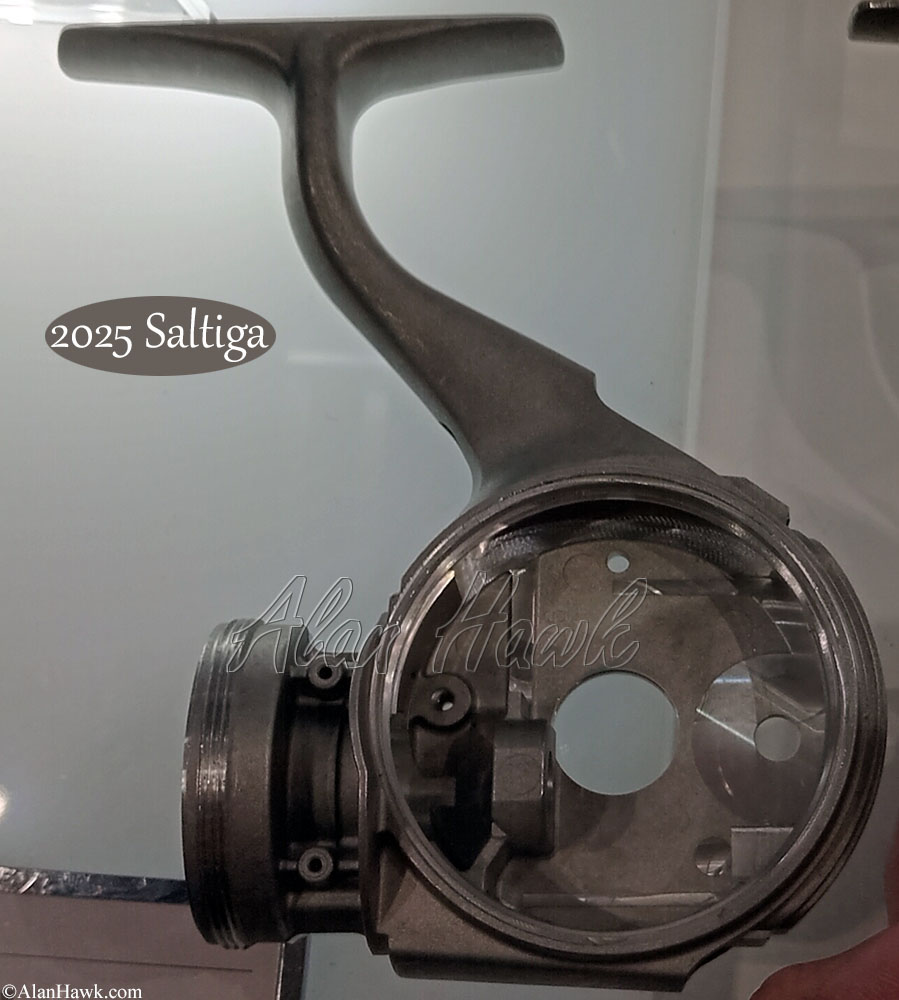
The gearbox expands in all directions, and in the upwards direction it eats up ~15% of the stem's length leaving a shorter stem then previous models. This does not mean the gearbox has become closer to the rod, rather means that the lower part of the stem has been gobbled up by the gearbox, further tipping the reel into the "bulky" side.
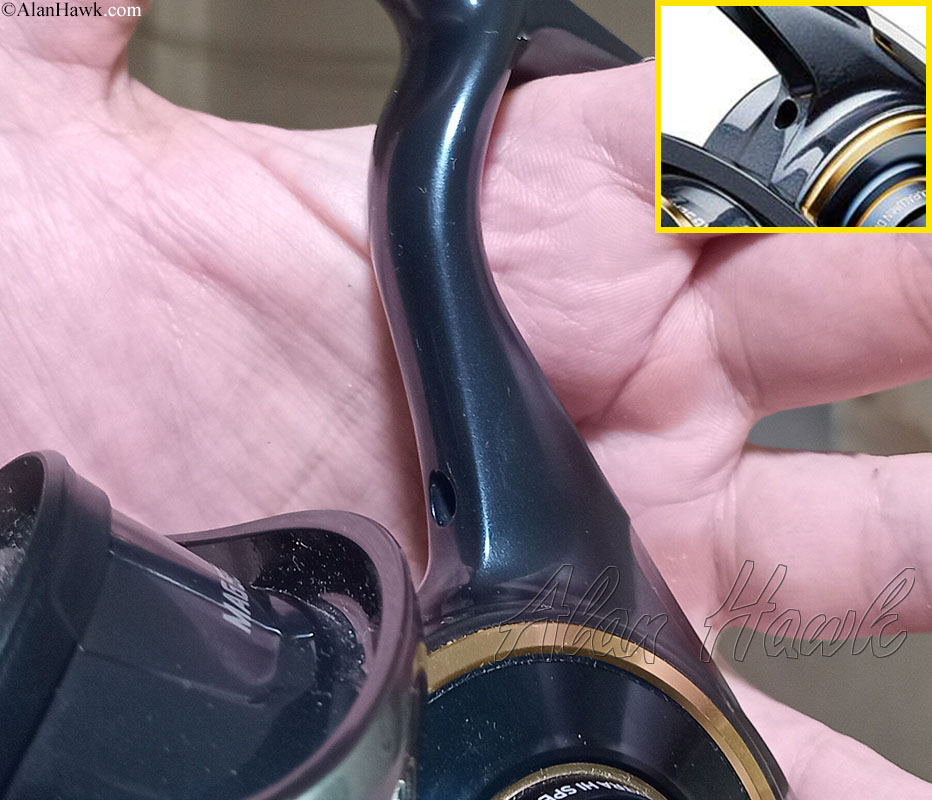
With the gearbox encroaching on the stem, the hole for the rear bumper is now in the stem proper, whereas in the previous model it was at the top of the gearbox (inset). The hole interrupts the visual flow of the stem and pushes it fully into utilitarianism instead of its previous functional and visual integration.
At the other end, the expansion of the gearbox without a full redesign made it protrude past the flange on one side but not the other. A body dangling past the flange is in principle a bad look, but the fact that it's happening here asymmetrically on only one side imparts a special sense of chaos to the visuals.
Stem opens out to reinforce the foot more aggressively than it did in the previous model, dropping the restraint of that 2020 Saltiga and opting instead for a much bolder appearance.
The plastic rear bumper has a shallow curvature that continues onto the metal of the frame seamlessly, creating a beautiful illusion of oneness out of two parts.
The increase in width is not as obvious thanks to smart blending of the outlines, yet within that width most of the shaping is gone and melted into a bloated singularity, with the right side hit particularly harder having become fully flat without even a raised handle receiver. When compared to the previous model (inset) this new Saltiga looks swollen and shapeless. The 30000 looks slightly better maintaining some details on the right side, but still overall has a similar swollen look
The extremely wide drag knob, whose functionality was universally liked in the 2020 Saltiga, makes it into this model but with a new shaping of the cross bar that removes some metal for weight reduction yet maintains enough spatial presence to complement the new sense of scale of this reel.
The bottom has become flat and almost horizontal. Gone are the elegant tapering lines and upward lean of the previous model's bottom (inset).
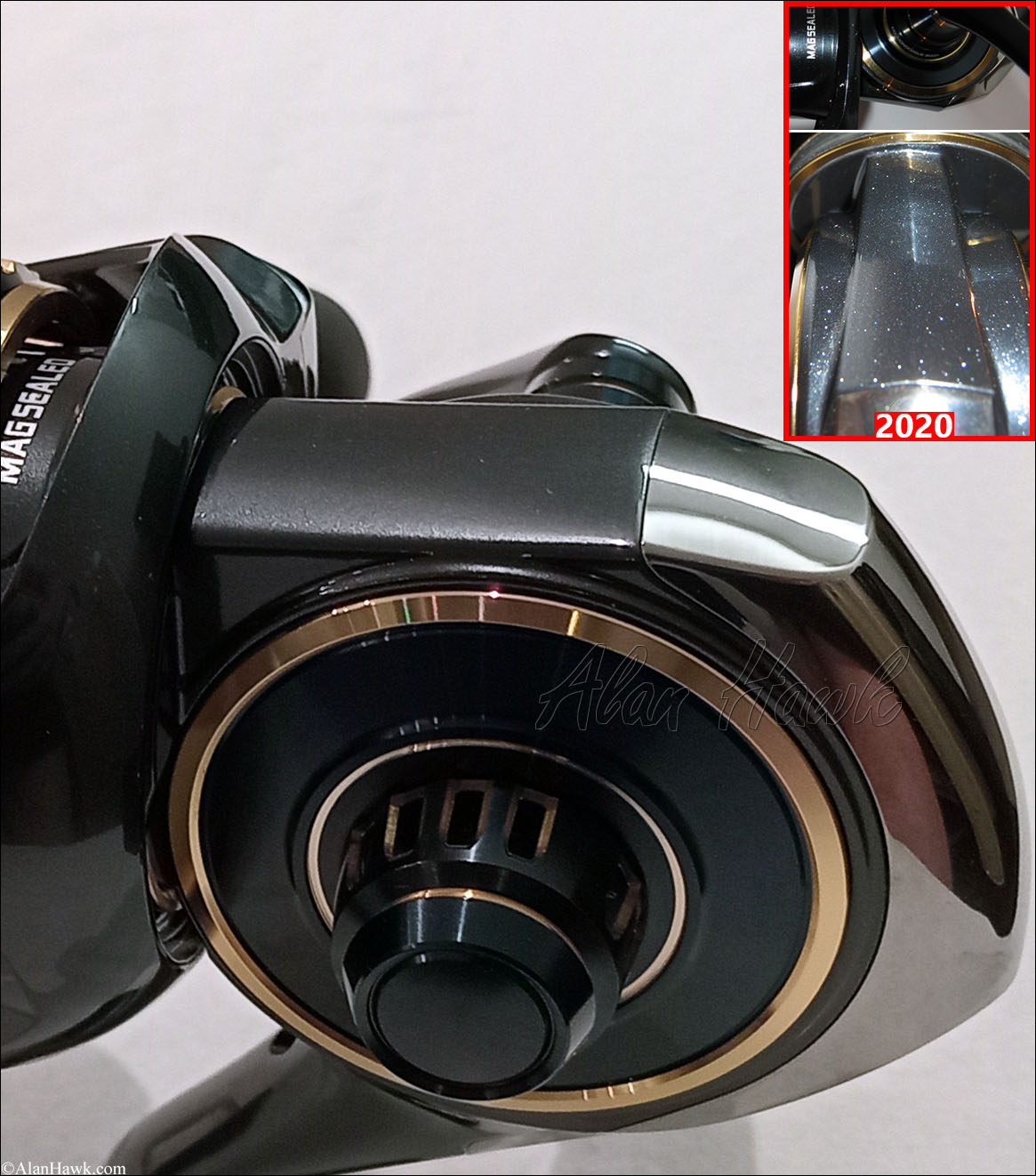
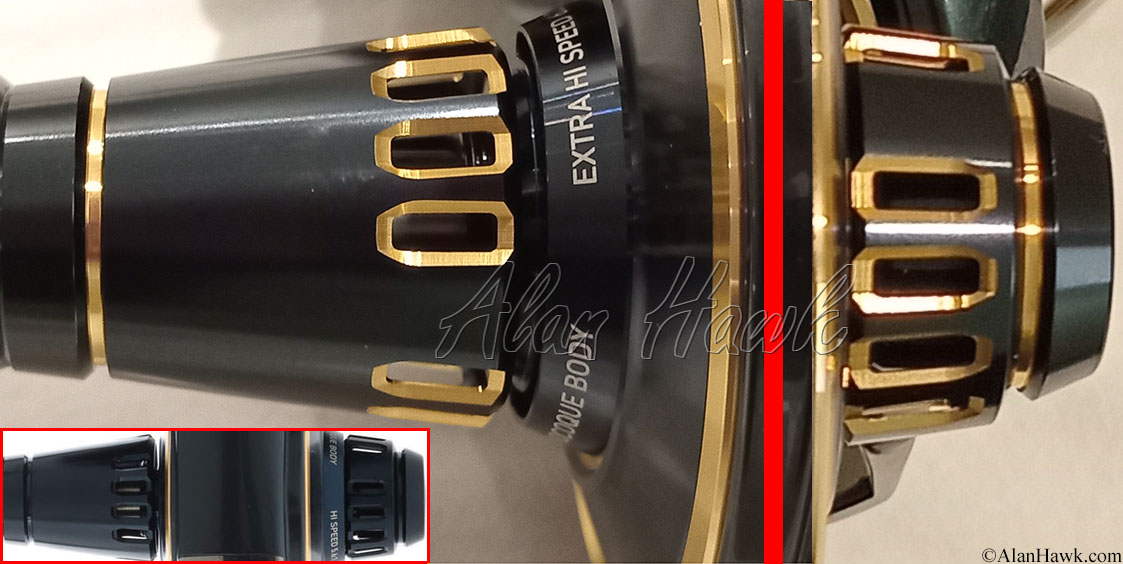
The handle hood and opposite side's cap reverted to having cuts, after having become solid in the 2020 Saltiga. The cuts returned as a part of the ongoing effort to control the inflated weight of this new model. In the Japanese Domestic Model those cuts have golden outlines making their shape clearly visible, while the export model (inset) doesn’t have those golden highlights resulting in the shape of the cut becoming virtually invisible making the handle look bland. In the previous generation Daiwa also put golden highlights on the JDM handle/cap and omitted them from the export model, but these were simple narrow rings that created a distinction but without making one version better looking than the other. Conversely, the golden highlights in this 2025 model play a more significant role visually, thus their omission in the export model renders it duller and takes away points on the looks' front.
Daiwa finally achieved a stylistic dream that they've long chased after with what seems to me almost like fetishistic vigour; having no visible external screws on the entire reel. In the previous model they partially achieved it by eliminating visible screws from the gearbox, but the handle grip (ball version), as well as the bail joints and the cover of the bail mechanism still had visible screws. These screws are finally gone from this 2025 version.
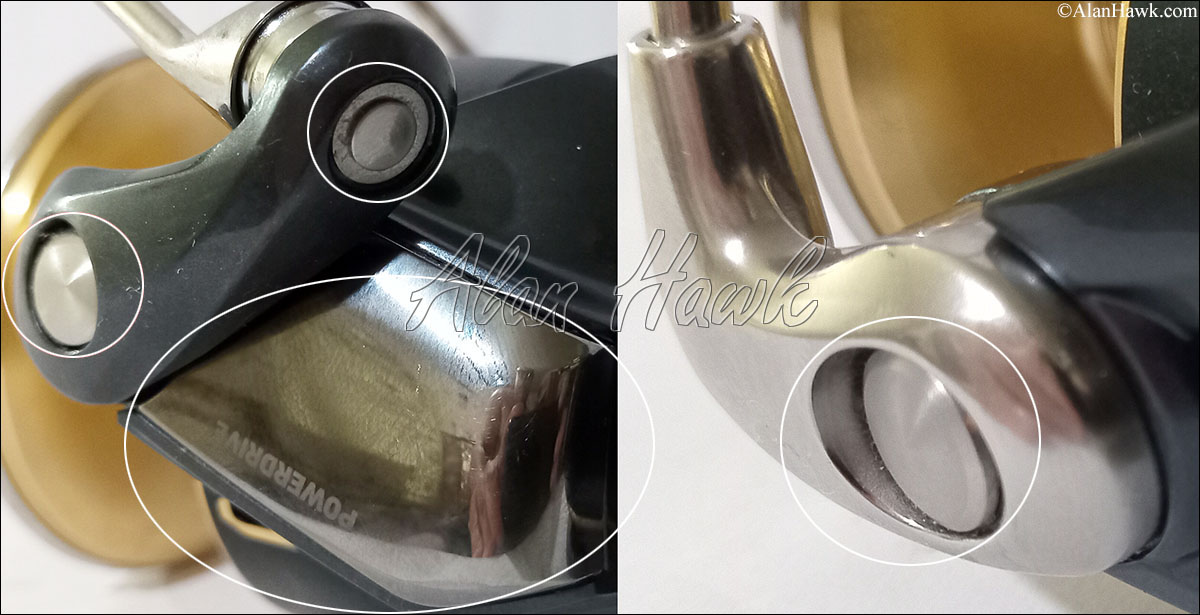
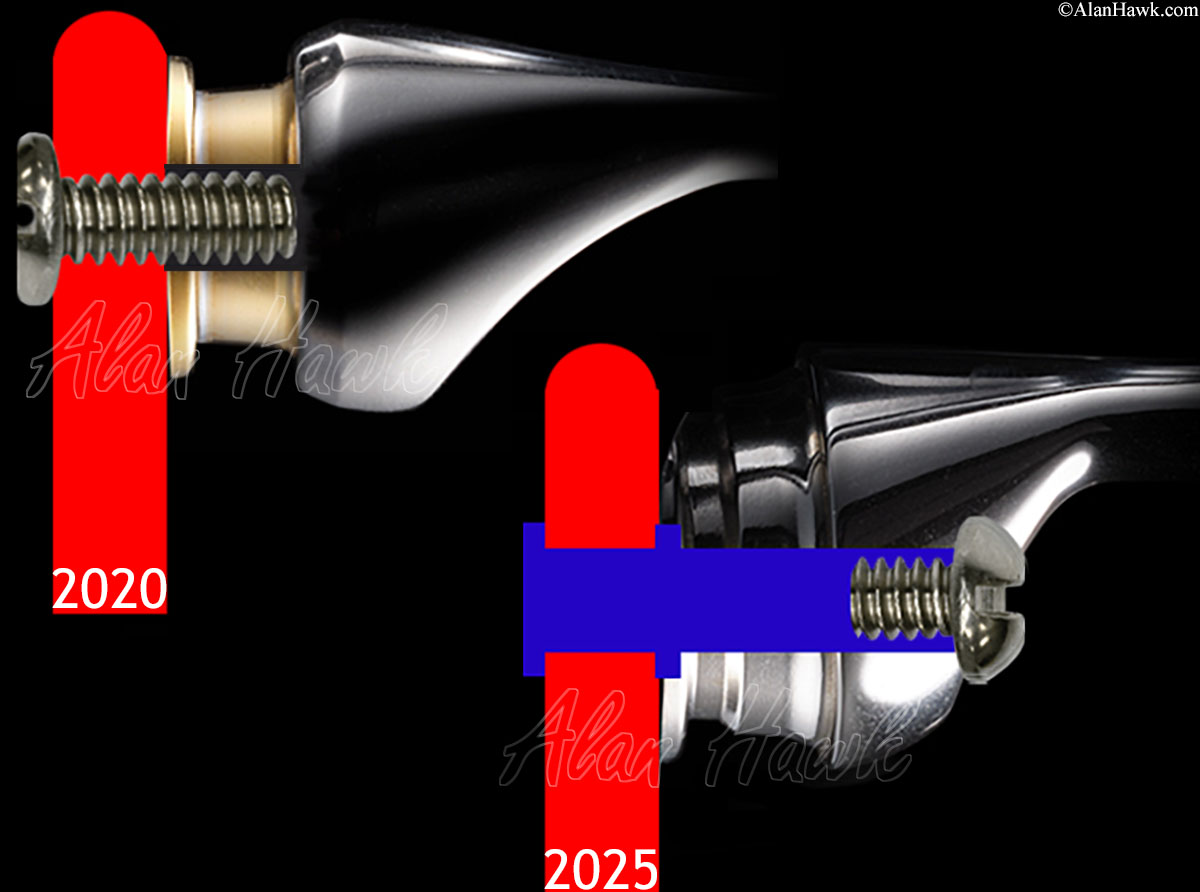
Well, technically the screws are still there, only inserted from the opposite side to hide them, leaving the reel's exterior with the "clean" look Daiwa so desires. The line roller screw is deeply buried and virtually invisible, but both bail joints' screws aren't flush and they rise vertically as well, diverging from the curvature of the arms and interrupting the flow of the rotor's outlines to a certain degree. In large reels, 18000 to 30000, these two screws are sunk into the thicker rotor arms so they don't look nearly as invasive.
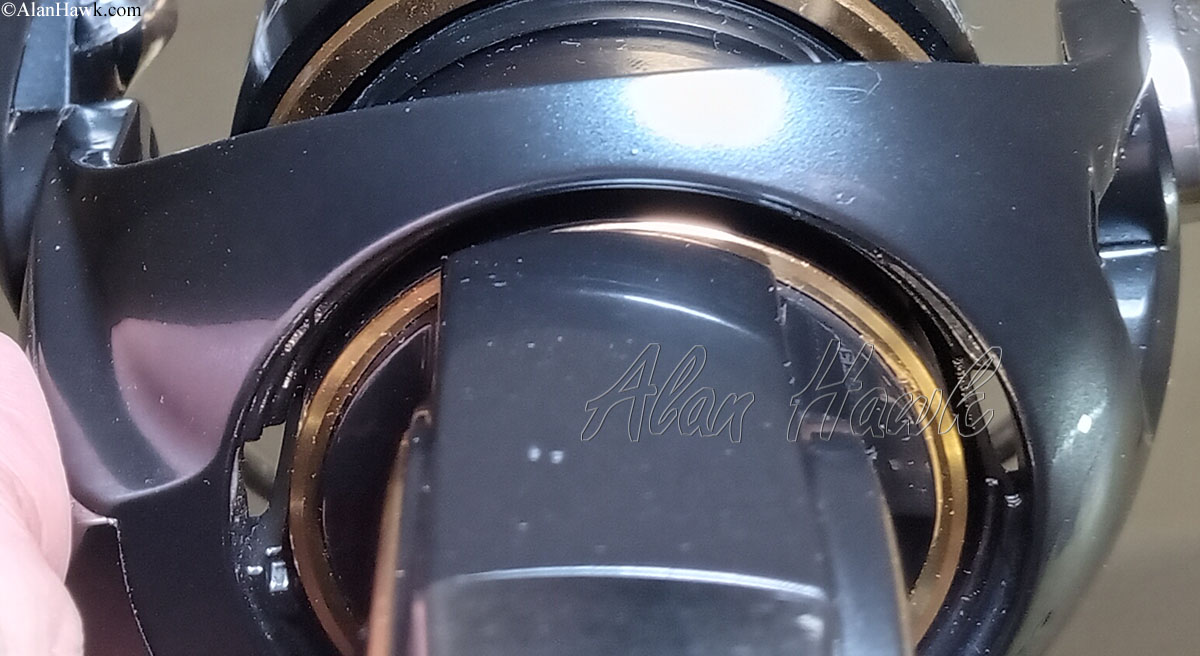
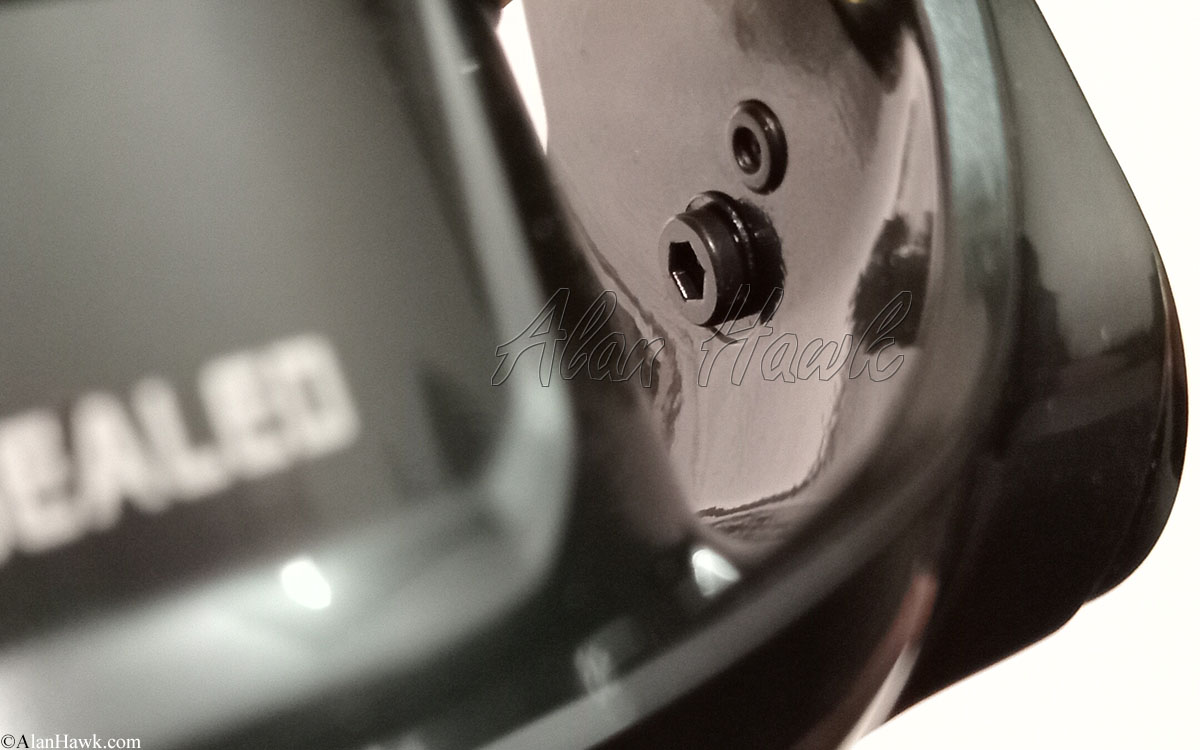
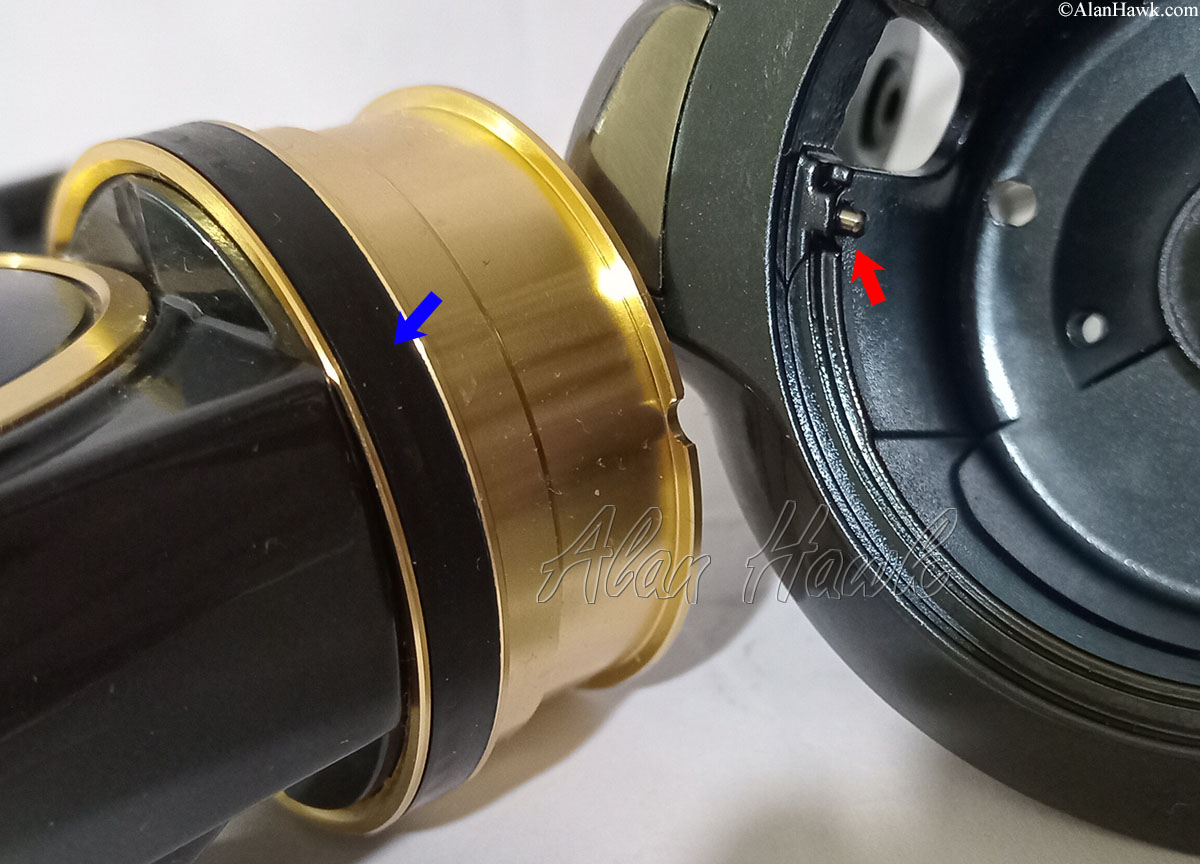
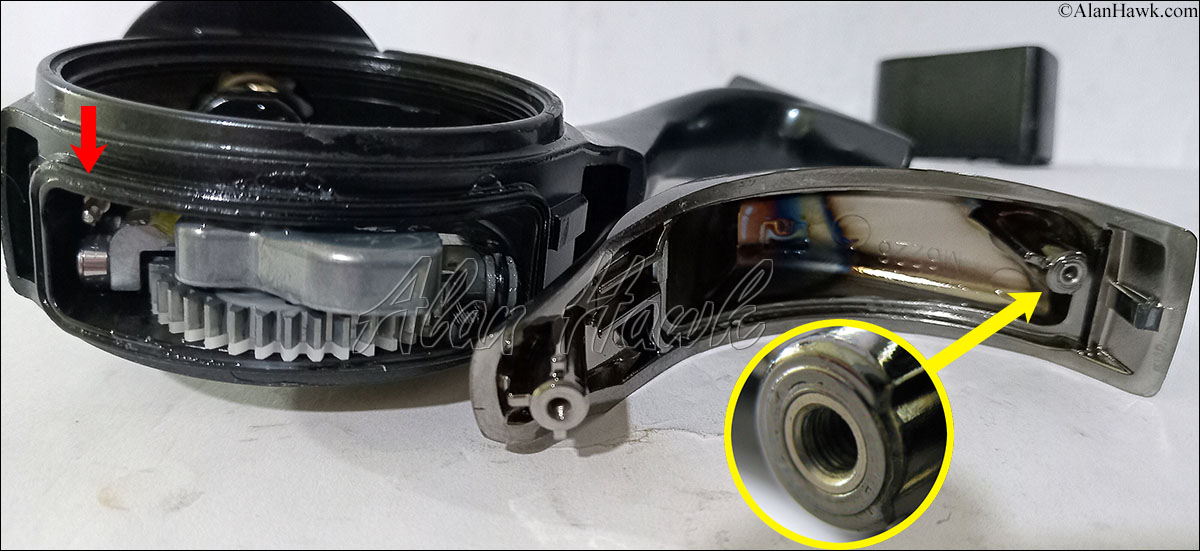
A much steeper price is paid here though; the screw retaining the bail mechanism cover couldn't be buried deeply, so it sticks out creating this unsightly abomination. The cover sure looks nice externally with no screw, but if the choice is between this internally protruding monstrosity and the old external sunken screw I'd pick the latter every time. This sticking screw doesn't hurt the reel operationally and I never had the braid caught on it. I'm only critical of it from a purely aesthetic perspective.
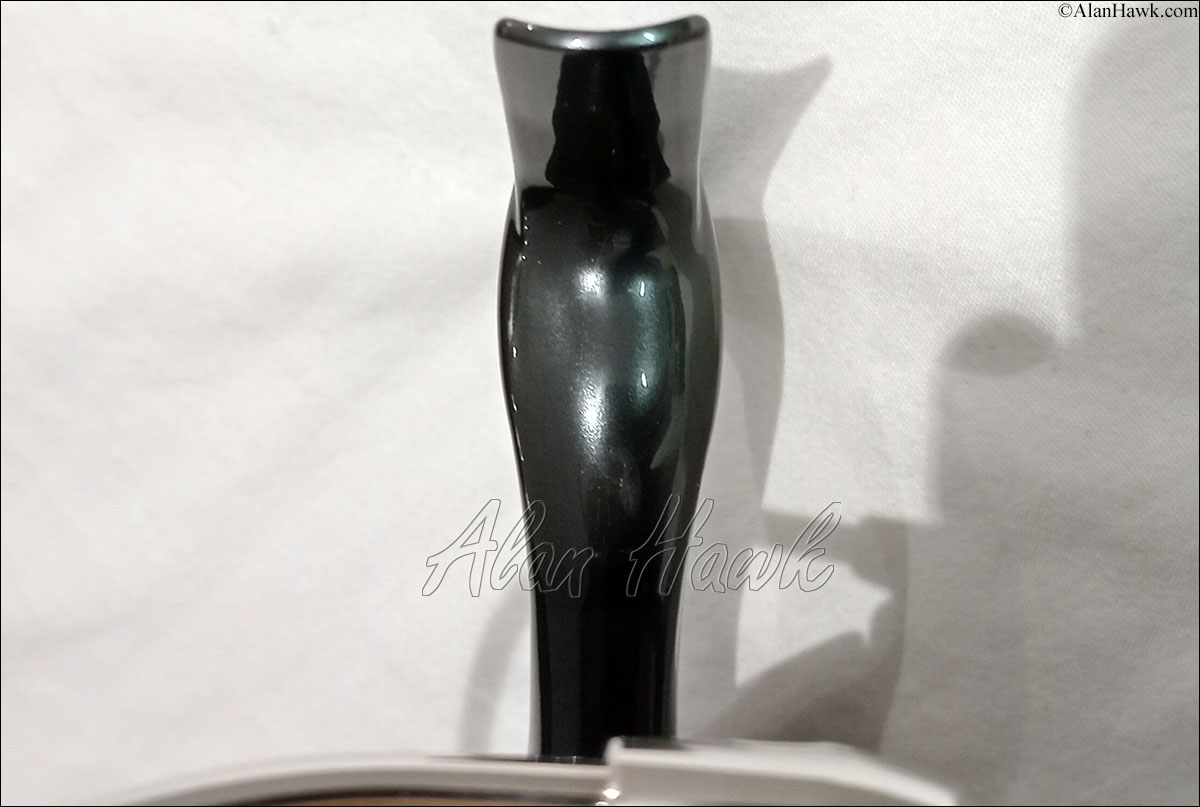
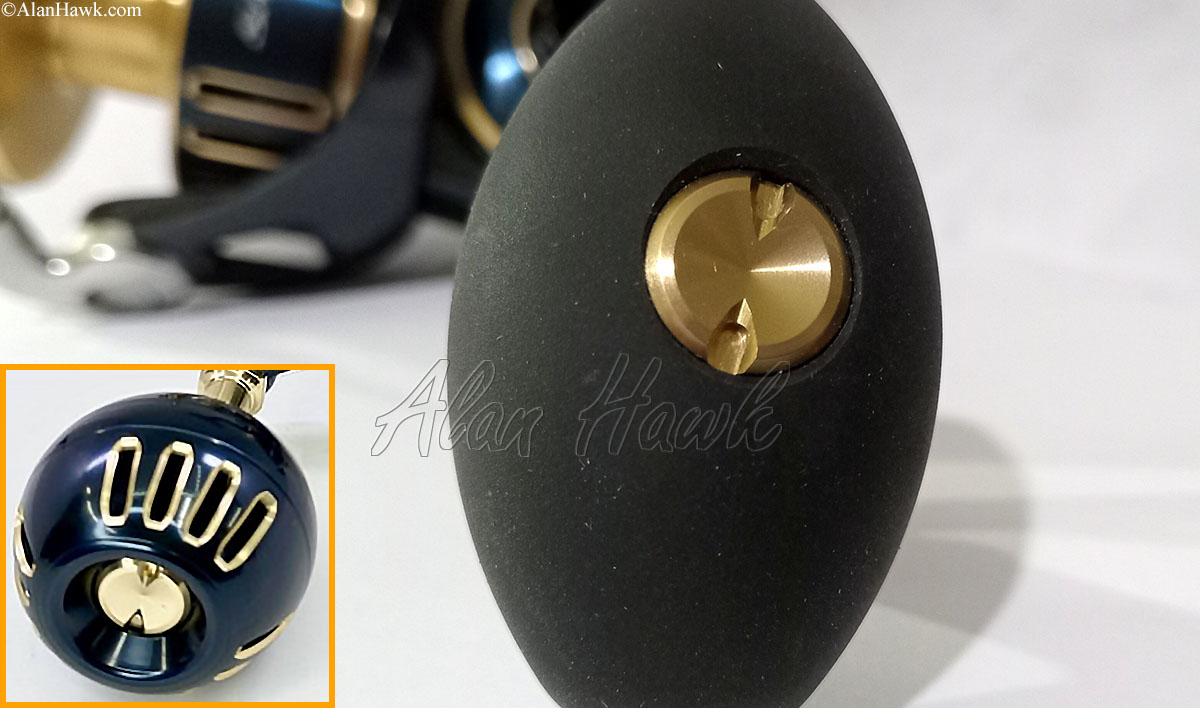
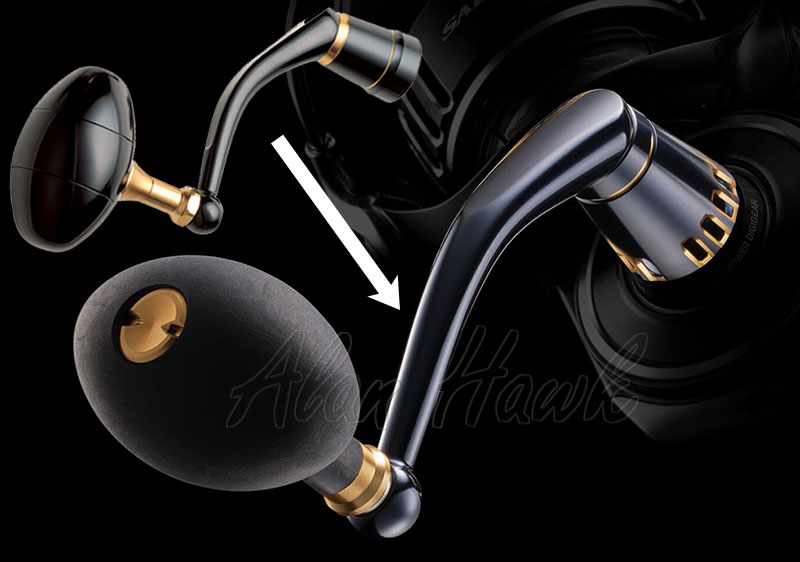
The knob's screw couldn't be fully hidden either, instead its head was disguised as a double notched disc in both the rubber egg knob and the aluminium ball knob that comes with the 8000P and 10000P. I find the latter to be a visual overload, with 12 gold lined cuts crammed into only half of the ball on top of the big golden screw in the centre, imparting a gaudy vibe to this ball knob. Anyhow, while the whole "hidden screws" thing feels unnecessary to me in principle, this notched screw head on its own looks elegantly unique. It requires a special tool to unscrew, which you'll see soon since Daiwa includes it with the reel.
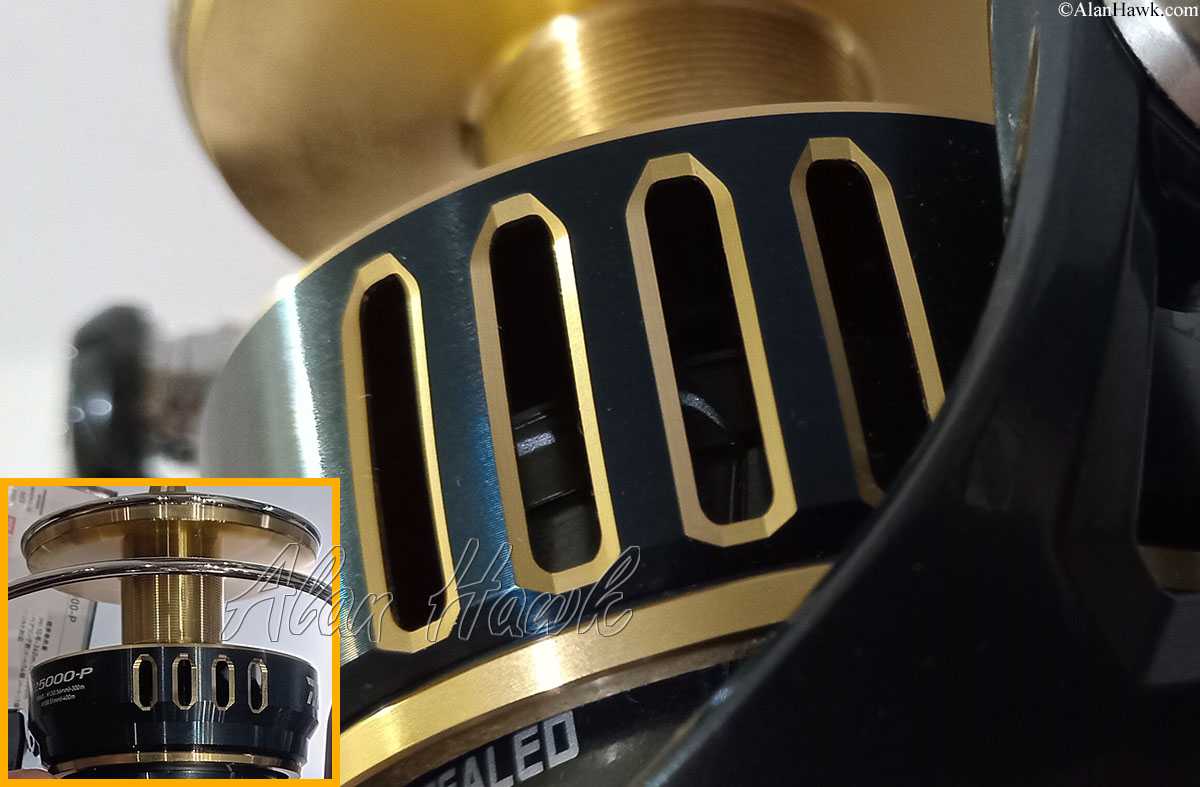
Just like the handle hood and opposite cap, the spool skirt reverts to being cut for the sake of weight reduction, with the cuts having chamfered edges to remove even more metal without making the holes larger. In the 2020 version the spool skirt had become solid without cuts. The style of cuts is quite conservative in simple stadium geometry, standing vertically without tilting or complex shaping. Nothing special or particularly attractive, but the matching between these cuts and the ones in the handle hood and opposite cap in the JDM model maintains visual coherence and makes the decoration look methodical. I specified the JDM model because in the export version that matching isn't as visible due to the aforementioned omission of golden highlights on the handle's hood and the opposite cap. The skirt cuts of the 25000 and 30000 (inset) are shorter due to being located on a narrow bulge that transitions the diameter of the skirt to the larger dimensions of those big spools. This adds extra detail to the skirt that makes it more visually interesting than the skirt of the medium reels.
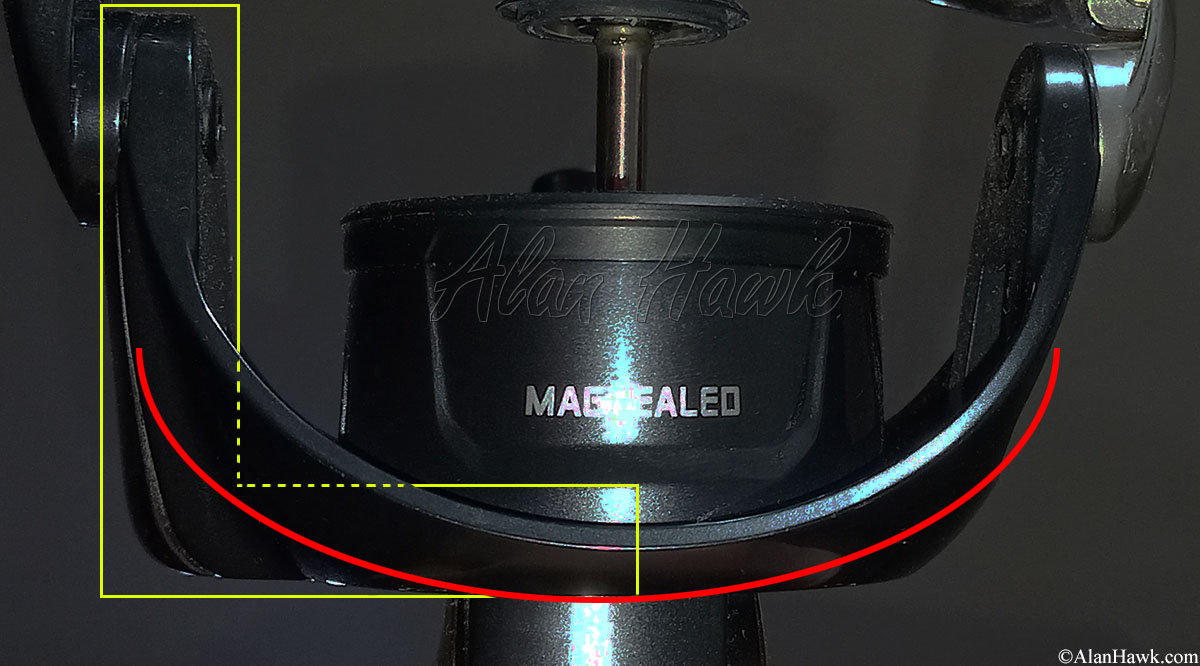
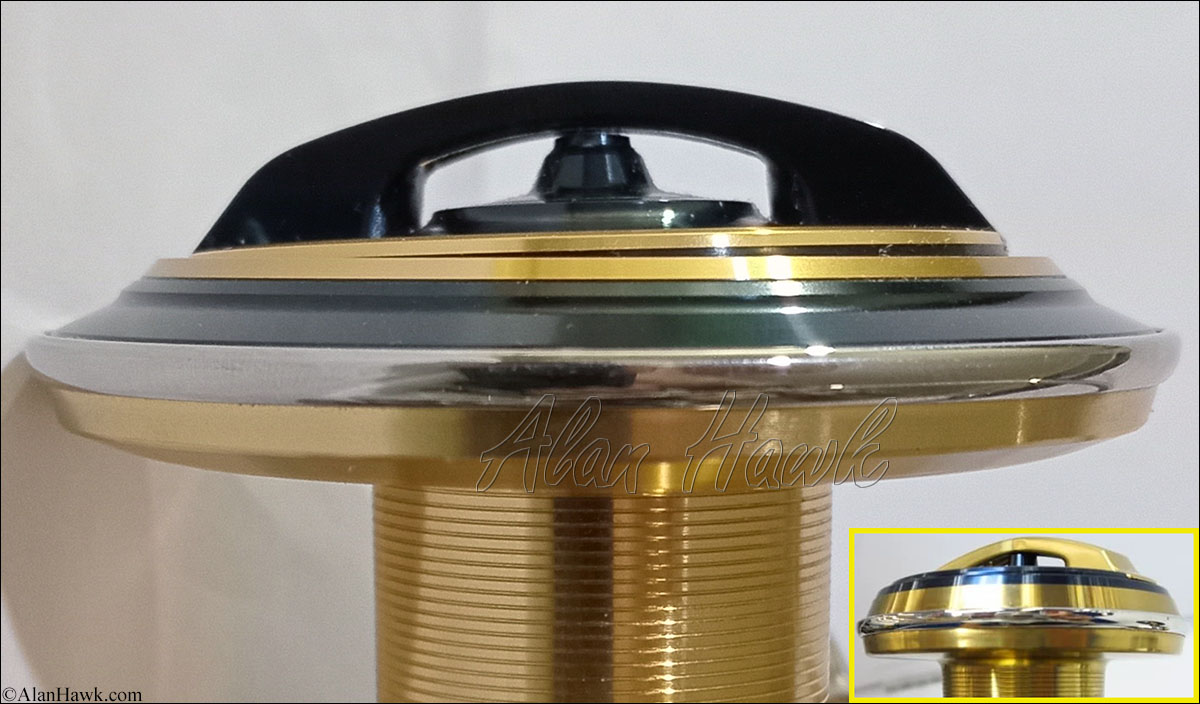
Opposite to my earlier expectations, the new Saltiga did adopt the "Air Drive" rotor of the 2022 Exist, only changing its material to aluminium and renaming it "Power Drive" rotor. Here is how they describe this rotor;
They call it "spherical", and in promotional videos they have a cartoon of it being carved out of a perfect sphere. Such an evocative cartoon, but I have a question;
Does this deformity look like a sphere to you?
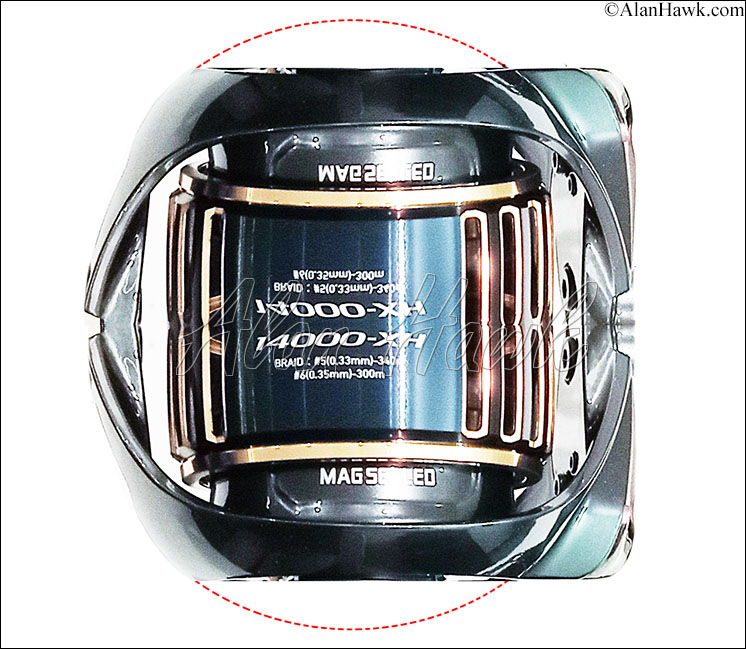
Let me illustrate;
I assembled two Saltiga rotors together, and drew a very generous "sphere" that's actually closer to an oval to give this reel every possible leeway, still there isn't a universe in which this rotor could possibly be called spherical.
Calling this rotor spherical is in my view the worst attempted redefinition of reality since Daiwa's own attempt to convince us that the "monocoque" body is a single piece, something that I still said was utter nonsense in my very positive review of the previous Saltiga. In my opinion, if Daiwa continues to claim that self-evident fiction is reality I fear that when they release the next generation they'll take our money and hand us freshly used condoms and tell us to enjoy those latest Saltigas. We'd tell them it's just a sticky condom that's even still dripping, and they'd retort that it's definitely a premium spinning reel and point to a picture in their catalogue showing a big swordfish on the deck of a boat with the condom on its belly. Sounds ridiculous? No more so than telling us that two pieces are one or that this mangled square rotor is a sphere. What a load of rubbish.
In reality, I see it as a standard right-angle rotor on one side, with metal allocation and distribution typical of a square rotor arm, partially wrapped in a curved shell that no longer looks like familiar supporting arches or compression limps but instead resembles something vintage;
To me, Daiwa appears to be slowly reconstructing the cup rotors, once commonplace before they were phased out decades ago in favour of modern rotors with skirted spools. Just look at how much of the spool is blocked by this wall of metal. I see the mechanical advantage since curved surfaces distribute load in all directions evenly, meaning more overall strength for less material and thus less weight, but it's regurgitating historical designs is in my opinion a sad bankruptcy of imagination. Just go the full distance and make a cup rotor then. No modern rotor can match its strength-to-weight ratio. Not saying that anyone is going to mistake this Saltiga for a Mitchell 300 from a distance, but looking at the walls coming up in this weird rotor you can probably see why I'm drawing the comparison. I don't want Daiwa to rebuild the cup rotor again then in the year 2065 introduce a Saltiga with the "new revolutionary technology"; the skirted spool!
Sheer hideousness aside, this quasi-retro design creates a rotor that rivals the previous one in strength while being considerably lighter and more compact. But that's a practical bit that doesn't belong here because, believe it or not, we're still in the aesthetic overview.
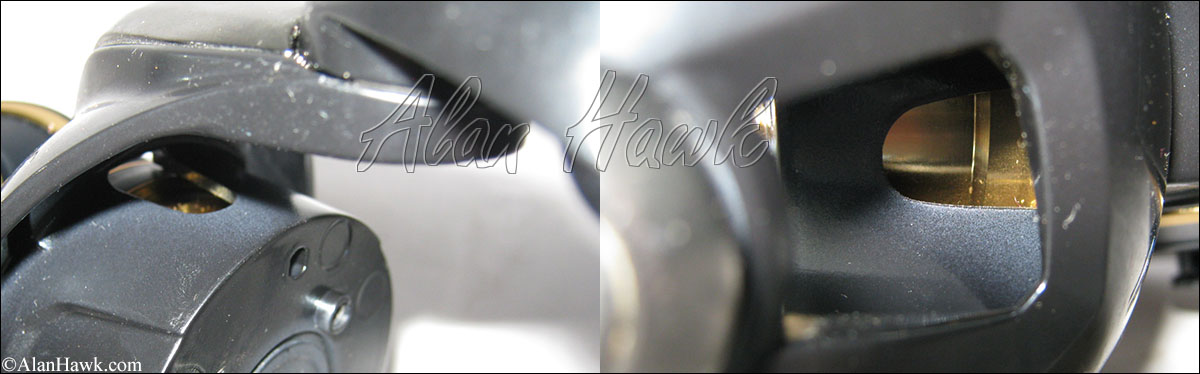
Another reversal from the 2020 model, whose rotor was completely free of cuts, the rotor of this 2025 Saltiga is cut on both sides behind each arm. These cuts open to the mag-sealed pinion assembly cover beneath the rotor, and the golden finish of this cover peeks through the cuts in an intrusive way. Gold is alright externally, but internals should look practical and subdued not to cheapen the look. A black or even silver finish on that internal cover would've been a better sight.
Before moving on from the whole cuts issue, let me explain that I'm not opposed to them in principle and I certainly had no issues with cuts in the 2010 and 2014/15 Saltigas back when that was par for the course. My frustration stems from the fact that in 2020 Daiwa created a superb reel whose light core design permitted them to jump on the opportunity to close off all the holes while maintaining a reasonable final weight, but now they're regressing and once again drilling the handle, cap, spool, and rotor, facilitating saltwater's entry to vital components for the sole reason of trimming the excess weight of the ballooned frame. Has it even worked? Nope, the reel is at record heft for a Saltiga, outweighing not only its predecessors but some of its rivals too.
The reel kept the fat bail wire, but ditched its iconic verticality which has been a trademark since the 2001 Saltiga Z. This new version adopts a Stella style bail wire bend, whose function will be examined later, but as far as looks are concerned, they should've just fully committed and adopted a thin wire as well and called it a day. The allure of the fat wire stemmed from its roots in the original Saltiga's wire with its signature verticality, but now that it got bent it lost its visual appeal and became just another bail wire among countless similar ones, only fatter.
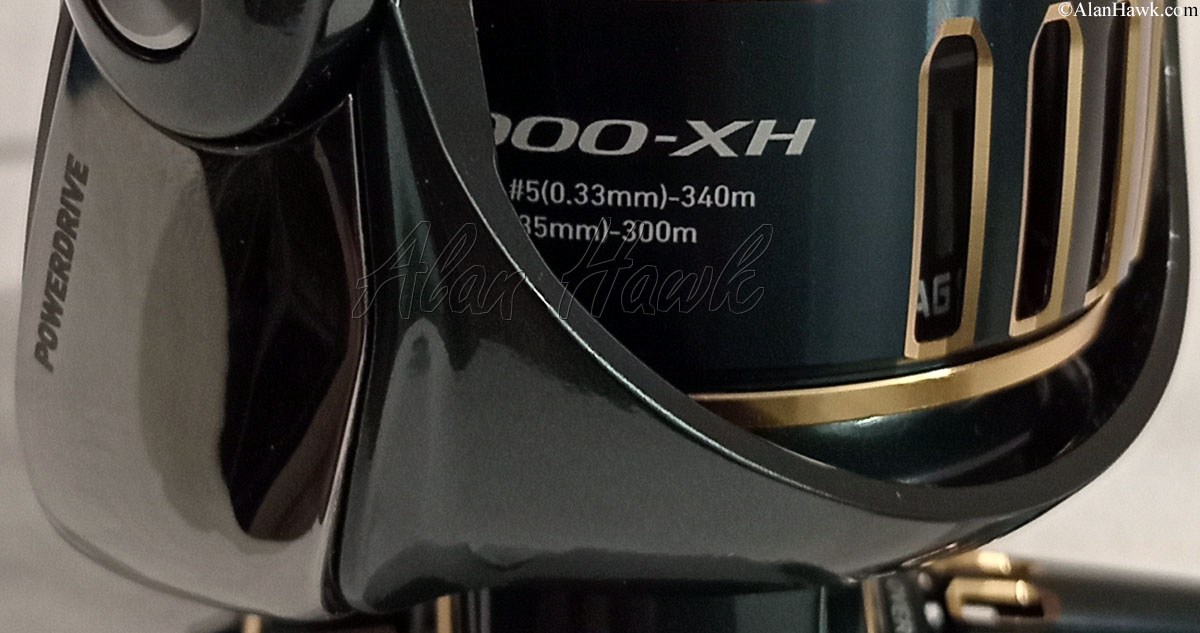
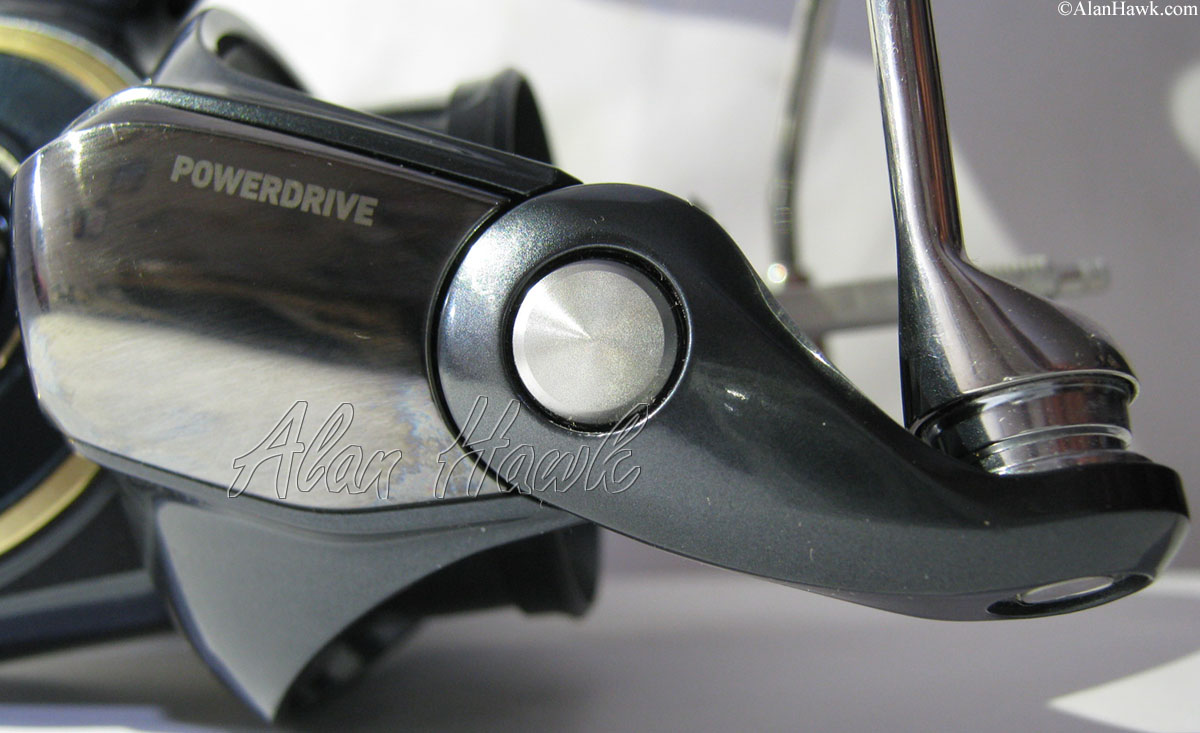
The bail arm is finished in black this time, and the plastic cover of its mechanism is imprinted "PowerDrive". You know my stance on using the reel's body as an advertising billboard and how I like to fish my reels instead of "reading" them. Therefore it should come as no surprise that I preferred the clean cover of the previous model to this printed one. Keep writing to the manual.
The real written horror though was yet to come....
I'm used to pointing out and making fun of bad English in the manuals of generic Chinese reels, but finding it on the body of Daiwa's flagship reel wasn't on my bingo card. "Oversized" is colloquial speak conveying that something is large in casual conversations, but it has no place in technical settings where it means something is out of specifications; when Billy says to Bob in the pub "did you see the oversized pair on that Sydney Sweeney chick", Bob would holler and high-five Billy because he understood "oversized" to mean her eyes are beautifully big lighting up her face (yes, her eyes you irredeemable hedonists, I'm a follower of Christ now!). On the other hand, if an engineer at Boeing says "those turbine shafts are oversized", panic would ensue, orders shouted to halt production, and emergency meetings called to fix it and fire whomever is responsible. I know the dictionary definition might make it seem acceptable, nevertheless we all know that you don't use "oversized" when discussing technical definitions unless you're pointing out a fault.
Can't believe I've just critiqued ludicrous English on the body of a reel of such stature. This feels more like a messy nightmare that one gets dozing off for seconds on board a train than real life.
The front end of the spool has been slightly trimmed and made slimmer. The spools of the 2020 Saltigas all looked fine, except for the 8000 size which looked bulkier in this frontal area due to its smaller diameter requiring its cap to rise almost vertically (inset). This is pretty much the only improvement in the looks department over the previous model.
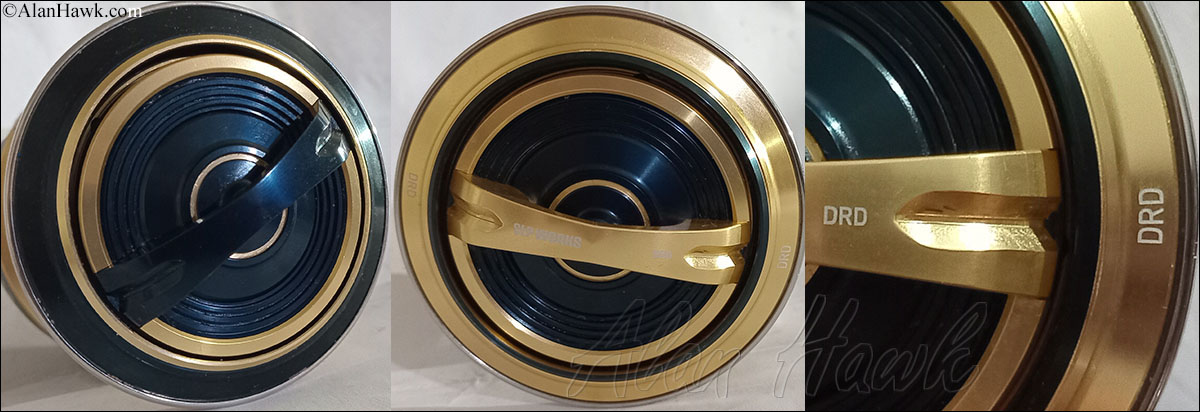
Sizes 8000 to 14000 come with the ATD drag knob handsomely finished in dark blue with golden trims in alternation (left), while the DRD knob, which comes with sizes 18000 to 30000 as well as optionally from SLP-Works in 14000 size (middle), has a golden cross bar whose colour stands out better than the blue bar on the ATD knob. The ATD knob is unmarked, whereas the DRD knob is marked as such on one side of the bar to complement the marking on DRD spools both standard and SLP-Works (right).
And this is how the 8000 - 14000 models look when upgraded to top tier DRD specifications. I expected the reel to reek of vulgarity when almost half of it becomes wrapped in gold, but it ended up having a better colour balance than in the standard state thanks to that golden shimmer brightening up an otherwise dim colour scheme.
The 2025 Saltiga's visual identity is defined primarily by its ballooned body which, unlike other features, is the foundation of all sizes. That body swelled to match the next size class in the previous model, meaning the gearbox of the new 8000-14000 is as big as the one in the 18000-20000 previous Saltiga, yet it remains within the reasonable limits and not what I'd describe as excessively large. That said, it fills those limits in a bloated manner, spilling into the stem upwards and dangling past the flange downwards. That frame gets a rotor that was made extremely compact by inching back towards an obsolete shape, creating one of the most acute cases of visual disproportionality in modern reels. You know the dudes who workout hard but skip the legs' day and look unbalanced? The new Saltiga has that in reverse; someone whose legs are huge but with a tiny torso, and to top it up it loses a hallmark of the Saltiga essense by bending the fat bail wire putting that wire in direct competition with the protruding rotor screw for the title of the weirdest looking element of this reel.
Now you certainly expect me to call it hideous then move on, yet, and quite mysteriously even to me, I'm unable to call it ugly. It's not beautiful either, still I find it captivating in a strange fashion. It lacks the conventional criteria of beauty such as proportionality, symmetry, leanness, or thematic cohesion, yet it has an imposing presence whose effect is hard to put in words. It looks radically different to any other reel, but it differs with confidence driven from its immediately evident powerful build. In other words, its appearance is unprecedented but it simultaneously exudes a sense of unprecedented dominance to justify it. To put it in real life perspective, this reel got more looks than any that I've carried around in the past decade or so, and the looks were not as much ones of admiration as they were of intrigued respect. Therefore if I'm to summarise this new Saltiga's looks, I'd say that it's beastly alluring.
Made in Japan, at least for now.
Alright, it will probably always be made in Japan, but I'm taking a dig at Daiwa's decision to manufacture the 2026 Certate HD in China. The "Certate" name has always been a Japanese made premium family of reels, both fresh and saltwater ones, second only to the flagship saltwater and freshwater "Saltiga" and "Exist", and making it in China is a slippery slope that logically could pull the top reels along one day. The "it's more affordable when made in China" justification is a joke because it would apply to anything so why not the Exist or Saltiga next?
Daiwa can certainly build tackle to outstanding quality standards in their Guangdong facilities, yet it's not about quality but rather about the prestige and perception of certain names and their association with exclusive Japanese manufacturing. A Rolex made in Canada wouldn't be very desirable even if it's built to higher standards than a Swiss one. Daiwa could've called this new Chinese reel anything else, "Fructose HD" or "Lasagna WC", and people still would've bought it on its merits without the need to drag the once premium name "Certate" into the mud like that. In my opinion this is their typical milking of a name to the very last dollar they could get out of it with no regard to that name's status, just like they slap "Saltiga" on conventional reels, braid, mono, rods, lures, and even gloves, not to mention lower quality spinning reels such as Saltiga Game, Saltiga Surf, Saltiga Blast, etc.
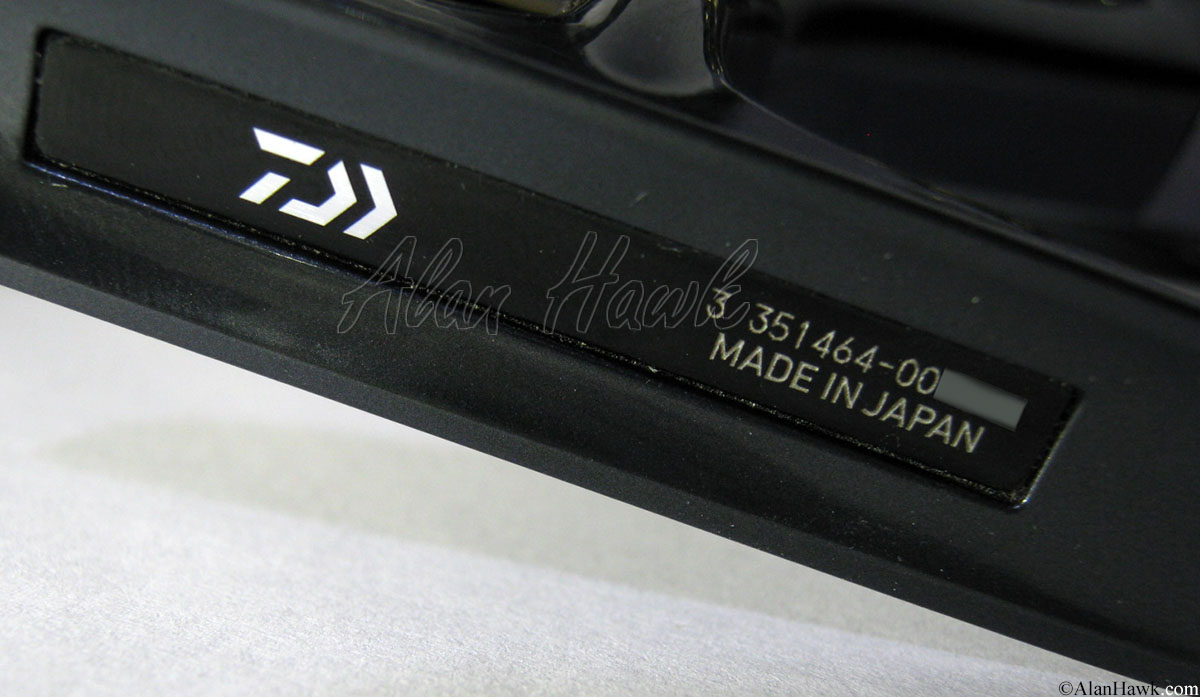
Anyhow, the JDM model has an individual serial number, which I blurred in the photo above, while the export "G" variant does not. The serial number tells them the reel's exact production batch in order to use matching parts during service in Japan in the event that a part had changed or been updated, and it enables the enrolment in Daiwa's special flagship service program offered to the Japanese market.
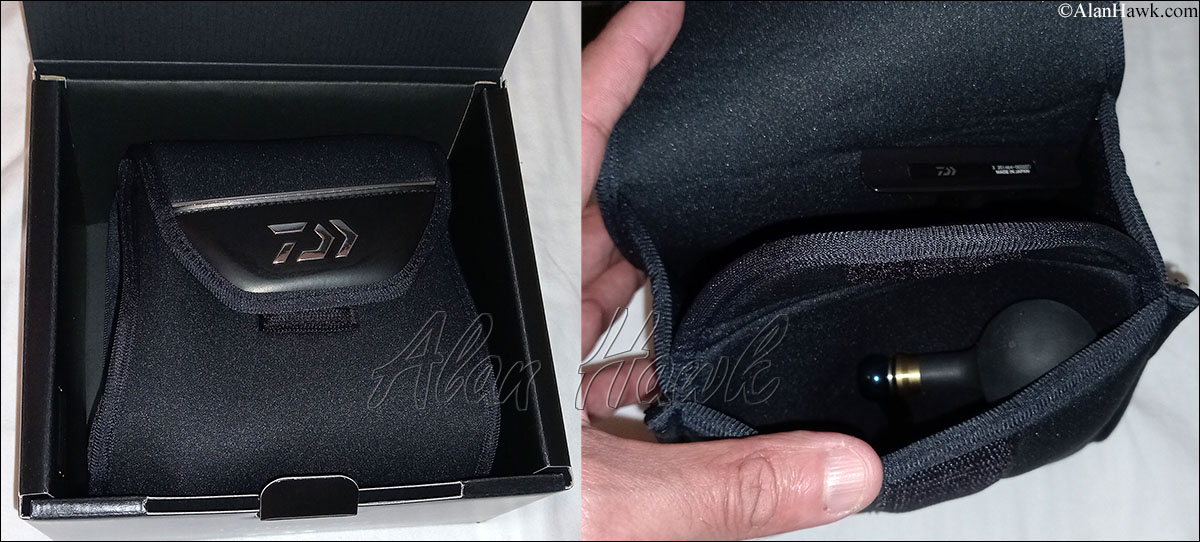
It comes with a high quality case that has a pocket for the handle, marked only with Daiwa's logo and not specifically customised for the Saltiga to allow it to be used for other models as well.
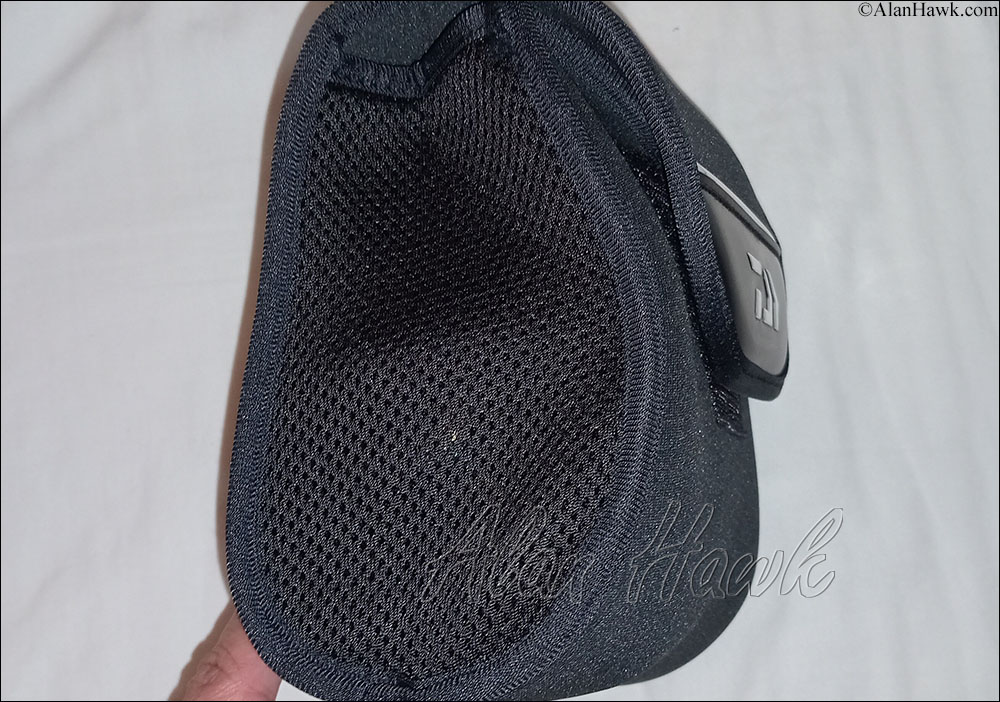
The case has mesh sides to facilitate air circulation for faster drying, which is a brilliant feature, but sadly Daiwa neglected to increase the case's dimensions for this enlarged 2025 model, therefore the reel fits uncomfortably tight and bulges from the side. Not a huge deal, but that's not how a flagship model should be treated.
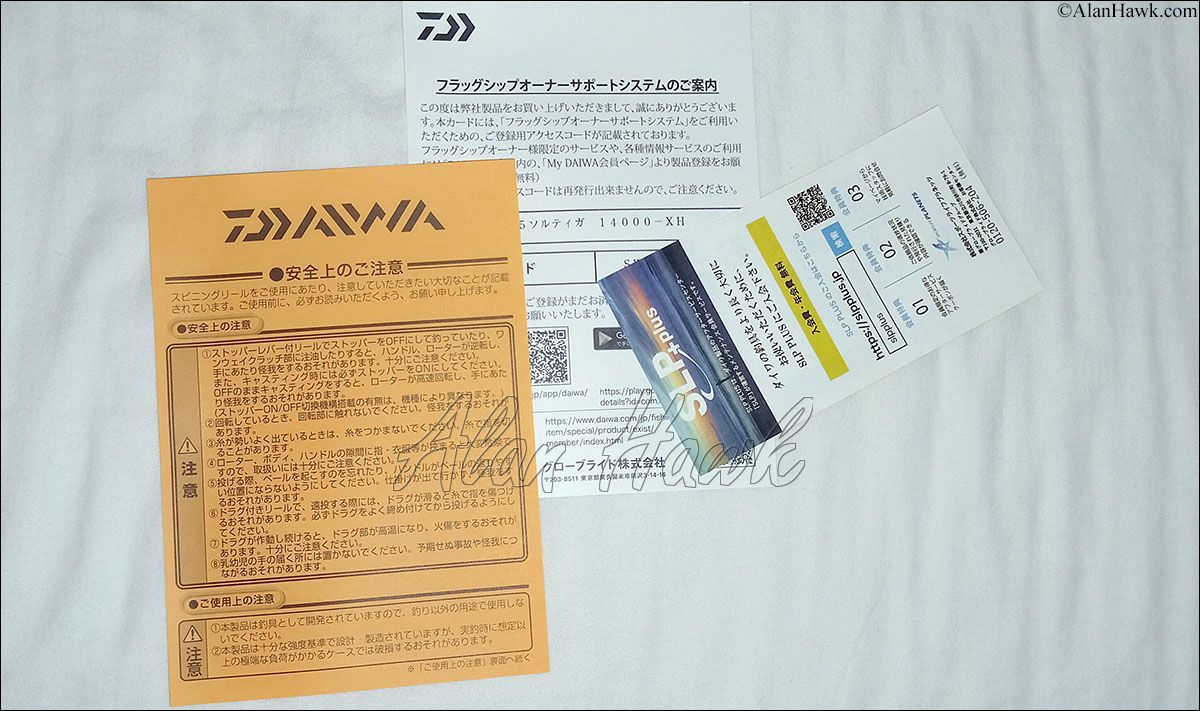
The JDM edition comes with a special registration card for the flagship service program, another for standard SLP+ service, and a card with some silly warnings such as don't grip the line by hand when a fish pulls it hard, don't forget to open the bail before casting, and don't use the reel for non-fishing purposes. Would've made fun of the warnings' list for a whole paragraph but it's now overshadowed by the goofy text on the reel itself.
There is also a spool band, and to signal their environmentalism they no longer use plastic baggies and instead the spool shims and the special tool for the handle grip screw come in a small paper envelope.
More notable than what comes with it is what does not come. This reel follows in the footsteps of the 2023 "inshore" Saltiga, and comes without a printed manual and instead tells you to scan a QR code to see the manual online. By doing that they show a fundamental misunderstanding of the nature of a luxurious product, whose paperwork is considered a part of the owner's "set" that's got its own appeal. Does anyone really need the pamphlet that comes with a Montblanc pen or the Proof Sovereign coin in order to know how to use them? This printed material is a part of the ownership experience, basically a welcome message into the exclusive club of premium goods' connoisseurs. I know paper and printing are extremely expensive in Japan, but I'm already paying a lot for the reel and wouldn't mind paying an extra 3 or 4 bucks for a proper set.
Anyhow, in certain overseas markets Daiwa had to include a printed copy of the manual with this reel, due to local regulations requiring usage and safety instructions to be included and internet access in these regions is not as ubiquitous as it is in other places.
As for the optional bundle I bought to upgrade it to DRD specifications, the spool comes with instructions, shims, and its band, the knob comes with nothing, and the grease has some information printed on the box itself.
With the standard ATD spool and knob, the 14000-XH weighed 695 grams (24.5 oz), a tad above the listed weight just like the 10000-P I mentioned earlier. Upgraded to top standards with the DRD spool and DRD knob, The 14000-XH weighed 707 grams (25 oz). Daiwa does not list a weight for the 8000/10000/14000 in upgraded state. One can make the argument that when comparing the weight of the Saltiga series to other flagship reels the higher weights with DRD appendages should be used for 8000/10000/14000 reels. Feels unfair to compare the weight of a competitor reel made to highest specifications to a Saltiga downgraded with what's essentially a 2026 Certate SW drag. Puts the Saltiga at an even bigger disadvantage, but what's right is right.
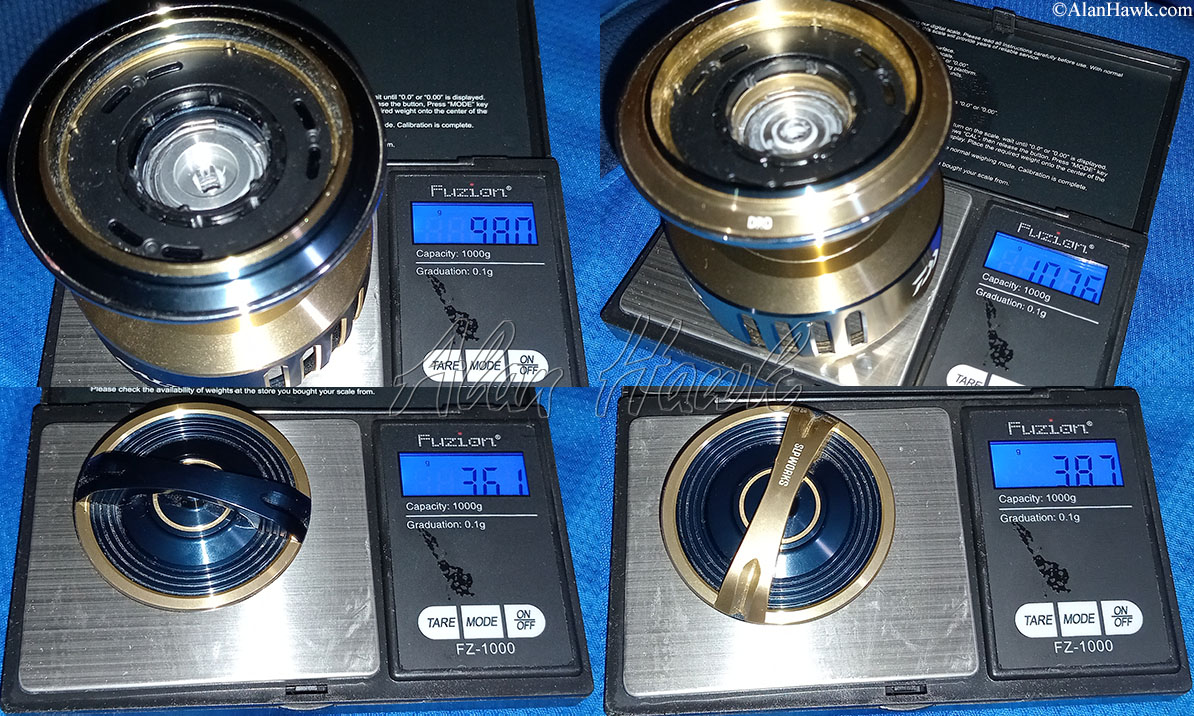
Weight comparison of individual components for the sake of comprehensiveness, standard ATD to the left, DRD to the right; ATD spool 98 grams (3.45 oz), ATD knob 36.1 grams (1.27 oz), DRD spool 107.6 grams (3.8 oz), and the DRD knob 38.7 grams (1.36 oz).
Right out of the box, the reel displayed the typical operational characteristics of a Saltiga; vanishingly small handle play (red arrows), very little spool in-out movement (yellow arrows), barely perceptible shaft side play (green arrows), and the only noticeable movement is the shaft twisting clockwise and anti-clockwise (blue arrow). The latter is not big by any definition, but just slightly more than in the previous model. Heavy use did not develop new play or increase existing play. Everything remained pretty much the same.
Turning the handle to check the smoothness, whose correct definition is fluid silent operation absent felt or heard mechanical noise or spots of irregularity, the reel felt buttery consistent and almost fully quiet only emitting a faint "wush wush" sound from the one way clutch. That's normal since its internals are always rubbing one another under spring pressure, but the sound is slightly more audible here than it was in the 2020 model, likely due to rotor and spool cuts allowing sound to escape easier.
As for the free-spinning, which is the ease of turning the handle, the 2025 Saltiga is on a whole different level as you might remember from my memoirs at Osaka's Fishing Fest, where this reel left visitors in a state of shock with how astonishingly little effort it took to turn its handle and put it into motion with barely any resistance and not a hint of tightness. That perceived increase in power was of such magnitude it made even the incomparably powerful 2020 model feel rudimentary in comparison. This unequalled sense of power had stayed with me since the first time I handled a prototype 2025 Saltiga, and I was almost ecstatic that I'll finally get to take that power out and bring it to the fish! I only needed to spool the new Saltiga and then the fun could begin.
Usually at this stage of a review I simply show you the filled spool, but this time we'll have a long pause because the spool deserves a deep dive in which you'll read things that were never told or published anywhere in any language.
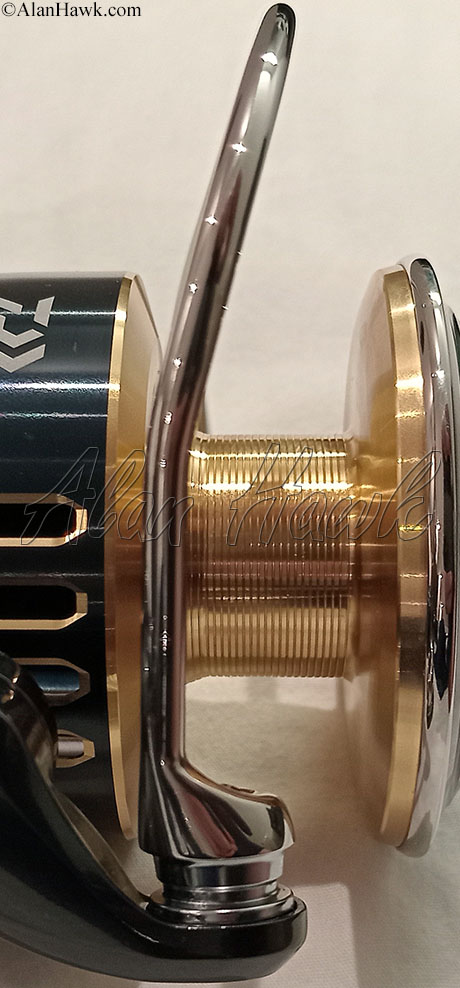
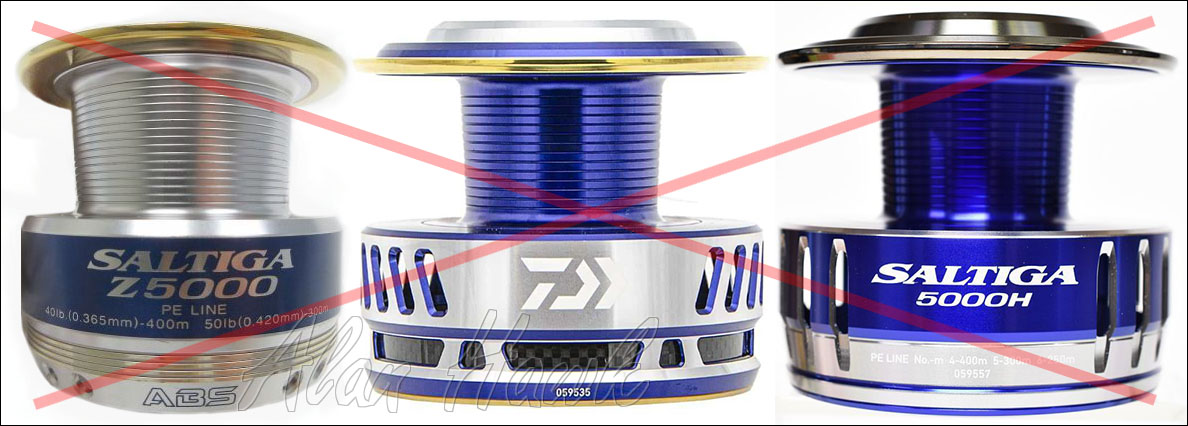
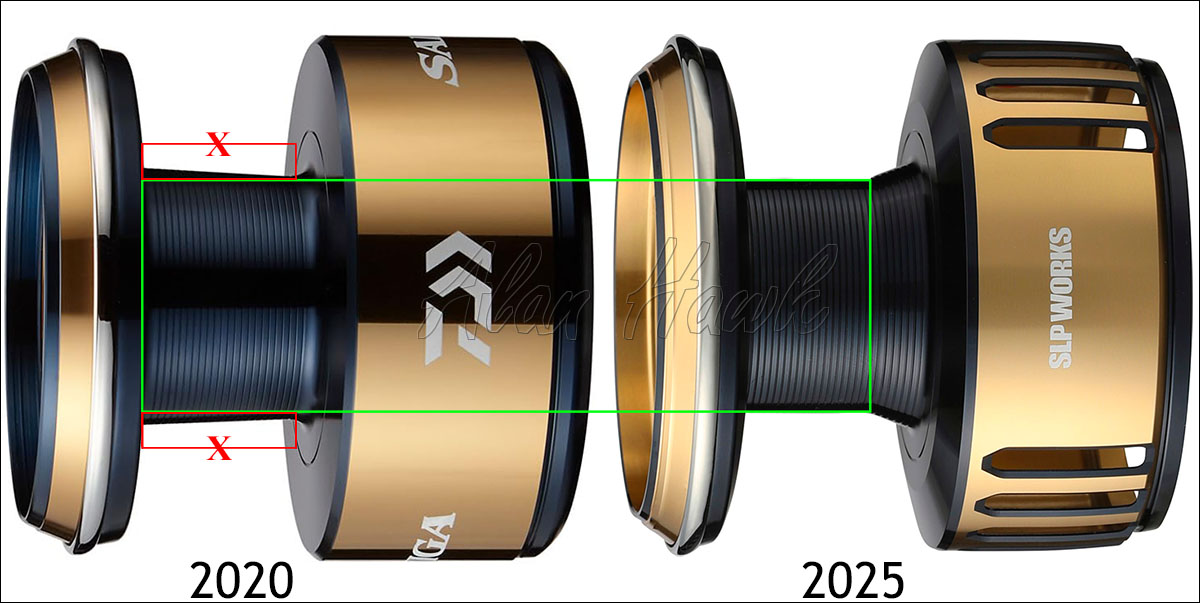
For the 2025 Saltiga, Daiwa quietly dropped the reverse-tapering of the spool arbour, which came in every Saltiga since the 2001 "Z" model and even in saltwater reels preceding that first Saltiga. For most of its life, Daiwa called that defunct feature ABS spool (Advanced Ballistic System) and attributed some wondrous benefits to it, yet they abandoned it after +30 years without explanation.
Instead, these new Saltiga adopted a standard straight arbour with a "pyramid" at its bottom where it meets the flange, still without a single word officially and everyone on earth just acted as if they didn't see that pyramid. Hundreds of articles, videos, interviews, and commemorative publications discussing every inch of the 2025 Saltiga, except for the pyramid which everyone apparently pretended didn't exist. This bothered me initially, then I saw the funny side of it as my mind drew strong parallels between it and an outrageous scene in a film....
"Movie 43" that is, where in one segment Kate Winslet goes on a blind date and meets a man who has... errr... let's call it "reproductive organs" growing out of his chin, but everyone at the restaurant acted completely normal around them and even her own friends loved him and congratulated her on finding the perfect man, leaving the poor girl utterly confused as to why nobody said a word about the huge thing dangling from his face. That was me since the reveal of the Saltiga in October 2024, desperately waiting for anyone to comment on the organ... I mean the pyramid, but absolutely no one did. Will tell you in a second what it is, but let's complete the overview of the spool first.
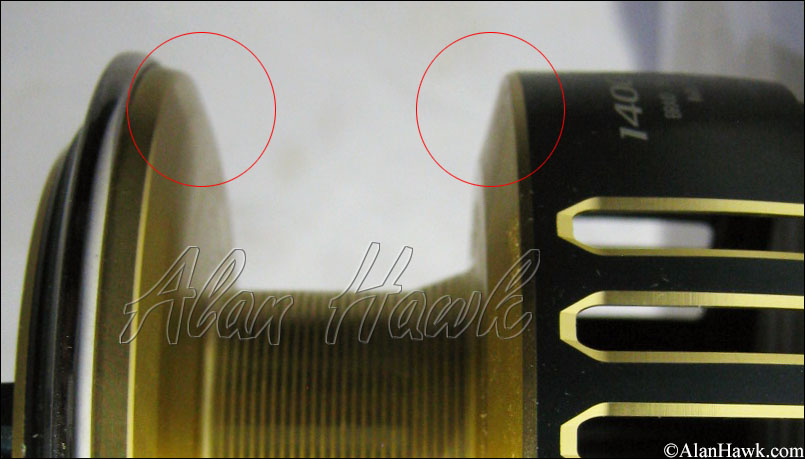
Both flanges acquired this new chamfer, whose job according to Daiwa is to increase casting distance. If, for the sake of argument, we accept this claim for the chamfer in the front flange, how exactly does the one at the back of the spool help with casting distance? Brands will always make all sorts of hilarious claims, but it never ceases to amaze me how the supposed experienced professionals listen to them and nod in agreement without even the most basic critical thought crossing their minds. It might very well be the "affiliate syndrome", where everyone knows that some claims make little sense yet they need to keep quiet if they want to have a future in the industry. No brand is going to associate with, sponsor, or pay you to preview their product if they know you might contradict or even question the provided script. I digress though....
I believe that the entire geometry of the 2025 Saltiga's spool is an attempt to address an issue that I'll call "spool stretching", an attempt hindered by the strict requirement to maintain spool interchangeability with the previous model, the cash cow that can't be sacrificed now that a full reset was already done a mere 5 years earlier.
To clarify what spool stretching is, we'll take a briefl detour; for decades many anglers have been spooling their heavy duty spinning reels by improvised spooling machines, a practice that isn't sanctioned or approved by any major manufacturer of spinning reels. You'd open a catalogue of any brand and find them telling you to fill the spool using the reel's own winding mechanism. Two major reasons for this; the first is to employ the reels own oscillation stroke designed to lay line in a specific manner that best serves the reel's purpose, and, equally important, to limit the tension applied to the line during spooling since it's very hard to turn the handle of a spinning reel when the line is tensioned to dangerously high levels. Spooling the reel normally therefore provides a "safety valve" to prevent spooling at excessive line tension.
Machine spooling does neither. The main purpose of that practice is to put more line on the spool than its natural capacity, achieved by winding under extraordinary line tension, coupled with random spread across the spool that doesn't conform to or match the reel's designed oscillation.
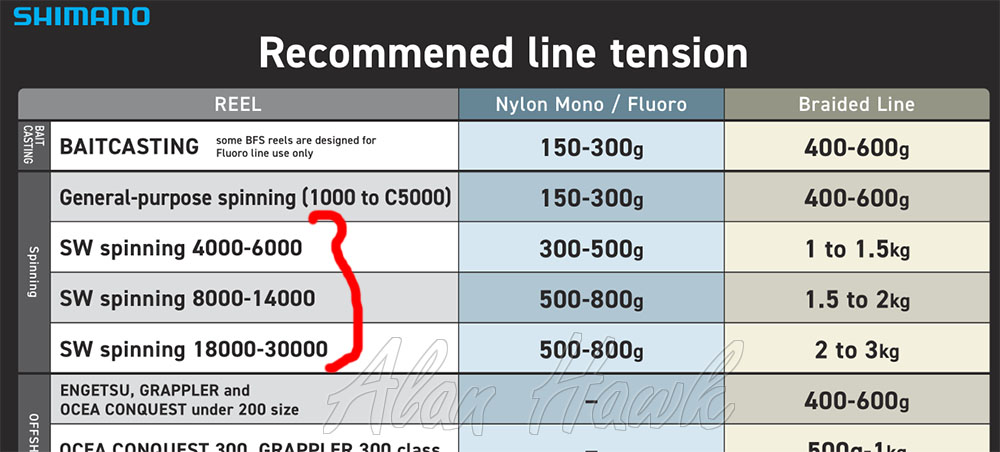
In response to the increasing popularity of machine spooling, Shimano, being a prominent producer of heavy duty spinning reels that people tend to machine-spool, went out of their way and published warnings specifying maximum safe line tensions for both mono and braid for various reel models and even for different size classes within each model. The image above is one of those charts published on Shimano's official website for many years and constantly updated for new models.
Daiwa did not do that, something they bear absolutely no blame whatsoever for, if fairness and level-headedness are to be upheld. Shimano did something extra, good for them, but it would be unjust to fault Daiwa for not following suit. They made the reels, they told us in the catalogues to fill them by winding the handle, put drawings showing that just in case someone doesn't get it, and that's as far as they owe us. No manufacturer is obligated to monitor unsanctioned trends and publish warnings about them. What if people started using their reels to fly kites, would Daiwa be required to update the instructions telling people it's ill-advised?
But hey, what's the big deal about excessive line tension anyway? Well, when pulled, fishing lines of all kinds stretch and their diameter decreases under tension. Once the line is let go, it will slowly pull back to its original length and regain its initial diameter in the process. Mono is significantly more susceptible to this phenomenon than braid and fluorocarbon, all stretch and pull back but to differing extents. This is why in the table above they list lower maximum tensions for mono than for braid due to mono's greater stretchiness. Now you probably get it; when line is loaded onto a spool under excessive tension it stretches and its diameter decreases, facilitating the goal of packing more line on the spool, but afterwards the line slowly relaxes and pulls back, only partially due to being trapped under more coils, but in the process it regains enough of its original diameter to push hard against the spool flanges in a situation akin to steam in a pressure cooker.
That situation would have little to no effect on old school reels built with chunky walls of metal, but modern heavy duty reels employ thinner metal both for improved drag heat dissipation and weight reduction. When these modern thin walled spools are subjected to the "pressure cooker" scenario, the flanges get gradually pushed away stretching the lower flange's metal and deforming the spool in an unexpected manner, although the most common one I've seen is the spools becoming taller. Most people would not notice this increase in spool length under normal conditions, but when people buy extra spools they notice the difference in height between the new and the stretched spool. Due to the immense success of the 2020 Saltiga there were more reels out there than ever, meaning more cases of stretched spools which Daiwa, to their great credit, kept replacing for free, but in the background they rushed to the drawing board to create a countermeasure for the next generation provided it doesn't throw away spool compatibility....
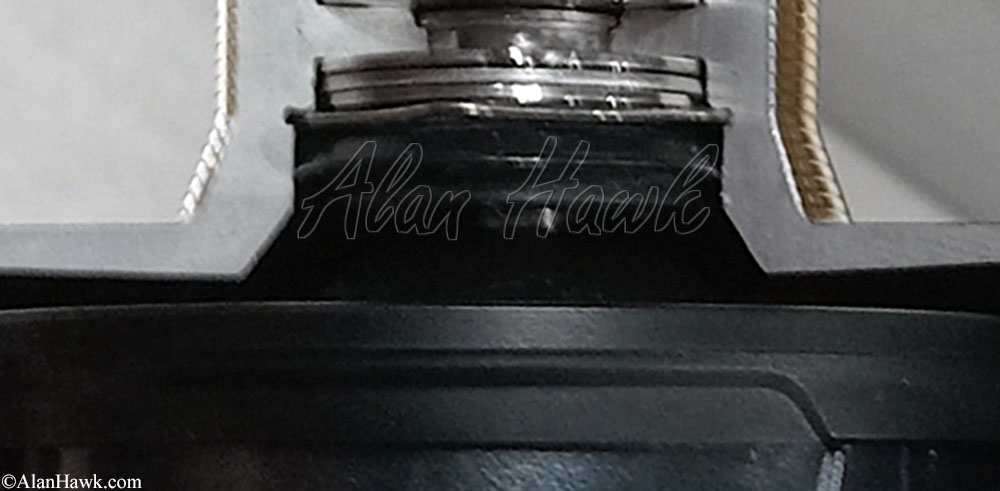
And that's how this pyramid was conceived, in my view a panicked solution to a problem that wasn't theirs to begin with. The concept employed here is the arbour meeting the lower flange across a larger circle for reinforcement, while the slope redirects line pressure away from the rear flange by making the path of least resistance upwards instead of downwards.
During the year since the 2025 Saltiga was released, I asked what that pyramid was for at every opportunity I got just to see what claims were being put out there. There was no official word about it, and instead I got speculative answers that fell into one of two categories; the first and more common one was that it increases casting distance, which makes no sense because it's so deeply buried one would have to make a cast hundreds of metres long in order to get anywhere near its potential region of influence. The other, which I got only once from someone who probably had read my previous work, was that it reduces resistance for line leaving the spool during very deep drops, but again if true the pyramid should've been at the other end of the spool where deep line has to rise vertically then make a sharp 90 degrees turn to leave the spool, unlike the line at the bottom which goes towards the lip at a much smoother angle.
On top of the altered spool geometry Daiwa now puts line tension warnings everywhere that's related to the 2025 Saltiga; on the website (left), in the reel's manual (centre), and even in the instructions of optional/extra spools by SLP Works (right). They actually introduced these tension tables about three years after the release of the 2020 Saltiga when the panic set in, appearing in other models before this latest Saltiga, but they certainly were not there when the 2020 model was released as some official Daiwa representations outside of Japan have falsely claimed, something I need to pause for a moment to address because I have a hard time ignoring misleading claims;
I photographed the entire manual that came with my own retail purchased 2020 Saltigas (click here for a larger version), and there is no mention of safe line tensions anywhere in it. The beauty of physical media is that no one can retrospectively edit them to falsely claim that something has always been there, unlike web pages and PDFs. That's neither here or there though because, again, I'm not faulting them for not warning about unsanctioned practices. I'm only addressing bad information put out there as a matter of principle.
Going even further in their response, and fearing the aforementioned elevated stretch and crushing recovery of mono, Daiwa no longer lists the capacity of mono (nylon) on the spool or box of the 2025 Saltiga, ambiguously implying that maybe these reels shouldn't be filled with mono but without explicitly stating this. To add more confusion, if you scroll 3 images up you'd see that the new tension warnings include safe tension for mono both as a spool fill and as backing. Which one is it Daiwa, mono or no mono?
To contrast, here is how Shimano makes it decisively known when they don't want a reel to be filled with mono. This is the Stella SW 8000, the only size on which mono should not be used for reasons related to line lay and casting dynamics. Other sizes can still be filled with mono. This is how to effectively deliver a piece of information unambiguously and leaving nothing open to interpretations, and hopefully by showing this comparison Daiwa will make things clearer in the future.
To summaries and prevent any misunderstanding of the few previous paragraphs;
Saltiga's spools are NOT too thin or too weak. They are perfectly in line with modern designs prioritising heat management.
Daiwa is NOT at fault for not previously publishing warnings in response to filling practices differing to what's described and illustrated in the reels' manuals.
The first Saltiga to come with these warnings was the 2023 Inshore model, good for Daiwa, but no need for anyone to falsely claim that these warnings were there previously.
In my opinion Daiwa's attempt to make the 2025 Saltiga spool resistant over-tensioned filling is noble, but unwise when restricted by the spool compatibility requirement. They should've just published the maximum safe figures and kept their tried and tested spool design.
This takes us back to the abandonment of their highly celebrated "ABS" reverse taper,
Which was sacrificed to make up for the line capacity lost to the pyramid and no other reason.
The same purpose the two chamfers partly serve, more space for line to compensate for the space occupied by the pyramid.
I said "partially" because these chamfers have a more essential task of countering spool stretching, equal in importance to the role the pyramid plays. I'll keep it simple; to maintain spool compatibility with the previous model, the oscillation stroke lays the line within the limits marked by blue lines. It can't extend past that limit because the old spool ends there since it does not have the added chamfers. Accordingly, the added spaces in this 2025 spool (red arrows) get filled with line sliding into them from the adjacent limits of the oscillation, as opposed to line being laid purposefully and tightly into them by the oscillation. These spaces therefore end up with line that's under lower tension, reducing the risk of the previously described stretching then expanding (pressure cooker situation) at this increasingly vulnerable area near the edge of the flange. The further away from the arbour the pressure acts, the more capable it is to cause metal deformation, hence that extra protective measure near the edge.
The chamfer, only the front one of course, might incidentally be beneficial in casting, something I still had to evaluate on the water, but I personally believe that every single aspect of this new spool was designed to counter stretching, and anything else is a coincidental by-product.
Let's spool it
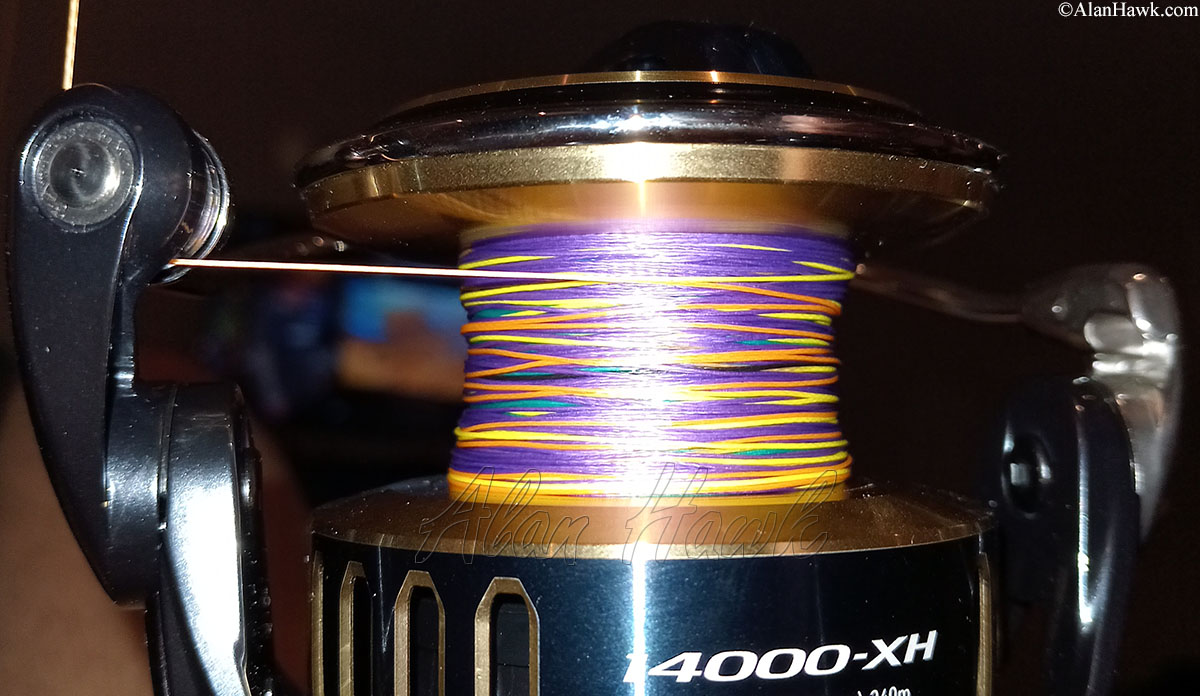
The line immediately formed two hills, one at the top and one at the bottom, with a valley between them.
If I ever see this spooling a reel I'd stop and take off the line then toss the reel away, or return it if possible, as a defective piece because two hills and a valley can't be corrected using shims. I didn't do this here because I was forewarned about it, by Daiwa itself nonetheless;
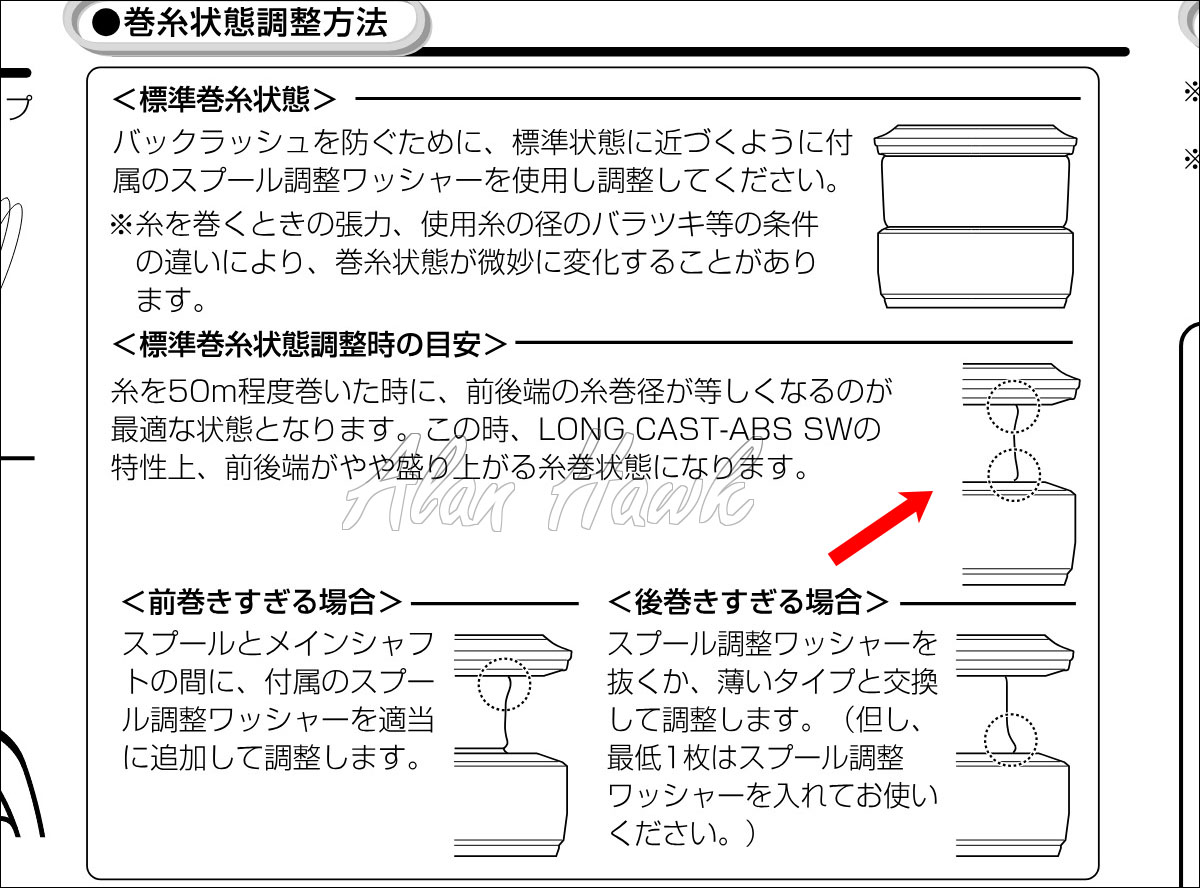
In the reel's manual they tell us that this will happen and instruct us to keep spooling, which is unprecedented and unique to the 2025 Saltiga.
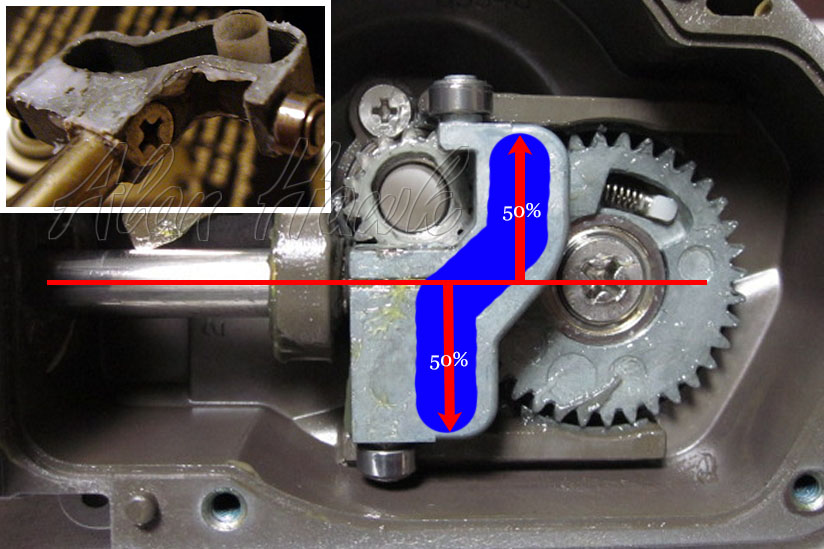
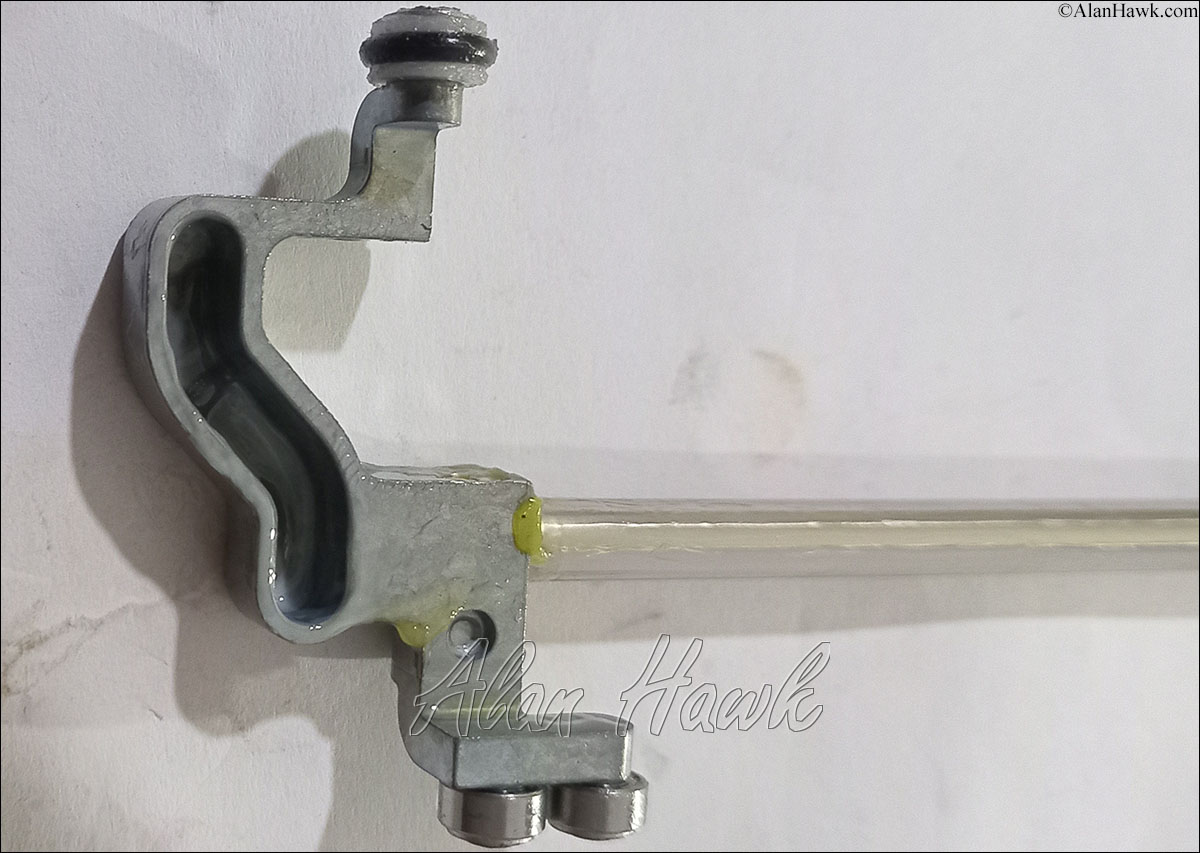
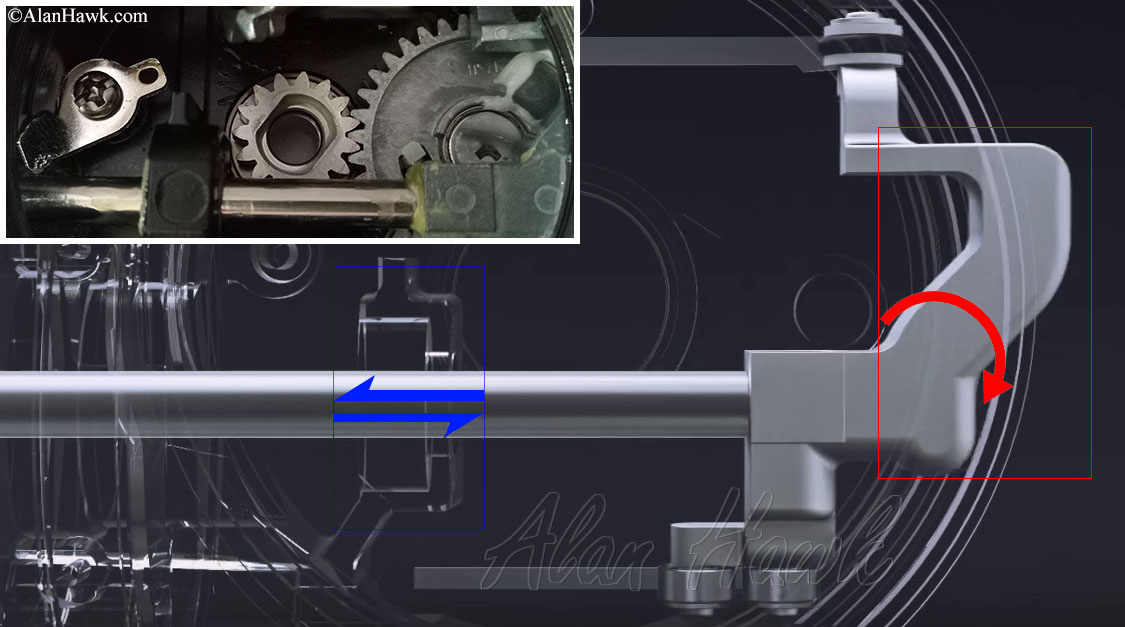
The makeshift pyramid fix meant that line will form a hill at the bottom of the spool since it's wrapping on top of that pyramid, therefore they did another makeshift alteration to the oscillation block to make the spool linger slightly longer in the farthest down position during the reversal of oscillation direction in order to build a matching hill at the top of the spool, exactly as shown in the manual.
Continuing to wind, the two hills persist but the line begins the process of "averaging out" when each coil wrapped on the slopes provides a minutely flatter surface for the next coil on top of it.
Continuing on, the valley in the middle nears disappearance while the line at the edges reaches the chamfers in both flanges and begins sliding into and filling them in the same manner.
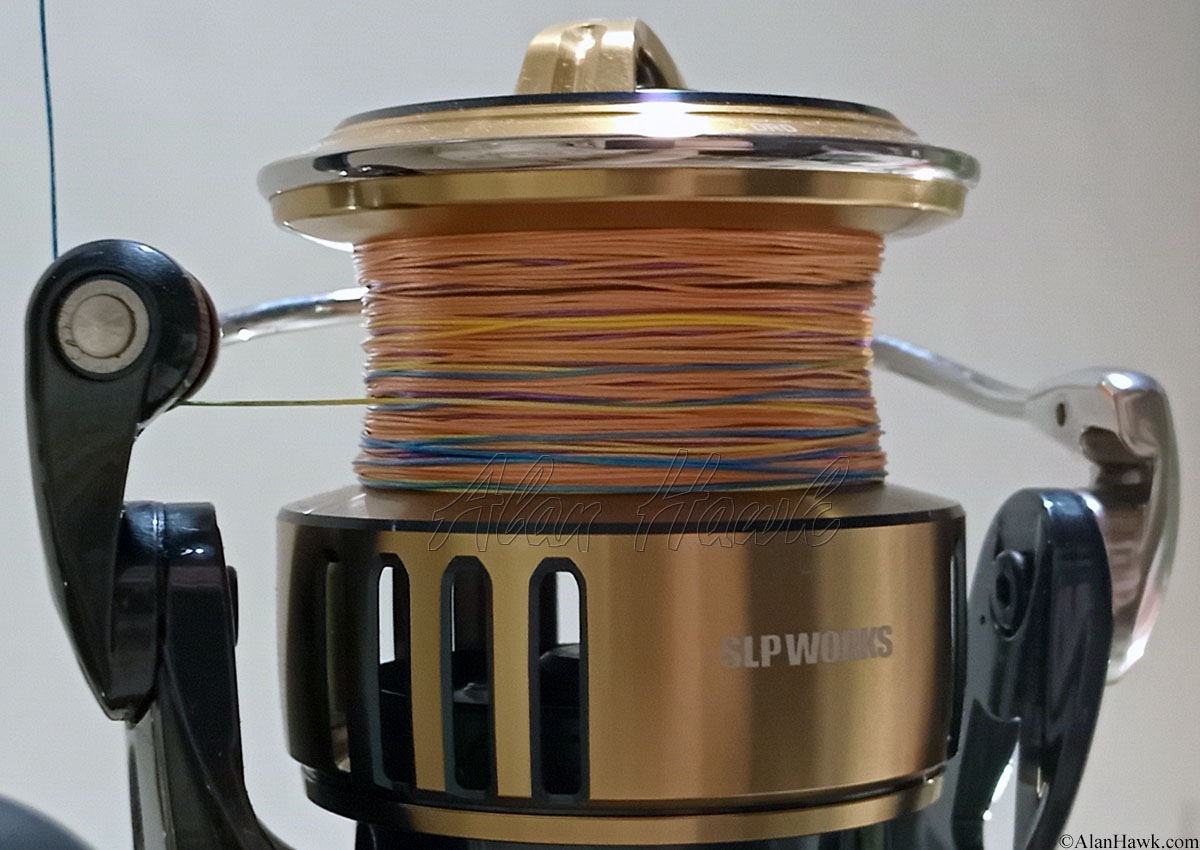
Finally, after all these acrobatics, the line ends up filling the gaps and forming a level surface. I demonstrated the filling stages with both spools to show they fill identically. Anyhow, I said "level surface" in an approximating sense because I frankly don't even know what to call this, or how it would influence the reel's casting performance.
Since I can more accurately assess casting performance when standing on solid ground than when on a floating body, I started at the beach to see how this new Daiwa casts both into the water as well as on the sand, followed by throwing bait and pencils to whatever fish might be roaming the surf. To my utter delight the Saltiga cast superbly despite the bonkers line lay. Braid flew in tidy loops that glided smoothly into the first guide and I felt no tugging on the line neither due to coil conflicts nor interaction with the spool lip.
I would dare to say that it casts every bit as good as the 2020 model, something I wouldn't have guessed if I had to based only on how it spooled the line. Goes to show that no amount of analytical experience can replace actual fishing when it comes to finding the truth, and maybe now you can forgive me for taking so painfully long to evaluate each reel and coming up with a review. I won't say a thing unless I've gone down every possible avenue to verify it first. At any rate, the Saltiga cast flawlessly, but I faced isolated hiccups in what followed the casting; twice I had line wrapping outside the front spool flange at the start of retrieving, but I decided that it must have been my fault somehow. Two times only in +100 casts is nothing, and no previous Saltigas ever gave me line troubles.
The Saltiga got sprayed, splashed, and submerged momentarily to clean it off blood and organic matter, and it powered through it all with no effect on either its function or impressively tough finish. I'm not recommending that you submerge the Saltiga, I just push the boundaries when testing.
The one environment that proved too much for the finish was rocky shores when I moved into the second phase of land testing. Rested the rod very gently on them to unhook a small catfish that I wanted for shark bait, yet that gentleness didn't stop those rocks from cutting into the anodising of the handle hood (inset). Not faulting the Saltiga at all. In the past I scratched even hardened stainless steel spool lips on those razor sharp rocks. I hate to imagine what would happen to me if I slipped and fell on them!
The reel was initially fished from land for a bit over 2 months, caught the typical assortment of shore dwellers including Jacks, Cobia, Red Drums, Hardhead Catfish, and a few Groupers whose exact species I did not bother to investigate because some are more protected than humans and I didn't want to risk even taking them out of water for a second. None was big enough to set off the drag even once, which was kinda disappointing yet it wasn't a wasted time as I got to learn about the reel's characteristics in its natural habitat.
I was mostly satisfied with the aspects I got to experience so far, except one which I was unsure about because I didn't fully understand at that point; the winding of the Saltiga didn't feel nearly as powerful as I expected once the line was actually in the water. That immense winding force I felt every time I spun the handle in non-fishing situations seemed to disappear when retrieving a lure/bait or the small fish that I drag straight with the reel instead of pumping with the rod. The Saltiga wasn't weak at all and it still packed some powerful pull, just not the explosive power one anticipated when winding it at shows or at home.
Needed to get offshore soon where I'm more at home and can better understand what's going on.
My offshore leaders are usually longer, so I finally got to see how the new line roller design handles knots. Simple answer, perfectly with no issues at all. Knots neither get wedged in the roller nor climb out of it, and when I open the bail to cast or drop while the knot is right on the roller the line still slips out smoothly without getting caught on the roller's side or the bail wire's edge.
When I fished the shore earlier, and now casting stick baits offshore, only the line at the surface of the spool went out, essentially the line equal to my casting distance, and it all went well. But once I fished deeper and more line left the spool, an issue that was buried beneath reared its head; after fighting a few fish the braid developed a felt tug when leaving the spool, symptomatic of line interference and coils getting trapped beneath one another requiring extra pull to free. The photo above shows the condition of the line deeper on the spool, right where it slid and collapsed into various gaps to fill them during spooling. You know, the gaps drawn in the manual, not something I recklessly caused.
As upsetting as this is, I need to keep it in proportions. The tugging is not of such severity I ever needed to free it by hand, and when using heavier jigs 250 and over they pull too hard almost full masking the tugging.
Lighter jigs, such as this 180 grams, struggled more to pull the coils free and I would need to twitch the rod as they dropped to aid the process. It was never bad enough that a jih would completely stop dropping, but the tugging slowed down the drop and I would lose a few precious seconds going back to the depth where the action is happening. I assure you that the reel was spooled normally using the same line tension I've always employed with comparable reels, and it wasn't a braid issue because I filled both spools with 4 different braids that I've always used none of which caused a single problem previously....
As well as two new braids that I was testing concurrently with the reels. A total of 6 different braids over a year of testing, all faced the same issues on the Saltiga.
I said "issues" in plural form because something else kept happening;
This. I'd be ready to cast or drop, only to notice that during the previous retrieve the braid had wrapped outside the spool. It wasn't too frequent, on average maybe twice per 8 hours of fishing, yet it persisted and never went away, always making a surprise comeback when I'm not expecting.
This is one of those times when I admit that I failed to positively identify the cause of an issue. I'm just a dude trying his best with the little knowledge he accumulated and I'm bound to fail every now and then. I'm still going to outline my best theory, but please keep in mind that it's just a guess, not something I could corroborate with measurable and repeatable evidence;
I believe that line wraps outside of the spool at the beginning of winding right after I've done a cast when the line is not under any tension, and only when I start winding while the spool is at its farthest position backwards, which explains the infrequent occurrence. The new bent in bail wire would be what's causing it;
After a cast or a drop one flips the bail closed, the braid gets picked by the wire, then it slides onto the line roller. In the previous Saltiga (left) the bail wire had no bent, therefore it always led the braid onto the spool even when the spool was pushed fully backward. By contrast, the bent wire of the new Saltiga (right) falls outside the spool when the spool is fully backward, therefore it can pull the line awkwardly against the spool's flange and once the handle is turned the line gets wrapped outside the spool.
But bent wires work normally on every other reel, so what gives?
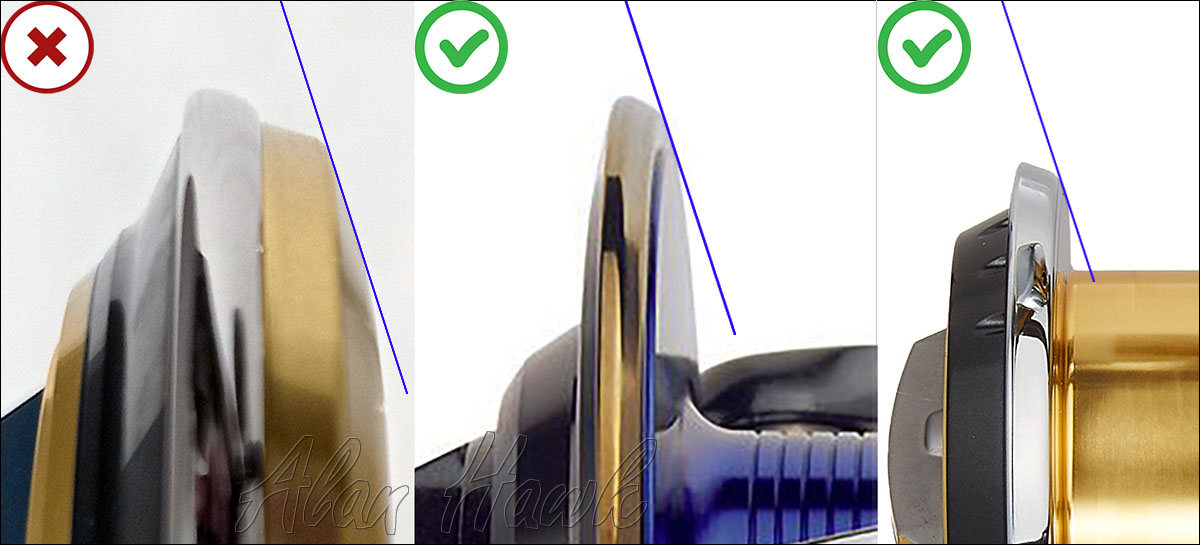
It's the design of the Saltiga's spool lip, which does not cover the entire width of the flange. It perfectly matched the 2020 Saltiga whose bail wire was not bent, both being designed from the ground up to work harmoniously, but in the 2025 model they played around with one component and left the other creating a mismatch; now when the bent wire catches the line while the spool is fully backward, the line gets stuck on the bare part of the flange not covered by the lip (left), particularly when wet, and when the rotor turns the braid gets spooled outside for a brief second before the spool oscillates upwards and forces the rest of it back on the spool. Middle and right images are of spool lips that cover the entire flange's rim, therefore they won't face a similar issue as the braid will always slide easily across the smooth lip and return to the spool.
To reiterate, the lip of the Saltiga's spool is a perfect match for the old bail wire it was originally designed for, but in this 2025 model one half of this pairing got altered thus creating this issue.
These were the cold hard facts to make of them whatever you wish, but here is my subjective feelings about it all; if the reel's name is scratched off and it's presented to me as a generic spinning reel, all those line management issues would fall into the category of minor nuisance that I wouldn't take the reel out of circulation for. Twitching the rod to clear line interference wouldn't kill me, and my day won't be ruined if I disregard Daiwa's promises about the bent bail that does it all and just return to my normal routine of closing the bail then guiding the line to the roller with my finger. It takes one tenth of a second. But, if the name "Saltiga" reappears on it I would be immediately aggravated, not because the issues are serious but rather because they don't belong in a reel of this stature. My expectations from a Saltiga, a Stella, or a Makaira are considerably higher than what I'd expect in any other reel. The flagship products of the market leaders set the standards for the rest of the field, so their flaws are judged twice as harshly. Nothing disastrous about this Saltiga's handling of line, yet I remain extremely disappointed.
The bail is still bearing bad news
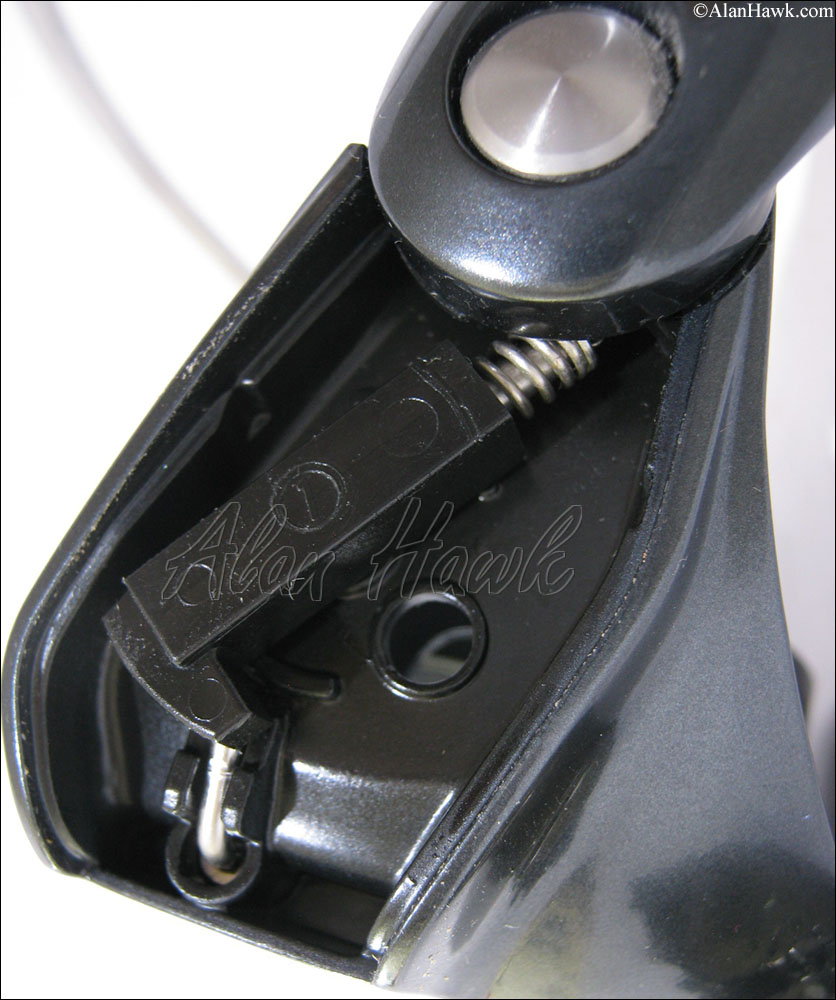
The bail mechanism is a complete departure from the design philosophy that endured from the 2001 to 2020 generation in one form or another. This 2025 model has a new high powered spring, and the mechanism's behaviour has been altered to become imbalanced in favour of closing. Past Saltigas had a well balanced bail action with a moderate spring that's neither too strong nor too weak, and when their bails were opened, the toggle point, where the mechanism shifts from resisting the opening to flipping the bail open by itself, was so smooth that it was almost imperceptible
For about 20 years that setup bothered virtually no one, but with the sudden expansion of the user base of the 2020 Saltiga complaints of a "weak" bail spring began to emerge. Some anglers, particularly in Japan close to Daiwa's ears, voiced concerns that occasionally when jigging they'd flip the bail closed but it wouldn't have enough force on its own to pull against the weight of the jig to fully close and send the braid to the roller, therefore when they instantly began playing the jig with the bail unable to fully close it would open.
A valid critique if one expects to just flip the bail then have it autonomously slam with such force it pulls against the jig, no matter how much it weighs or how deep it is, then seats the braid on the roller. For those people the familiar Saltiga bail action would certainly feel lacking. It's just that I, subjectively, don't expect that or find it necessary enough to accept any compromises for its sake; these reels are manually closed, meaning my hand will already be swiping the bail wire, and it's only natural that I'd extend the same motion guiding the line onto the roller with the side of my hand, or if the line roller isn't on that hand's side I'd whip the rod down while winding to create a momentary slack that allows the line to reach the roller. I certainly wouldn't mind a bail that does it all for me, but not if it comes with any concessions.
What concessions does the new bail mechanism impose? Predictably, a spring that makes the bail close with increased force will also make the bail require increased effort to open, which is exactly the case with this new Saltiga. Additionally, the opening motion is no longer smooth, creating both felt and heard noises as the spring clicks and rubs its guide, and probably the worst of those compromises, the toggle point at around 75% of the opening stroke is now a solid wall that one hits then has to use even more force to push past it to where the spring finally reverses and flips the remaining 25% of the stroke open on its own.
What's I've just described is nothing that one pays much attention to in active fishing, therefore it's fair for anyone to see it as redundant commentary, yet it had to be said because it went from the absolute best and most refined bail action on the market to one of the clumsiest and most imbalanced, therefore it's noteworthy for the magnitude of the shift even if the entire matter is largely inconsequential in the grand scheme of things. Actually let me give you another nugget that belongs in this exact same category;
Listen to the sound of the first bail movement, then compare it to the subsequent ones in this video
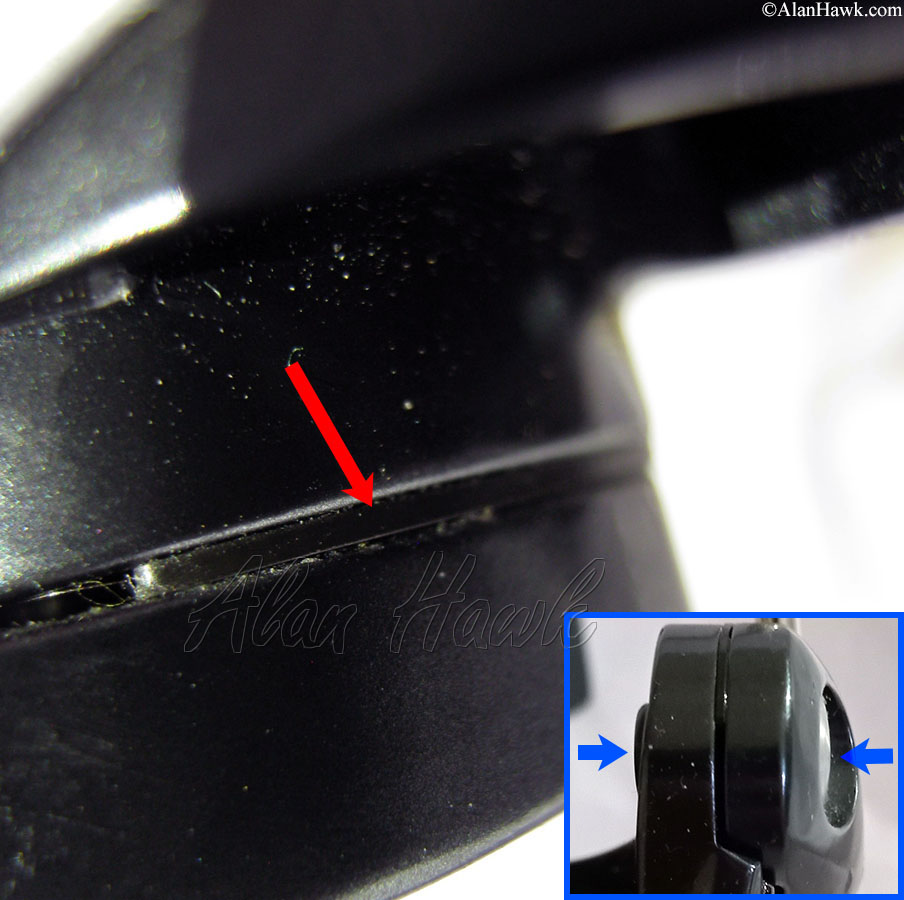
When the bail is left unused for a good while, the bail arm binds with the spacer it sits on....
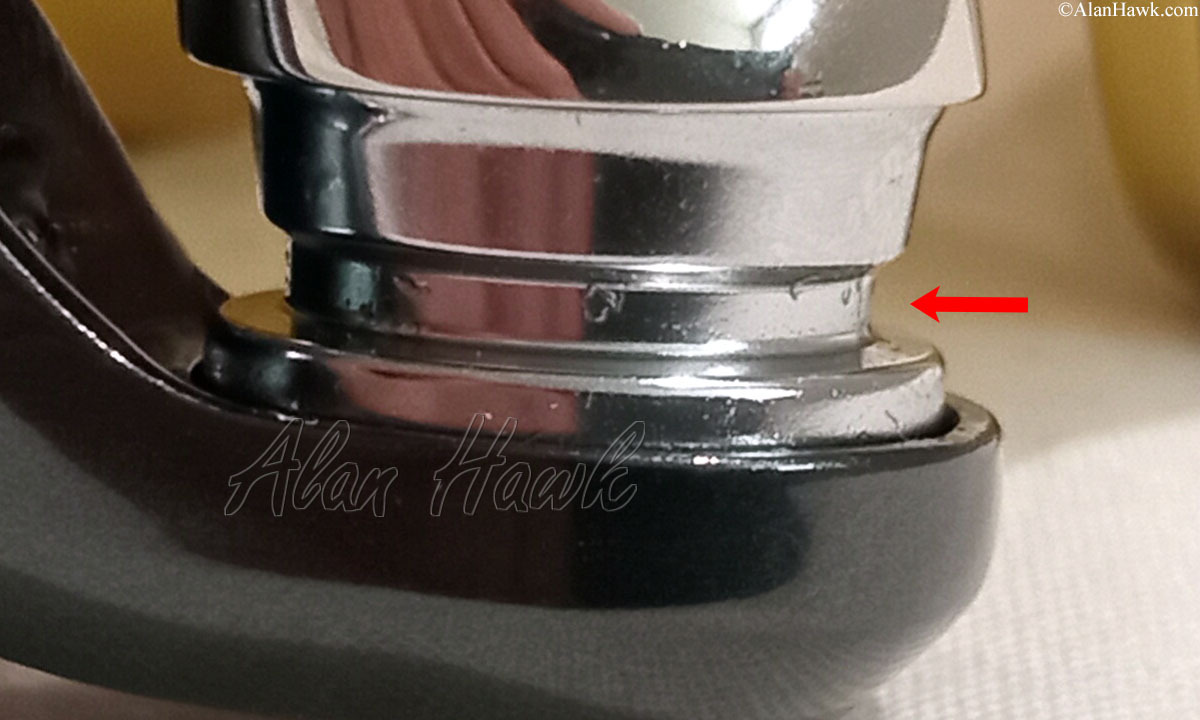
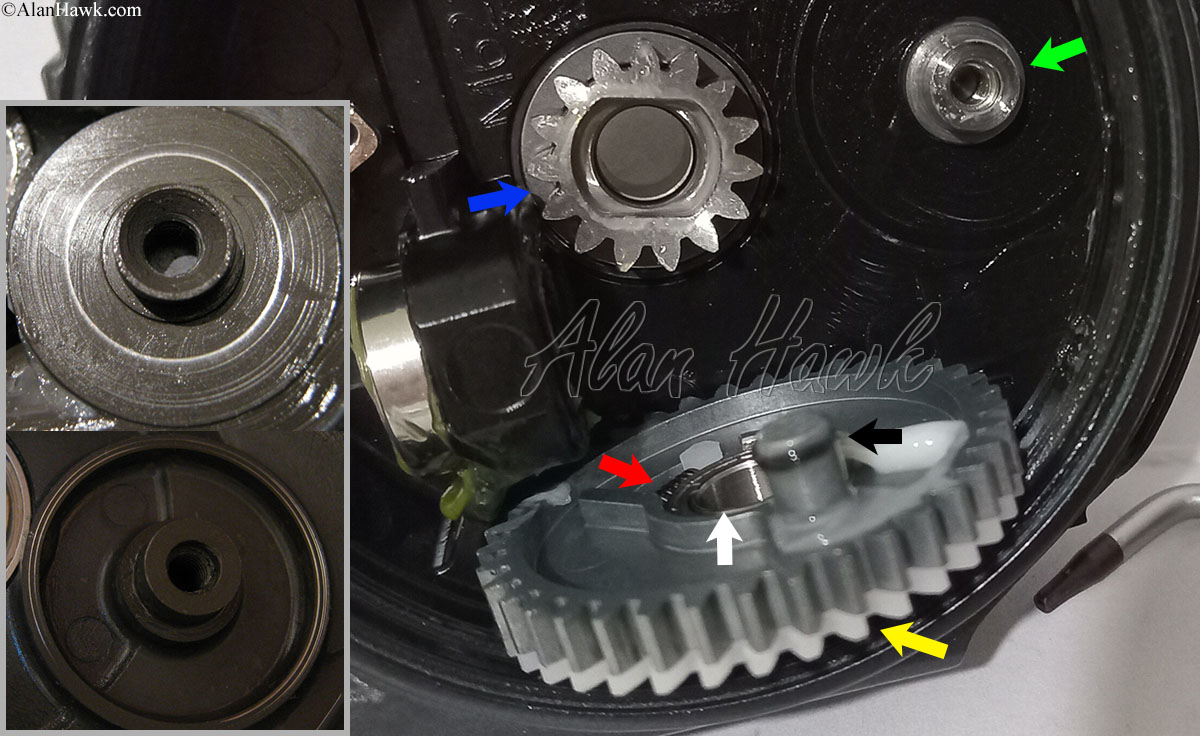
This spacer. The previous reel had a similar spacer, but its bail arm was retained in the traditional fashion by an external screw that threads into the metal of the rotor, allowing a small breathing room that prevented binding either between the reel's own parts or due to foreign contaminants. In this new design though the bail arm is sandwiched between the "hidden" screw on the inside and a bolt from the other side (inset), which when screwed together fully press the bail arm against the spacer, and when left unmoved for an hour or so they bind. The video above shows how that binding creates a slight resistance to the initial movement of the bail until the binding audibly breaks and parts separate, then all works smooth for the subsequent attempts.
Binding and such trivial nonsense aside, this method of bail arm retention, a bolt and a screw, is stronger than the classic screw threaded into the cast aluminium of the rotor. I don't see this extra strength being utilised, though, since the classic setup could already withstand any stress brought on by the reels' maximum drag, and by a multifold margin. At any rate, this fortified bail arm retention doesn't require the screw to be on the inside of the rotor arm, and it would actually be even stronger if the screw is inserted externally and its correspondent bolt internally. I believe that this reversal was purely for the sake of Daiwa's "sans-screw" obsession.
As an aside, the 2026 Certate SW uses this exact same bail arm retention, but its rotor is made of carbon infused plastic (Zaion), therefore it does benefit greatly from the screw being captured by a metal bolt instead of by threads in the plastic itself. Of all the second tier companions of Saltigas throughout their history, this 2026 Certate SW is the closest to the flagship reel, and in my book it even surpasses it in some aspects, but that's a subject for another article. Back to the review....
The other end of the bail arm has the first genuine spark of genius in this reel, no compromises this time. It's actually so creative that on my first encounter with it I thought it was something else completely;
I was looking at a disassembled 2025 Saltiga on display before the reel was made available to purchase, and wondered why they didn't fully disassemble the bail arm. Moments later I went on to hold the actual reel, and the full force of its brilliance finally hit me....
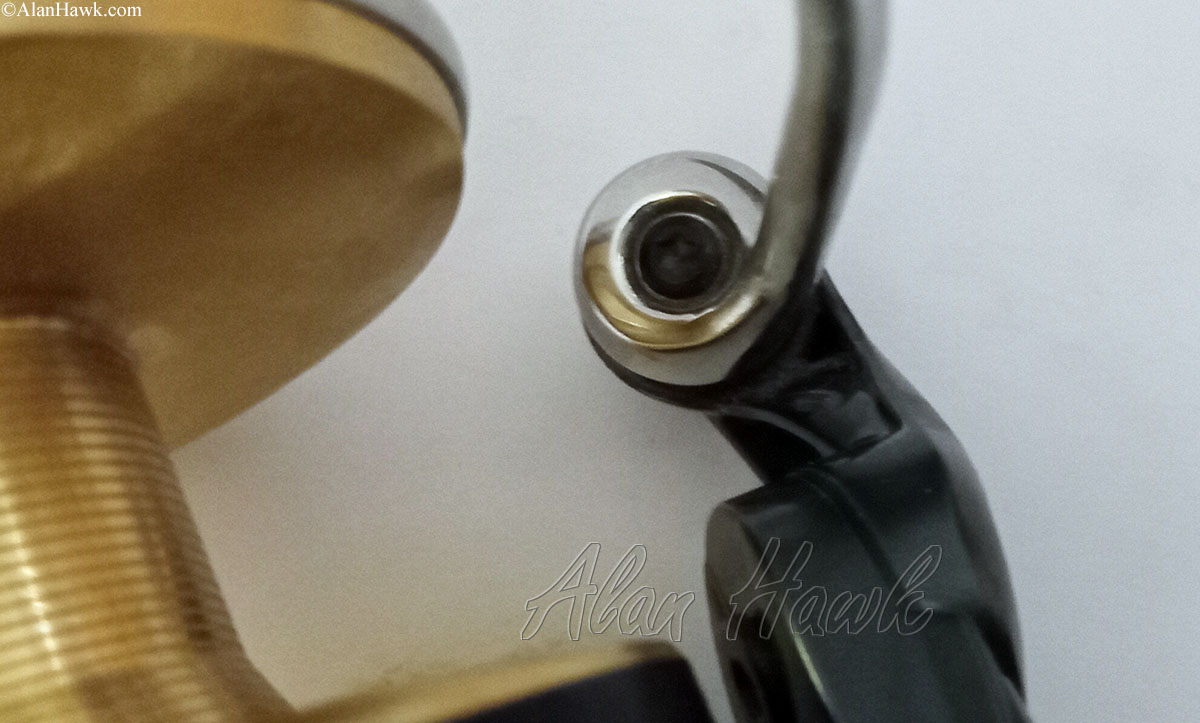
The line roller of the 2025 Saltiga sits on a bolt that's permanently attached to the bail arm and can't be disassembled, and the retaining screw (blue arrow) only has the task of preventing components from sliding off while it bears absolutely no load. In the previous design (inset) the roller sat on a part of the separate bail wire that was then attached to the bail arm by a screw, so when a fish pulled at high drag settings almost all the force was borne by the threads of the screw and the entire assembly was as tough as those threads are. This powerful pairing of the bolt and bail arm in the new Saltiga is done individually by hand by Daiwa's top technicians assigned with the manufacturing of the Saltiga and Exist, then each piece is checked for any cracks that might have developed in the process. No one can claim that this new Saltiga is cutting any corners, and I'd actually say it's "adding corners", to coin a new phrase.
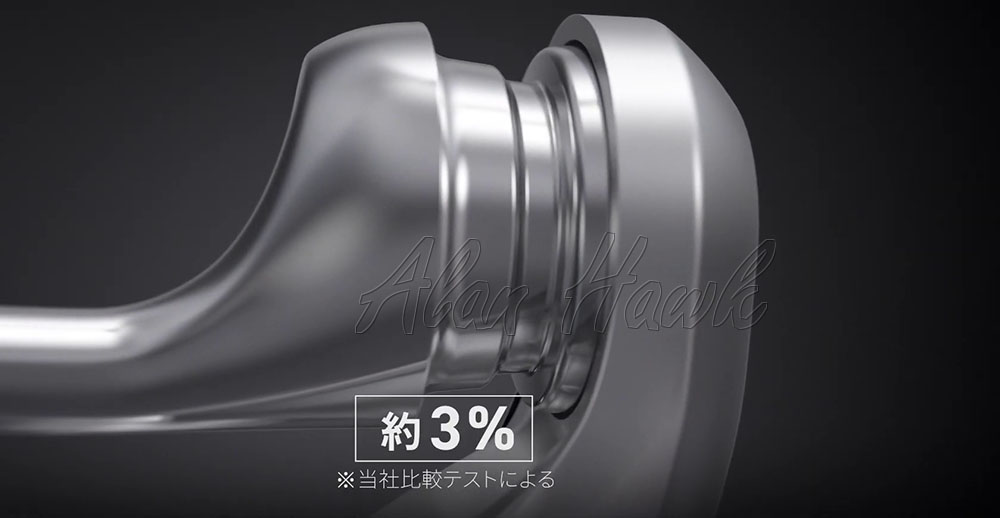
The mag-sealed line roller was redesigned with a narrower line groove as an additional element of this bolstering; this groove keeps the line in a specific location right above the base of the bolt where the connection between that bolt and the bail arm is the strongest, guaranteeing maximum resistance to breakage at all times.
Daiwa's advertisement states that this redesign of the roller "reduces line sliding resistance by 3%" compared to the previous open line roller, something I personally find silly beyond words. Yes, the sliding of the line on the old open roller did happen as the oscillation dispersed line to various locations on the spool etc., but looking at the major forces affecting the line one can't help but see its sliding on the roller as negligible. Pay attention here, they didn't even claim to have completely eliminated this vanishingly small "line sliding resistance", rather only reduced it by 3%, meaning 97% of it is still there!! I want to know who comes up with these gems. I understand that the actual benefit of this redesign is too complicated for an advertisement aimed at the general public, but I'd rather they said nothing than boast about some secondary effect in which a near-to-zero thing became nearer-to-zero by a whopping 3%.
Back to reality, this upgrade is actually meaningful, because I've seen cases where the standard roller assembly failed due to metal fatigue in the screw over repeated cycles of high load work, often accompanied by the everpresent palming of the spool that pushes the reel beyond its design limits instead of letting the drag release line to relieve the stress once it reaches unsafe levels. Some reels counter this by increasing the size of parts or using sturdier alloys for the screws, but the new Saltiga effectively turns the page on the whole matter, ending any and all concerns regarding roller robustness once and for all.
And before anyone asks, no, that's not remotely similar to what's on the Stella SW. There is a vague visual resemblance due to a component being inserted from the opposite end of the Stella's roller, but the two setups are completely different structurally. I hate to see Daiwa's flash of brilliance being treated as a stolen idea, something I've actually witnessed in a video from Japan which I initially included but later removed because I'm not out to embarrass anyone.
Another noteworthy change in the bail; in previous Saltigas the exact same bail arm was used in both medium and large reels, therefore it had a "universal" shape made to work with the very different geometries of reels from 8000 to 20000. For the 2025 generation though, Daiwa gave each size class its own bail arm, proportioned to it and shaped to become a closer match to the dimensions of the spools in each class. Therefore instead of a single fit-all bail arm we now have one for 8000/10000/14000, a different one for 18000/20000/25000, and the 30000 reels get their own bail arm as well.
This allowed the bail arm to be bent and twisted to bring the line roller closer to the spooled line, with the roller's angle tuned for a more uniform line pull from all areas of spool, top and bottom, shallow and deep. The previous bail arm couldn't be this customised in order to maintain its universality for more than one size class with the wider differences in their spool dimensions. This both enhances drag's initial responsiveness as well as smoothens the sustained line release that follows. Daiwa isn't the first to adopt class-specific bail arms, but they did an excellent job with it.
This detail, like many others in this review, has not been mentioned in promotions or specifications and never discussed by Daiwa or anyone else anywhere in any language, and that's what you get in return for your patience as I get fully immersed into each project, not only crossing oceans to keep catching fish in all seasons of the year but also researching deeper and speaking to more people than anyone is willing or even capable of doing. Please keep this in mind next time I ask for an extra week or two so you'd find it in your hearts to forgive my tardiness and grant me that.
One final thing about the bail, it opens so wide a seagull can fly through it during a cast. Not really, but that bail opening is on a whole other level, no doubt aided by the new bend in the wire. No leader of any thickness or level of springiness is going to hit that bail during release.
The standard drag that comes in 8000/10000/14000 sizes of the 2025 Saltiga is a top stack design, with carbon fibre brake washers impregnated with Daiwa's specially formulated ATD grease, all revolve on two ball bearings. This drag is lifted straight from the 2020 model, in which it came in all sizes, and it's also the same drag of all sizes of the 2026 Certate SW except without the ball bearings.
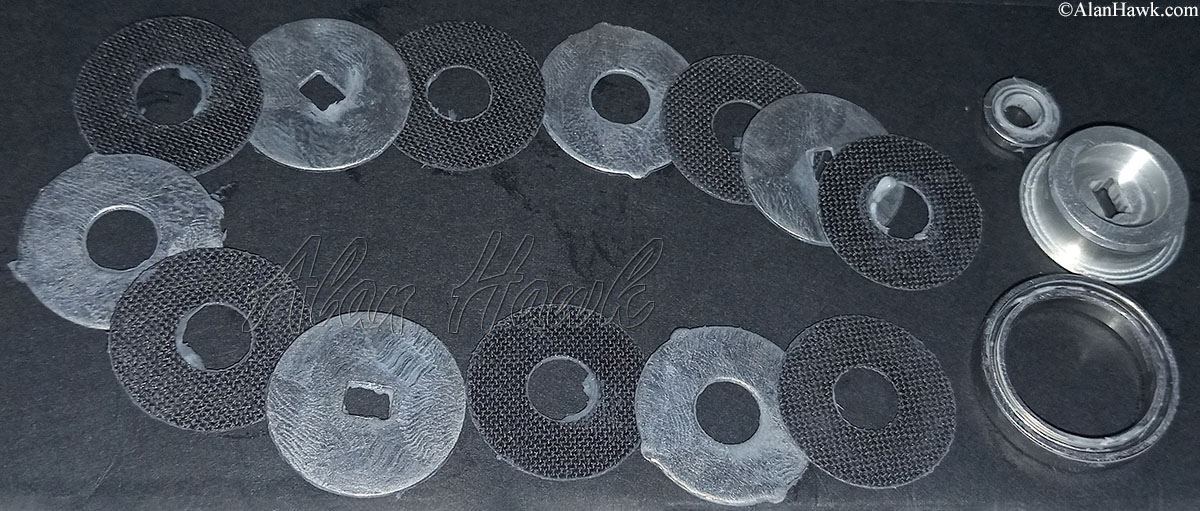
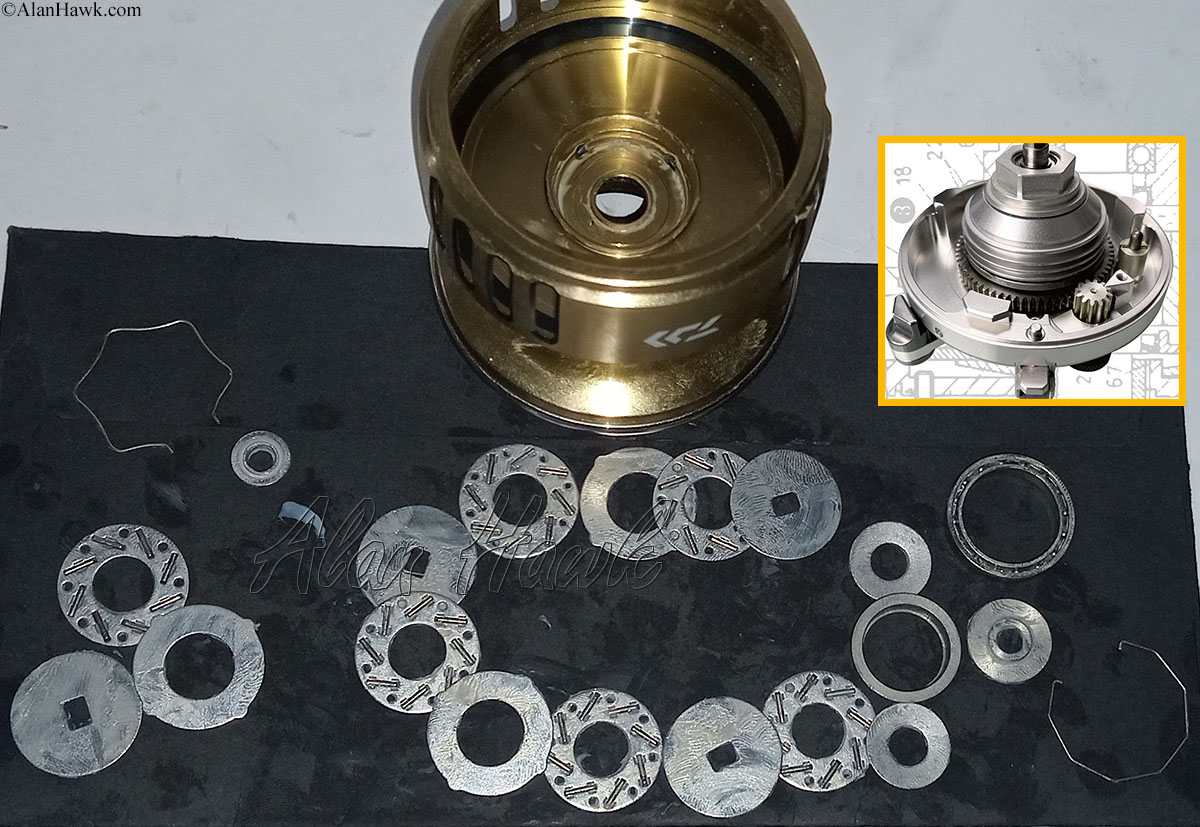
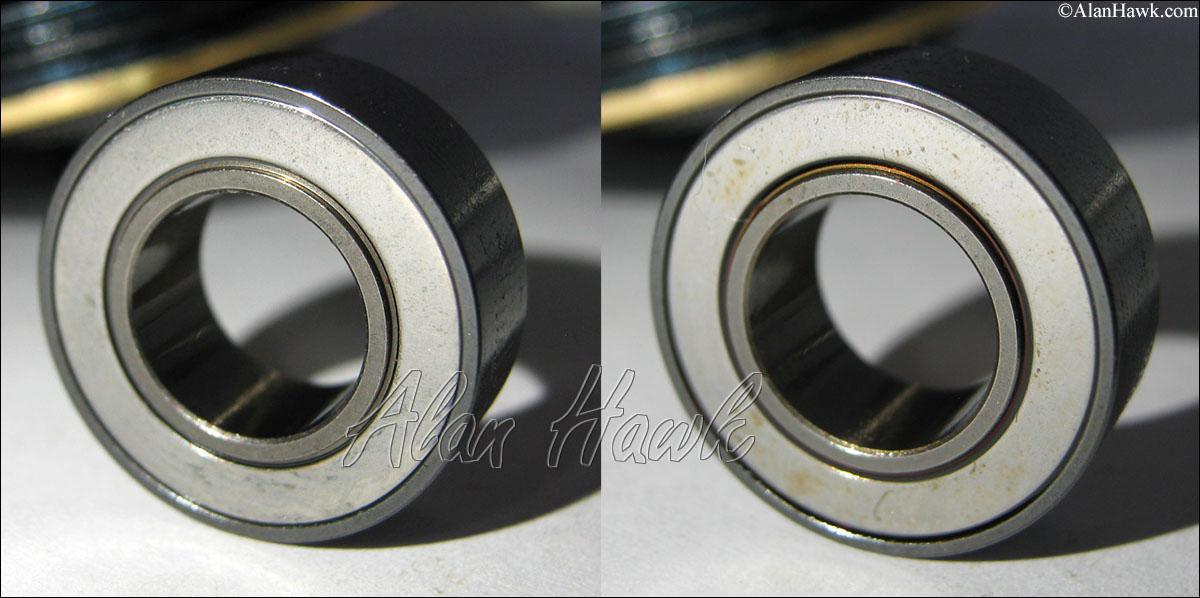
Starting left and going clockwise; the large diameter ball bearing topping the drag stack, it's open without shields but it should be alright because it sits in the protected sealed area. Next is one of the carbon fibre brake discs, soaked in the ATD grease and the excellent condition of its directionally uniform tightly woven surface signals that it still retains substantial service life. One of the highest quality brake discs available anywhere. And lastly, the small flanged ball bearing that sits at the bottom of the stack, fitting into its machined recess with such precision that it requires no retainers.
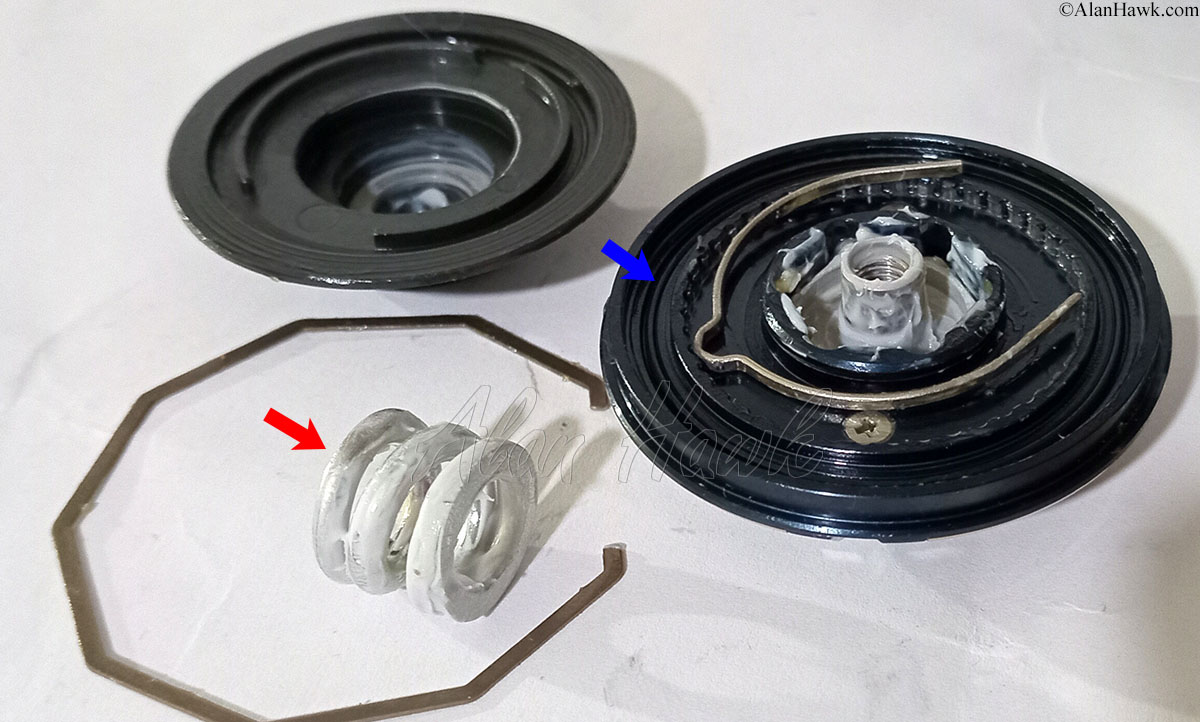
And here is the correspondent ATD knob that comes with this drag. It's powered by a coil spring made to Daiwa's specifications with finely tuned characteristics (red arrow), and it has an internal seal (blue arrow) which protects the components of the knob itself from water intrusion. More on that later.
I fished this ATD drag mostly at the beginning when the upgraded DRD spool hadn't yet been released, and later on I still brought it along and used it, although at a lower frequency as I focused more on the DRD. This ATD drag showcases Daiwa's mastery of the art of top stack, a setup that they stuck to for decades due to its simplicity and lower weight, and continually tweaked and enchanted it until it reached what I consider the absolute peak performance possible for a top stack, boosted by the ATD grease which lets brake discs monumentality slip at the beginning of action to virtually eliminate the spike of overcoming static inertia.
With the ATD spool and knob, I measured my 2025 Saltiga it to the full 25kg (55 lb) of claimed maximum drag at home, and on the water it performed both flawlessly and beautifully, recalling the pleasant memories of fishing the ATD in the previous model when the world was losing its mind and I was getting dirty looks for not wearing a mask while fishing on the rocks at least 10 metres away from any humans.
The new DRD drag, the most interesting and equally perplexing feature of these reels, or lets say "half of these reels" since they are a paid option for the other half. As I pointed out in my early commentary on this reel, the principle of a fully metal drag utilising rolling elements for braking without fabric or synthetics is not new, having been adopted by Ken Matsuura in his "Tuna & Marlin" series of conventional reels decades ago (inset). However, Daiwa's interpretation of the concept here has enough originality for me not to protest if they call it their proprietary design. I'm going to describe and evaluate it in the next few paragraphs, but it requires a fresh mind so now might be a good time to take a break and get some coffee if you're in America, tea if in Australia, or lassi if in Britain.
The braking washers here are metal ones, with 8 angled rollers mounted on each, made of high hardness stainless steel. The rollers are retained via the industrial process of staking, the deformation of the surrounding metal plastically (past its elastic limit) and pushing it over the rollers to retain them. On one side the rollers are retained by 4 such strikes (left), and on the other by 2 strikes (right). The manufacturing consistency employed here truly boggles the mind; half a millimetre shift and the disc is ruined, too much pressure and the roller gets jammed, too little pressure and the roller falls out, all at such a microscale. Any Chinese OEM manufacturer will have a very tough time attempting to knock this off due to the amount of precision it requires.
In Daiwa's animated video these rollers appear to spin smoothly, which might give the wrong impression that their action is exclusively rolling without any sliding....
.... but it can't possibly be that because if the rollers purely spin their path would take them straight out of the washer.
What actually happens is that the rollers simultaneously spin and slide across the surface of bare washers next to them, a dual action that is carefully calculated to produce the right balance between both then precisely implemented by angling the rollers according to the circumference they'll move across. If the rollers were placed closer to the centre of the washer their movement circumference would shrink and their angle would need to change accordingly, and if placed closer to the washer's rim their movement circumference would expand and their angle would need to change in the opposite direction to maintain the same balance of spinning/sliding.
It is the sliding component of this dual action that produces most of the resistance, "braking" for our purpose, while the spinning component of that dual action guarantees that this sliding happens at all, as well as distributes the wear evenly across the entire surface of each roller. Absent the spinning, the rollers would bite into the surrounding washers and no longer slide once enough pressure is applied to the system, effectively locking the spool, and if the spool somehow still manages to turn, the static rollers would wear rapidly and develop a flat surfaces rendering the drag twitchy and unusable.
Before explaining drag adjustment, I want you to do this basic experiment at home; get two identical glasses and fill them with an equal amount of water, making them roughly identical in weight. Wrap the bottom of one in aluminium foil, and the bottom of the other in a piece of paper. Now place both on a flat surface, put one finger near the bottom of each glass, and push to slide both glasses across the surface. Which one will feel harder to push?
You'll see that despite being of equal shape and weight, the one wrapped in paper will feel harder to slide on the surface than the one wrapped in foil. The paper here represents the traditional carbon drag washer with its fibrous surface, while the foil represents the DRD with its smooth metallic surface.
We generally understand that in order to produce drag resistance from fibre washers we need to "apply pressure", but to produce the same amount of drag resistance from solid smooth metal, that additionally has spinning rollers on its surface further impeding this tasks, the pressure we need to apply is orders-of-magnitude more it starts to resemble "clamping in a vice" instead of a simple "application of pressure". The distinction I just made is semantic, but I want you to bear this mental image for a fuller understanding of the dramatic changes made to accommodate this DRD drag, which I'm about to lay out;
The DRD knob is nothing like the ATD knob. None of the standard springs could produce the required "vice clamping" on the metal drag washers and still maintain any range of adjustment; coil or wave springs of a size that can fit here would fully compress producing only a tiny bit of total drag pressure, then the rest of pressure would build so quickly upon further tightening it becomes more of an instant on/off situation that's useless for fishing.
Instead, Daiwa employed Belleville washers, or "disc springs" as they might be correctly but less precisely called in this particular reel (red arrow). The conical geometry of these washers produces very high force with little deflection, here stacked in a "series" fashion where every two cones face one another to create some travel and impart a sense of incrementality to the process of clamping down on the drag washers. A special tube was necessary for this knob (blue arrow) to contain the individual washers and prevent them from slipping sideways when pressed.
They deserve a closer look, being entirely new to the Saltiga series.
The main shaft and the nut of the previous Saltiga would deform and fail if pushed to act like "vice jaws" on this DRD drag, so in a rare move Daiwa upgraded the stainless steel alloy used for these two parts to become significantly tougher yet not precariously brittle.
With everything now in place, the system could finally clamp down on the DRD with enough force to produce usable drag for the Saltiga, but with major compromises in both feel and function;
Turning the knob of DRD drag feels significantly harder than anything we're used to, from beginning to end not just near the end.
The knob has very limited travel (range), where it goes from producing the first hints of drag resistance to full drag in about 1.6 turns of the knob in this 14000 spool. For perspective, the standard for this class of reels with a similar maximum drag is ~3 turns. Deciding these two points, "first hint" and "full", can vary from one person to another based on their own perception of what constitutes each, so the contrast between this reel's 1.6 and the normal 3 should matter more than the actual number of turns since both were estimated by the same person, myself.
Those 1.6 turns were not consistent even to myself, because one of the drawback of Belleville washers is that as they flatten under pressure the friction between their edges causes load loss and variability between cycles, meaning each knob movement follows an unpredictable and irreproducible drag progression curve that would be different the following time the exact same action is repeated. That variation is insignificant when turning the knob a few clicks here or there, but when measuring the full travel (range) from start to finish these small variations add up. That's why I'd once get 1.6 from start to finish, then I get 1.4 the next attempt, followed by a 1.8, etc.
The characteristics of Belleville washers are highly dependable on alignment and lubrication, and while Daiwa did a great job soaking them in grease there would come a point in the future where they'll need re-lubrication or drag control would become less manageable.
Within those ~1.6 turns, the increase in drag output is not even close to linearity; once the first hint of drag engagement is felt, very little increase of drag happens during the first ~half turn of the knob, then the second half turn is the closest to normality where drag increase becomes faster and follows the knob's movement more closely, but for the final ~0.6 turn of the knob the drag progression spikes sharply and each click of the knob causes a larger jump in drag output.
Finally, the internal clicks of the drag knob which serve as a felt indicator of how much one moves the knob, fade and almost disappear in the final 1/3rd of the knob travel due to how heavy this travel becomes. The knob's internal clicker still works, but you won't feel the resistance of its cute little detent when you're using elevated force to move the knob in that final 1/3rd of its travel, essentially barreling through it. It can still be heard in a quiet room, but out on the ocean the sound is useless and it's the feel that counts, and that feel is no longer detectable in the final third of DRD knob travel.
The DRD washer stack is topped by two additional Belleville washers in a tube (red arrow), with a transfer disc (blue arrow) that delivers the downforce from the drag knob to them. These Belleville washers have the additional and more crucial task of distributing the force evenly across the entire surface area of the DRD stack.
A bit of elaboration;
While releasing line under high drag pressure, the spool goes through rapid cycles of tilting back and forth on the shaft as the line gets pulled from both extremes of the spool. That tilting is quite small since it's limited to very minor manufacturing clearances within the mounting components, including within the ball bearings themselves, nevertheless it causes the downforce from the knob to be shifted around to certain areas of the washers due to their tilting instead of being evenly spread across their entire area. Fabric brake discs compress to absorb such positional fluctuations and maintain an even spread of downforce on the stack, but the solid DRD components can't do that therefore the two Belleville washers were needed to do the compression and compensation, which they do effectively because they move in unison with the drag stack unlike the ones in the knob whose movement tracks the main shaft. Without them the DRD would act twitchy under elevated drag settings.
During prototyping Daiwa tried a straight swap installing the DRD components in an exclusively top stack arrangement just like the ATD, but that couldn't produce the desired maximum drag output. More DRD components were needed, but there wasn't enough room for them at the top, therefore the divider wall (red arrow) was moved upwards creating enough space beneath the spool for more DRD components (blue arrow), narrowly maintaining the mandatory spool compatibility with the previous model. With this Daiwa gave up its signature top-stack-only arrangement, which stretched back to even before the first Saltiga, although the DRD drag remains fully housed within the spool's arbour not to stray too far.
Now, spool compatibility conditions should become clear in your mind and easy to memorise; the body of the 2025 Saltiga 8000/10000/14000 can accept the 8000/10000/14000 spools of the 2020 model and they'll work normally with the ATD drag knob that comes standard with these medium 2025 Saltigas. The body of the 2025 Saltiga 18000/20000/25000 also accepts 18000/20000 spools of the 2020 Saltiga, but expect faster drag progression than usual because the DRD drag knob that comes standard with the big 2025 Saltigas delivers immediate elevated force as explained a moment ago, since it's specifically made to clamp down on the solid DRD plates. None of the 2025 spools work on the 2020 bodies. That's good news for sales; keeping your old reel and buying the latest spool for it isn't as profitable.
The 14000 (SLP-Works) spool has 6 roller brake discs, one of which is at the bottom. The 18000/20000/25000 have 8 roller brake discs, also one of which is beneath the spool. And the 30000 has 10 of them, one of which is similarly at the bottom.
It's important to highlight how the approach of the Saltiga 30000 to the drag question markedly differs to the common practice;
As mentioned earlier, when other brands do a 30000 size, they usually take a 20000 reel and widen the spool but leave its height unchanged in order for that 30000 to use the body and oscillation of the 20000 reel. The height remaining the same, the 30000 spool naturally gets the exact same drag components of the 20000 size, leading to a reduction in maximum drag since the larger radius of the spool gives the line more leverage against the same drag components. For example the current Stella SW outputs 30kg (66 lb) of maximum drag in 20000/25000 size, but the exact same drag components produce only 27kg (60 lb) in the wider 30000 spool. Other 30000 reels, like Okuma's Makaira, also produce lower drag than the 20000 they're based on but they don't always list this difference and erroneously claim that both output the same maximum drag.
The 2025 Saltiga 30000 on the other hand has a dedicated body with its own larger oscillation mechanism, therefore the spool increased in height as well as width, allowing them to insert additional DRD discs in it and make it genuinely produce as much drag power as the 18000/20000/25000 reels. I'm not suggesting that anyone needs or can hold on to 30kg of drag standing up, that's a whole other discussion, I'm only pointing out that this Mammoth 30000 Daiwa produces actual Mammothian drag numbers.
Speaking of which, the 180000/20000/25000 Saltigas do achieve the claimed maximum drag numbers, so does the 14000 DRD spool on the medium reels. I'm using the unnatural term "reach" instead of saying their maximum is as advertised, because they actually exceed it, with ease. Before continuing I'm instructed by my legal aid to say the following:
The following describes my personal experience with the reels and is not a recommendation or instruction. I do not endorse using the reels outside the manufacturer's specifications or warnings. Exceeding the manufacturer's stated drag limits may result in equipment damage, serious injury, or death, and anyone choosing to do so assumes responsibility for the associated risks.
As usual, I tested the maximum drag output using weights at home since I do not anticipate a fishing scenario in which I could actually use the advertised 25kg (55 lb) of drag. I do it in the reel's most vulnerable state with the spool fully extended forward and the bail arm at the bottom for maximum bending moment on the shaft and stem, and I start below the advertised number to get a sense of how the reel is handling it before I increase the weight. During past tests of other reels I stopped before testing the claimed maximum because I could see that reels were almost at the failing point and couldn't possibly survive the manufacturer's claims.
My 14000 DRD took 17kg like it was nothing, 20kg without breaking a sweat, passed the advertised 25kg feeling like there was still a way to go, 28kg went well, then I finished at 29.5kg (65 lb) but my gut told me 31kg (68 lb) was a possibility. in case you're wondering where Daiwa lists the maximum drag for the 14000 DRD spool, here it is
Not on the main Saltiga listing since the medium reels come with the ATD drag, instead it's on SLP-Work's site where this DRD upgrade is listed among other custom spool options for the series. Anyhow, I learned two things testing the maximum drag of the 2025 Saltiga;
The new shaft alloy is an engineering wonder, resisting bending in a way that I have not come across before in any reel, including ones of the next size class. I wish I knew what the alloy was and how it was processed and/or treated to achieve this remarkable stiffness. I tried, but I don't always obtain every bit of information I desire, particularly when it's protected as a trade secret whose R&D cost the manufacturer money and time.
The drag knob doesn't have a solid limit for how far it could be tightened, thanks to the aforementioned toughness of the new main shaft and knob's nut. Usually, continuing to turn the knob past what should be its natural stop causes the threads to enter the phase of elastic deformation, and if not immediately relieved permanent plastic deformation follows then failure occurs. These parts are so immensely strong on the new Saltiga I only stopped turning the knob because I no longer could unless I gripped it with more fingers and the innards of my thumb which is unnatural and outside the scope of normal use. I have my gripes with this reel, but it's so ferociously strong it takes my breath away. You know I don’t throw around those kinds of words lightly.
This brings us to the final element of the DRD drag, the grease....
Grease can play a significant role in standard carbon fibre drags, but it's not vital and dry carbon drags are indeed a thing, although not as common today as they once were. For DRD though grease is life-sustaining, think of it as oil for an internal combustion engine. A braking system where hard metal is pressed against hard metal is prone to overheating and accelerated galling, and without an efficient lubrication system both its performance and lifespan would be atrocious. This is quite different to car brakes where the pads are made intentionally softer to become sacrificial.
The DRD grease sold by Daiwa is composed of perfluoropolyether as base oil in a polytetrafluoroethylene thickener, with smaller percentages of additives to inhibit oxidation and wear. The exact ratios are proprietary and I couldn't obtain them, and frankly if I did I would probably not share them for ethical and potentially legal reasons. I'm here to have fun, not to commit industrial espionage. This grease's most valuable quality is extreme heat resistance, highly critical in this tightly pressed full metal drag, and I found it to have an unusually strong adhesion to metal surfaces. This grease keeps the DRD running smoothly and durably reducing friction and providing the best possible conditions for the rollers to keep spinning across a wide range of temperatures. If these ever stop spinning a fuse will have been lit and carnage will be imminent.
Just like motor oil, the explosive environment in which this grease operates takes its toll and causes it to break down faster than any other lubricant in the reel. Due to this rapid rate of degradation, Daiwa made the unprecedented move of expressly asking the owner to do regular disassembly, cleaning, and relubrication of the entire drag unit, top and bottom, using their DRD grease.
They follow up on that with the option to still send it to Daiwa, but considering the frequency at which this drag service is required, sending it to Daiwa each time sounds so impractical it almost feels like a joke to suggest it. What's the definition of "frequently" here? Well, that's what I methodically tried to establish for a year;
The manual suggests that fishermen should clean and lube the DRD drag components each time 2000 to 3000 metres of line get pulled under 10kg of drag pressure. In American speak that's 2190 to 3280 yards of line leaving the spool at 22 lb of drag.
This advice is impossible to follow in real life; no one engaged in active fishing can continuously estimate and keep track of how many metres left the spool while fighting each fish then add it to the total accumulated since the last drag service, let alone know and record the drag pressure each length of line was pulled at then compute an adjusted number relative to the "10kg" figure. Meaning if a fish does a 15 metres burst at 12k of drag upon initial hooking then drag is reduced to 8kg after the fish had been pulled away from the wreckage where it does a 10 metres run, how am I to relate 15m/12kg and 10m/8kg to the 10kg figure in the manual? The former should definitely compute to a final number larger than the actual 15 metres, and the latter should end up being smaller than the actual 10 metres, right?
Now let's assume that you fished with a dedicated team filming both the line leaving the spool and drag knob position then feeding the date in real time to a mobile processing unit that analyses it all then outputs a combined total number that had been scaled and corrected to the 10kg figure, should I do it at 2000 metres, or carry on and do it at 3000? Giving such a large range where one figure is 50% higher than the other is on its own problematic to me. If your mechanical watch manufacturer tells you it must be serviced after "20 to 30" years of use, the advice is of no practical value.
Having dismissed the concept of expressing drag service frequency numerically, I decided to just fish the new Saltiga with the DRD spool with as much intensity as I can muster and let reality be my guide. To understand my approach, it's important first to understand what the DRD is supposed to offer over the traditional drag it replaces, so let me make a quick sanctioned digression for which I don't have to apologise as usual;
Fabric brake discs made of heat resistant materials, like strands of carbon, provide efficient grip when cold, then as temperature rises that grip is reduced while the lubricant works to keep the drag running smoothly by spreading pressure more evenly to all components in the system for heat suppression. If heat rises beyond a certain point, which varies for each specific design, the increasing temperature begins to cause "brake-fade" due to thermal effects on interface physics, mainly oxidisation and the melting of the compound holding the fibres together. Those fibre brakes are essentially resin-bonded friction materials, and even the highest performance resin will melt in intense heat causing the brake discs to break up into loose fibres. That's what we usually describe as "molten drag", which is only partially accurate since no fishing reel can generate the heat required to melt carbon fibres but the compound holding them does melt leaving behind clumps of stuck fibres buried in loose ones.
The 2020 Saltiga was extremely powerful, yet a reader once wrote to me seeking alternative spools after he "melted" the drag of his 18000 dropping bait to enormous bluefin tuna. Told him that his best bet was the Studio Ocean Mark 23000, a spool designed specifically to handle heat both with special washers and radiation systems, whose drag I considered the most powerful in the world until recently. He wrote back later that summer saying that a tuna turned this spool's drag into a hairy mess resembling a roadkill opossum, which I found amusing because he was European and opossums are North American, but anyhow I told him to quit messing around and get a Tiagra because some fish are way too big for spinning reels.
Now that you know what really happens to fibre drags when pushed past their limits and how it manifests itself in fishing based on actual occurrences rather than vague rumours or inaccurate hearsay, you'll grasp what Daiwa is trying to achieve and see the logic of their approach; the DRD has no components that can melt, its solid components should resist brake-fade better, and no matter how hot it gets it will not lose its structural integrity. They claim the DRD is 5 times more durable than carbon fibre drags, meaning 5 times better during a single fight rather than the overall service life as they told me at a show, and I was eager to put it all to the test.
To do it properly, I needed to change how I fish; I usually try to suppress heat build-up and keep my spools relatively cool by fighting at higher than average drags to limit a fish's ability to make extended runs, and it seems to work alright. It could be argued that shorter runs against higher drag produce similar heat to longer runs against lower drag, which is a sound reasoning, but going by my observations on the water I found that a tighter drag limiting bursts keeps the spool cooler. Could be because this allows breaks in which heat dissipation mechanisms get to work, but regardless that's what I found to work on all but a small number of reels. Been meaning to change this for a while in order for my tests to reflect how a wider swath of fishermen would use the reels, considering that I can only fish those elevated drags because God blessed me with a capable physique that not everyone has. The DRD provided the perfect vehicle for me to usher in this shift in style, and I was eager to see what comes of it.
Offshore, I fished the new Saltiga almost exclusively with artificials, poppers, jigs, and spoons, staying away from natural bait not to risk getting spooled by a fish that's too big for this medium reel, losing both expensive braid and valuable fishing time. No matter how powerful a reel is it remains restricted by line capacity and a 100 kg fish has a 50-50 chance of stripping away the 300 or so metres on my spool if it swims away from me. Therefore my main catches were Greater Amberjack ranging from 14kg (31 lb) to 35kg (77 lb), the former is actual weight because I harvested a few in accordance with local laws and the later an estimate since ones too big to consume on board were released in the water. There were a few dozen Narrow Barred Mackerel and Bonito among other species, but Amberjack was my top choice to test the DRD at settings between 8.5kg (~19 lb) and 12kg (~26 lb), figures I reckoned most people would actually fish instead of my usual fighting drag which I'd say is roughly 40% more.
When freshly serviced and greased, the DRD is such a unique experience. It doesn't have the slipping start of the ATD, yet it's not needed because the DRD is inherently less susceptible to spiking than its fabric counterpart due to reduced contact surface internally. Instead of rubbing resistance, the resistance of the DRD resembles pulling against weight, clean, instantaneously response, and superbly consistent across all stages, start, release, and stoppage.
In terms of heat management, this is one of the less common cases where everything the brand claimed is true. For hours I'd hook fish that made multiple consecutive runs of 15 to 25 seconds each, eternity when holding on to 11 or 12 kg of drag, and the DRD never became unpleasant to touch or gave me reason to be concerned about braid melting. At its hottest I felt no meaningful decrease in braking due to that heat, and most of the time it was actually the exact opposite where the drag resistance increased as line level dipped due to the smaller lever arm rotating the spool. In many cases that increase in drag is balanced out by the decrease caused by heat, but the DRD is almost unaffected by heat therefore the drag may seem to tighten as line level dips, requiring me to back off the knob by a click or two. It's very unusual and I fully expect that people will be split over it, nevertheless it establishes that Daiwa fully accomplished what they set out to do, for better or for worse.
I began the above description of the DRD with "when freshly serviced and greased", because the grease begins degrading, albeit extremely slowly, the moment the drag gets to work. After catching a few tough fish the drag will feel ever so slightly different, and if you don't perceive it initially you certainly will after landing another bunch of them. At that point it remains a top class drag that's fully reliable, but it's no longer the same. As the drag continues to work, there will be a time when its behaviour verges on distribution and you'd know it's time for another cleaning and greasing. For many months I tried to find a sensible formula for the DRD service intervals, but it proved unattainable due to the many variables involved and the countless usage scenarios that can accelerate the degradation. I think Daiwa too gave up on this, because when they released the Saltiga 30000 they made a very revealing remark;
The 30000 coming a year after the rest of the series, they had heard the feedback about drag degradation and decided to add this unprecedented note about irregular drag feel on the main listing of the reel of all places. This isn't a standard reminder to look after your reel because these don't belong on the main listing. You don't see them saying "rinse your reel" or "oil the bail joints" on that page, do you? This is a most abnormal action necessitated by the unprecedented high-maintenance of the DRD.
That remark on the Saltiga 30000 listing outlines the advice I had intended to give; forget the 2000-3000/10 nonsense, and instead get to personally know the DRD and develop your own sense for how it's feeling and sounding, and based on its behaviour decide for yourself when it's time to clean and lube it.
Anecdotally, to see what that whole "2000-3000 metres at 10kg" thing might look like, I harvested this one on a drag that I intentionally kept at ~10kg, using every bit of mental capacity I had to instantly estimate and add up the line it pulled throughout the roughly 4 minutes fight with the aid of the colour coding on my braid; allow me a huge margin of error of +/- 10% considering the task at hand, and it would go something like this; 3 initial bursts of 15-20 metres each, let's average that to 17.5 and multiply it by 3 for 52.5 metres, then on its way up from about 80 metres deep it made 6 or 7 more runs of 5-8 metres each, let's average both and write down as 6.5 x 6.5, then as it broke the surface and saw my ugly face it did a 5 metres dive before it got into the circle of doom and got gaffed.
That's a total of 100 metres for this one fish, and that morning alone I had already released 3 larger ones, so if one makes the very reasonable assumption that had the same conditions been observed each would have pulled ~150 metres, therefore a very loose estimate would be 550 metres out by that afternoon, which is ~28% of the smaller 2000 metres figure and ~18% of the larger 3000 metres figure. This means I'd need a drag service in less than 4 days for the lower 2000 metres figure, and in 5.5 days for the higher 3000 metres figure. Doesn't sound very practical, does it?
But what exactly does this much-referenced "service" entail?
Everything top and bottom needs to be pulled out, noting the parts' order and orientation, paying maximum attention not to scratch washers or bend the roller discs, and making sure the wire retainers aren't switched since the top one is different to the bottom one. Everything then needs to be cleaned, discs carefully examined for dislodged rollers or ones showing signs of flattening, DRD grease applied, and components reassembled double checking the full seating of the two ball bearings and the correct sequencing of the Belleville washers' sub-assembly which I circled in the image above.
So far I've been refraining from voicing strong opinions and instead asked you repeatedly to make what you will of whatever I'm showing you, but this time I have to express my firm view that it's an overly complicated procedure that crosses a threshold between reasonable asks of handy fishermen and complex tasks requiring qualified people. Asking an owner to install a different handle shaft or pop out a seal then snap it into the opposite side to change winding hand is one thing, but it's a completely different matter to demand a full dismantling of such an intricate mechanism, a single oversight in whose reassembly could cause a sudden seizure potentially squandering the fish of a lifetime and damaging the reel to such an extent repairing it would cost nearly as much as a new reel.
Actually let me stay in the "strongly opinionated" mode as I boil down how I feel about this drag to a few concise points;
The DRD is a radical departure from established designs with genuine merits, and I wouldn't dismiss the idea that it might be the future of big game spinning reels drags, but in my opinion it's not ready for the market yet due to the number of compromises required for its adoption in its current state. If one fishes a DRD Saltiga exclusively or even most of the time, he might develop the muscle memory to absorb the heavy knob adjustment, its limited range, and even the unpleasant drag curve within that limited range, and over time feel as if all of this is the norm. The ability of the human body to adapt is amazing. The frequency at which the DRD needs to be serviced though is not something that can be gotten used to as easily, or perhaps not even at all.
Over the next few years, I see myself answering fishermen who ask me whether or not the DRD is for them with a question of my own; would your intended fishing certainly demolish the drags of every Stella SW, Makaira, 2026 Certate SW, or even the Slammer 4 of Authority which aren't in the same league but close enough? If the answer is no, which I speculate would be 99.5% of the time, I'll tell him to get something else or hold on to his 2020 Saltiga if he has one. If he replies yes, then I'll tell him to buy it and include the standard pointers for mag-seals care along with a link to Daiwa's DRD service video for convenience.
This video, which is a very useful tool for learning the DRD service procedures, yet I couldn't help but smile seeing how it treats such a major undertaking so lightly with fun music playing in the background. Kinda reminded me of the pharmaceutical TV ads they run in America where they show happy people having fun as calming music plays, hoping to distract viewers from the list of side effects they're required by law to read. Typically goes something like this:
"Does your nose itch and you have to scratch it sometimes? Ask your doctor about MISCOZA". *relaxing music plays, young people kissing, dog running with children in a park, elderly couple looking at their black and white wedding album* "Common side effects of MISCOZA's include headaches, insomnia, impotence, sudden death, and itchy nose. Call your doctor if you become blind or your kidneys explode, and seek immediate medical attention if you feel an urge to cook and eat your pets" ♫ "MISCOZA, stop itching, start living".
I digress, though....
In my opinion the DRD feels quite analogous to early electric cars, which were heavy, more dangerous in an accident, and required successive charging between the limited mileage. When they came out they were heavily promoted as the best thing imaginable, and journalists who raised concerns faced career-ending consequences, but now we know they were right after several automotive brands were found by courts to have lied about mileage and charging and illegally hid the risks. Were these without a single real advantage? No, they still accelerated better than most established supercars, just like the DRD undeniably surpasses any spinning reel currently on the market in heat resistance.
The real question with those early cars was not whether or not they had some advantage, but rather whether that advantage was worth the many compromises or not. The real answer for those early cars was definitely not, and in my view the answer for the DRD in its current state is the same, unless you're in the infinitesimally small niche of fishermen whose fishing sets every other drag on fire. I can say this without fearing career-ending repercussions because I'm a bum who has no career or any prospects, and I'm still struggling to understand why you folks would want to hear anything I've got to say. At any rate, Daiwa is known to commit to their novelties, unlike Shimano who backed down from the parallel reel foot after a short stint, so I expect the DRD to stay and maybe even "trickle down" to cheaper models in the future, as they improve it significantly for future Saltigas. I can see such improvements including rollers located further away from the centre of the disc, more of them per disc, refining alterations to their angles, and maybe further down the road a dramatic overhaul that sees the DRD discs completely departing from the arbour and doubling or tripling in size to grip a much larger surface for lower burden on both the rollers and the grease.
The DRD is an ingenious concept that has great potential, but I feel that it needed more time to mature behind the scenes, not in the hands of fishermen.
The 2020 model had the loudest drag clicker to ever be on a spinning reel, and it was carried over into the 2025 model virtually unchanged. The spring-mounted hammer runs across the black plastic gear (inset), emitting those resounding crisp "strikes" that very much resemble those of a big conventional reel, which during my testing of the previous model I counted on to wake me up when I dropped bait at night and slept next to it. Its unmatched loudness mainly comes from being positioned at the top of the spool, as opposed to being beneath it partially quietened by the skirt, but the knob plays an important part as well;
By having a deep seal (red arrow) that sinks in and seals the top of the drag well (blue square) beneath the clicker (green square), thus leaving that clicker unmuffled with nothing obstructing the travel of its sound waves.
I explained drag seal types in detail in previous reviews, but here is a quick rundown for these new to this site;
There are mainly two styles of drag seal, early seal that closes off the spool entirely (left), and deep seal that protects the drag at or near its well (right), each has its strengths and weaknesses. An early seal makes cleaning easier because saltwater never enters any part of the spool, the drag knob does not need its own internal seal since its mechanism sits in the protected area, but early seals are bigger which creates more friction with the spool subtly interfering with the drag. A deep seal is smaller therefore has less friction with the spool, it allows better heat dissipation, but it lets saltwater enter the top section of the spool making cleaning slightly harder as well as necessitating an internal seal inside the drag knob to protect its mechanism since it sits in the exposed area. I showed you that internal knob seal earlier in the review.
The drag clicker does not operate when the knob is removed, because it's the knob that activates it via these two protrusions (red arrows). Caution must be exercised therefore when installing the knob, not to press one of these two protrusions into one of the 6 teeth of the clicker ring (blue arrows), which sounds tricky but not really....
The two protrusions line up with the rounded parts of the main shaft, so one needs to make sure none of the clicker ring teeth is facing the rounded parts of the shaft before installing the knob. This has been stated in the manual of the 2020 model and is pointed out again in the 2025 model's manual (inset), but I felt like highlighting it because judging by the amount of dented clicker rings I've seen on 2020 Saltigas not everyone reads the manual.
Not that I get to feign wisdom. I knew it pretty well, yet I still dented one of the teeth on my ATD spool. I'd feel embarrassed had I been a normal person, but this is pretty typical of my idiocy which I've long since made my peace with. My poor Saltiga now has a dinged clicker *sobbing* waahh!!!
The plastic cover of the clicker received 6 cuts in this new model, whereas it was solid in the 2020 version. Shows Daiwa's dedication to the democratic proceeds, because this change was 100% driven by user grievances; the clicker being outside of the sealed area it needed to be rinsed to get rid of any saltwater residuals, but being almost enclosed meant that rinsing water was slow to dry and even after leaving the reel to dry overnight some droplets remained beneath the clicker cover.
Having initially approached this with an open mind, I've now spent enough time using the 2025 Saltiga to decide that I don't like these new cuts. Yes, they do speed up the drying of rinsing water, but they also allow more saltwater to get inside the clicker during fishing. Which one should be prioritised? I weighed these two against each other using a simple question; in which environment am I in more control, out fishing the reel or at home rinsing it? I certainly have less control over what happens to the reel during fishing, therefore I would rather have the solid cover to keep as much saltwater out as possible then I will deal with the slower drying later at my leisure. I can always let the reel dry for several hours after rinsing, then remove the drag knob completely to hasten the drying of the clicker.
You might not believe me, but I reached this reasoned conclusion that I dislike the cuts even before I discovered the following;
Upon disassembly and close inspection for this review, I found debris and deposits beneath the cover, outside the protected drag well, in the ATD spool (left), which I can't prove to be the fault of the new cuts but I never saw such a thing in the previous model. To the right, I found a bug that crawled into the DRD spool and died! Daiwa is being too responsive to buyers' requests, but they can't just do whatever they're asked for willy-nilly. I mean would Daiwa fulfil my request to insert a hardened steel spike at the back of the Saltiga's frame? Would make the reel a useful self-defence tool if I ever want to fish loathsome third world dystopias where violent crime is no longer policed such as Niger, Eritrea, and Britain. If you won't spike the reel for my sake Daiwa, then don't turn the clicker into a bug nest for the sake of other people.
The other end of the spool is protected by a seal mounted on the hub (red arrow), both parts coming straight from the 2020 model to maintain spool compatibility. My reel came with one shim (blue arrow), on top of the default shim (green arrow) which must never be removed to avoid seating the spool on the bare metal of the hub. Some users of the 2020 Saltiga would remove all shims, so Daiwa made a small change in this 2025 model by making the hole in the default shim rectangular (inset) unlike the round hole of removable shims. This rectangular hole makes it much harder to take out, and it signals to people that it's different to the shims that could be removed and added.
The corresponding spool recces that receive the seal to perfectly shut water out of the spool, ATD spool left, and DRD spool right.
Even before I ever touched a 2025 Saltiga, the second I saw a picture of the back of the DRD my mind constructed a three dimensional model of the reel and I immediately spotted what in my opinion is one the worst design defects I've seen in a flagship reel in almost 10 years. Take a deep breath because what I'm about to explain to you should make anyone who cares about engineering or sound design squirm in pain.
It goes without saying that in order for 2020 spools to work on 2025 bodies and preserve compatibility, the seating of the spools had to be dimensionally identical. Here is a representative cross section of the 2020 Saltiga (left) and the 2025 Saltiga ATD (right), both have two shims, the default shim + one standard shim. Everything is perfect.
Here we have the 2025 ATD to the left and the DRD to the right. To retain the DRD components at the bottom of the spool, a wire retainer was added, here presented in red in the right image. The spools' seating height couldn't be touched because the reel's body should work with both the 2025 ATD spool as well as the 2020 spool, therefore that added wire retainer had to encroach on the space between the spool and the hub. It is not a problem with two shims installed, the default, plus one.
Things take a bad turn though if the owner needed to remove one shim to tune the line lay; the 2025 ATD spool (left) works great, just like the 2020 spool would, but the DRD spool (right) faces an issue where the wire retainer that took up previously clear space comes in contact with the seal on the hub, presented in green.
I know these reels in all their iterations like the back of my hand and I was fully confident in the mental image I formed of this issue, yet I remained patient because the reels weren't being sold yet.
I then went to Japan and held the cutout 2025 Saltiga, and saw with my own eyes that the space between the hub seal and the DRD retainer was much smaller than a spool shim, meaning that indeed once the spool sits on a single shim the retainer will sink into the seal. The one in my hand in the above image is the big size class 25000.
Still, I'm more responsible than to make noises or even make a final judgement based on pre-production reels, so I continued being calm and patient until they go into serial production and I get to see what the actual retail purchased reels are like. The following is just that;
Here is my medium class 14000 Saltiga 2025 with the DRD spool, both serial production retail purchased. I fully cleaned the hub seal and the back of the spool, and brought out some Quantum Hot Sauce grease because I needed its distinct red colour to show you a neat trick....
With two shims on the hub, the default shim + one normal shim, I rubbed some red grease onto the surface of the hub and its seal, making sure I leave only a film of grease on the surface of zero height. Meaning the grease does not rise even a fraction of a millimetre. I then inserted the spool and turned it once, and checked how the wire retainer of the DRD looked....
With two shims on, the wire remained clean, never coming in contact with the hub seal or any parts on the shaft. To confirm, I wiped the wire retainer with a cotton bud and got nothing on it (inset).
Next, I removed one shim and left only the default one, then inserted the spool once more and gave it a spin.
Can you see the red grease on the wire? It definitely made contact with the hub seal, and I took an imprint of the wire on the cotton bud just to leave no doubt (inset).
What I've just shown you is not how I personally verified that contact does happen between the DRD retainer and the seal when one shim is installed. I verified it in multiple ways, including clearly feeling the rubbing when I removed unrelated parts and felt it with my hand. The red grease experiment is done for your sake so you'd have visual proof since you can't feel it.
Don't let anyone fool you and claim you're supposed to leave two shims on the hub. The manual clearly states that only one shim is mandatory, something that anyone who ever used a spinning reel already knows but here is a screenshot anyway just to leave no room for deceptive claims. Actually, even a fictitious requirement to keep two shims is not the loophole and escape they think it is, because it still means that a user can only raise the spool but if he needs to lower it in order to tune the line lay he's out of luck.
How bad is the rubbing between the DRD retainer and seal with one shim installed? That's the wrong question and it does not matter at all. Let's say the interference is almost negligible and eventually the wire will wear a path for itself into the seal reducing the interference to a practical zero, is this still not a reckless design shortcoming that should never be in a reel of this stature?
It's not just the seal that's being rubbed here, because this rubs me in the worst way possible. I've seen all sorts of faults testing reels, but they were almost always oversights that the manufacturers missed during design, manufacture, or quality control, or issues that their testing was insufficient to expose only for it to appear once the reel is in the hands of thousands of anglers worldwide. This time, and while it's only my feeling and I have no proof of it, it is my opinion that this one was not "missed" but instead "ignored" by Daiwa.
I feel this way for two reasons; first, it's as glaringly obvious as it gets. You can't possibly convince me that when they decided on the makeshift solution of placing a spring wire in the space between the spool and hub to retain the DRD components, whose placement at the bottom of the spool was in itself a makeshift solution, they didn't ask themselves "why did we ever leave this space to begin with?". They definitely know that they left this space to allow the spool to be lowered by the user if needed, and it's only logical that when they placed a wire in it they immediately understood that spool lowering would be affected.
The second reason I feel like this is, do you know what is the single reel in the entire series that doesn't have this problem? The 30000, the only reel that isn't restricted by the requirement to accept 2020 spools. The window between the release of the 30000 and this review was incredibly small, yet I fought tooth and nail to get my hands on one and familiarise myself with it before I wrote this article. I wasn't allowed to overstress or disassemble it, but checking interference between the retainer and hub wasn't a problem, and that one size had absolutely no issues there.
It's exceptionally ironic that since the very beginning of the Saltiga in 2001 the shimming has been messed up, not excluding even the 2014 Expedition which I highly praised overall yet still criticised its spool shimming, then finally after almost 20 years, or actually 22 years since the terrible shimming originates in the Saltiga's predecessor the Team Daiwa X of 1998, they fixed it to absolute perfection in the 2020 edition, but only for 5 short years before they reverted to a faulty shimming, as if it's their comfort zone or something.
I know some folks see me as some sort of a "professional" who should bottle up any personal sentiments, but this is not my profession and I set up this free site to share my passion with the world, therefore I'm not stepping out of line when I tell you that this greatly upsets me. I love spinning reels, they give me immense joy both as companions in my adventures on the oceans and as showcases of intricate engineering and manufacturing skills. I want each and every reel from all brands to be brilliant and special in its own way because this only elevates my joy and permits me to tell you cheerful stories instead of depressing ones. I don't wish to avoid negative outcomes because I fear the backlash, the mother of all of which you're about to witness once this review gets around, but rather I don't want negativity simply because positivity feels better, and this whole sport is first and foremost about feeling good. I could've bought enough fish to consume for the rest of my life for less than half of what I spend on tackle and trips in 6 months. What I'm seeing in the flagship reel of one the world's leading brands disheartens me, and I certainly expected better.
The first half of the "floating shaft" system, in which the main shaft is isolated from contact with the pinion to reduce power loss to friction and allow the reel to work smoothly when under heavy load; the main shaft is isolated from rotational friction with the pinion by a ball bearing (red arrow), whose outer race spins with the rotor leaving its inner race with the shaft inside it stationary. A separate bushing is positioned between the main shaft and the inner race of the bearing (blue arrow), whose low friction surface allows the main shaft to slide in and out during oscillation smoothly....
This bushing is made of stainless steel, just as it was in the 2020 Saltiga. That was a departure from the original floating shaft system designed by Shimano decades ago and copied by everyone else, where this bushing was a synthetic one for minimal friction.
Daiwa decided that the 2020 Saltiga had enough inherent smoothness that switching to a stainless steel bushing wouldn't make a noticeable difference, and that switch has been retained for the 2025 model. It's smooth indeed, naturally more rugged than any synthetic alternative, but I couldn't tell how much difference it makes in actual fishing action since the switch debuted in a completely new design, leaving me with no frame of reference to compare it to. Had the switch happened between the 2010 and the 2014/15 models I'd have had the needed reference since both reels are built on the same foundation.
Anyhow, I inset a photo of the shaft inside the pinion with all components of the floating shaft removed to show the large space separating the shaft from the inner wall of the pinion. How neat is it that the shaft floats in there, remaining perfectly centred in that space no matter how heavy a load it is subjected to? The Japanese have some truly crafty ideas.
Beneath the rotor, the main mag-seal of this reel keeps water out of the pinion/anti-reverse assembly, and since it's the biggest and most visible one I'll pause for a second to explain the concept; the plate pointed by the red arrow houses a circular magnet and has a small reservoir at its centre, it fits around the pinion's sleeve (blue arrow) with a small gap between them, then this gap gets filled with a special liquid called ferrofluid (green arrow) which becomes suspended in the magnetic field filling the gap and forming a barrier against water while permitting the sleeve to spin freely.
The ferrofluid responds to the magnet this way thanks to its composition of iron particles embedded in a heavy liquid carrier in the presence of a compound that prevents those particles from clumping together. A very neat technology that Daiwa first debuted in the 2010 Certate then it expanded to a large number of other models, and it reshaped the existing rules by fully eliminating friction since there is no physical contact between any sealing elements, which is the same reason it doesn't wear out with hard use.
These unique attributes come with unique precautions. The liquid seal could be easily damaged by contact with lubricants or solvents, and while it's unaffected by the amount of use the ferrofluid has a lifespan of about 4-5 from time of manufacture regardless of whether or not the reel is used, after which it breaks down needs replenishment with Daiwa's own formula. Over the years I experimented with alternatives, and found none to have the viscosity, magnetisation, or retention of the one Daiwa has made to their specifications. More on this later.
The one-way anti-reverse clutch (blue arrow) sits right beneath the mag-seal. It's the familiar Japanese made NSK clutch used in all Saltigas since the beginning, and even before the Saltiga in the Team Daiwa X of 1998 which had two of these clutches in size 6000, the biggest one and equivalent to today's 20000 size, so that one acts as a backup for the other. With such a long established track record of reliability it came as no surprise that they sought its service in this newest Saltiga as well.
The main ball bearing is retained by a plate held down by 3 screws as usual (red arrows), but for the first time they added a 4th screw for the retainer in sizes 18000 and up. The Saltiga Z had a different setup with no dedicated retainer, but starting with the 2010 generation all sizes had a retainer with 3 screws. This time they added an extra layer of reinforcement for the big ones. I call it the "main" ball bearing since it's the one keeping the rotor attached to the frame and it handles great amounts of forces radially and axially, so it's understood that they want to strengthen its retention. I have to say though that I've seen some large Saltigas from previous generations that were put through rigorous work yet in none of them did the 3 screws fail to hold the plate down. Not complaining at all because the 4th screw doesn't hurt, I just see it as unnecessary.
When the bail is opened, a lever (red arrow) protrudes and digs into the rubber brake ring (blue arrow) to stop the rotor from turning during a powerful cast. Since the lever is powered by the new stiffened spring, it digs into the rubber with increased force producing a uniquely powerful rotor brake. All 2025 Saltiga reels have a manual bail closure, meaning the bail will not close by itself if the rotor spins during a cast, still I appreciate having such a reassuringly powerful brake even if its inclusion is not vital.
The extensively hyped aluminium "power drive rotor" out, and on the right a view of its back showing the double reinforcement of the rotor's "neck" by triangular rises cast integrally into the rotor. This area is where the rotor connects to the rest of the reel, and it's subjected to immense stresses that could over time fatigue the metal, develop microcracks, sink the nut on the other side into the rotor's metal, or even break it outright if the reel is pushed far past its limits. These are not theoretical scenarios, rather things I've seen over the years in heavily used reels of different brands, although the fatigue and nut sinking almost always happened in reels used on charter boats. The double reinforcement of the Saltiga's rotor has been battle tested and it does a great job.
The hidden screw of the bail mechanism's cover is reached through the cuts in the rotor. Some quirky stuff right there.
Jest aside, this "power drive rotor" is the true culprit behind the felt loss of power once there is any resistance on the line. I told you how this phenomenon caught me off guard during my initial shore outings, and that perceived loss of power continued offshore and became even more discernible now that I'm no longer interacting with the seabed. It's essential not to misconstrue this as me saying that the 2025 Saltiga lacks winding power. It remains extremely powerful, but the startling ease of turning the handle, suggesting that it made leaps over the previous model all but vanishes on the water, because it wasn't a result of a boost in winding power but instead a symptom of the shockingly low inertia of this compact rotor.
For our purpose, "inertia" would be the resistance of a rotor to changes in its rotational state. A high inertia rotor that's stopped would require more effort to begin spinning because it wants to remain stopped, but once it spins it gains high momentum that makes it want to keep going, and stopping it would require high effort. Conversely, a low inertia rotor that's stopped requires very little effort to begin spinning, and once spinning it can be stopped easily by a small resistance due to little momentum. Of course I'm talking specifically about "rotational inertia" and "angular momentum", but I'm dropping the identifiers to keep things simple.
The inertia of the rotor depends not only on its mass, but equally on how that mass is distributed relative to the centre of rotation. Meaning we could have two rotors one of which is slightly lighter than the other, yet the lighter one would have more inertia due to its weight being spread further away from the centre than is the case with the heavier rotor. The rotor of the 2025 Saltiga is certainly shaped to concentrate weight close to the centre of rotation, therefore the very low inertia that makes it start spinning with such astounding ease, yet once that rotation is resisted by the braid the rotor struggles to keep going due to its low momentum and the angler would need to input more muscle energy to keep it spinning.
The low inertia of this new "power drive rotor" felt like such an outlier to me that I located a 2010 Saltiga with a Zaion plastic rotor to compare, and in their fully assembled state with all parts attached to the rotors the 2010 Saltiga had a much better inertia/momentum balance in my estimation. I did not expect this.
It's true that Daiwa is free to assign whatever characteristics they want to any rotors, but the unwritten rules and norms dictate that low inertia rotors are desirable for light tackle where one seeks sensitivity to feel the vibration of small lures and the ability to do instantaneous rotor stop and go, but for heavy saltwater work sensitivity takes a backseat to the high momentum that provides assistance in retrieving heavier lures in turbulent waters and currents, whether it's the jerking of a jig in the deep or the sweep/wind rhythm of surface fishing. No reel will do the winding on its own, but a high inertia rotor provides the extra momentum that keeps the handle tracking your palm for a fluid continuous action at lower effort instead of being constantly resisted and forced to expend more energy to keep things in motion.
Do you remember how I earlier said that when this rotor design first appeared in 2022 I immediately dismissed it as a prelude to a new offshore Saltiga? I did that because I knew that such a low inertia design definitely belongs on an Exist, but it would be madness to put it on an offshore Saltiga. I can't think of a good reason why they'd choose to do this, which leads me to question whether that was really a choice or something they had to do in order to mitigate the increased weight of the swollen gearbox?
So, how come I felt more winding power from the 2025 Saltiga than from the 2020 model on the demonstrator pitting them against each other early last year, despite both reels being wound against weights? It was largely due the way weights were connected to the reels, via a sleeve wrapped on the spool which sled around the fixed spool when the rotor turned. That sleeve made full contact with the spool of the 2020 model, but only partial contact with the 2025 spool due to the pyramid at its bottom allowing it to slide much easier. The demonstrator wasn't intentionally set up to advantage one reel, it's just the way each reel happened to be built.
I said that it was "largely" the spool's shape because some of that felt power was owed to the handle's dimensions, something that needs a closer look;
The familiar Saltiga ambidextrous handle with a hidden fixed joint and a machined stem. No Saltiga ever had a cast handle, except the "Saltiga Blast" which was an attempt to milk the Saltiga name for cash, not a real premium reel.
The change in stem shape is purely stylistic without practical benefits, only permitting them to demote the stem design of the 2020 Saltiga to the latest 2026 Certate SW, similar to what they did prior to that when they demoted the stem of the 2015 Saltiga to the incoming 2021 Certate SW. Saves them R&D costs by switching to a tried and tested handle design for the Certate SW instead of creating a new one.
The compact rotor allowed the handle to be brought closer to the centre by 4 millimetres (0.157 inch). This is an authentic engineering success that's beneficial without any drawbacks; the closer a user's hand to the centre of rotation is, the more of his energy is converted into actual rotation, or in simple terms more winding power for the energy expended. It's easy to imagine the opposite case even if one doesn't fully grasp the dynamics; move the point of grip further away, and more energy would be diverted and lost on "twisting" the rod in the user's hand.
The Saltiga 30000 scores a win here over its competition; other reels create the 30000 size by exclusively widening the spool and rotor, therefore their handles have to extend farther away from the frame to avoid hand collision with the wider rotor. The 30000 Saltiga on the other hand expands both the spool's length and width, therefore the width is not as extreme and the handle can be closer than it is in competing reels, for higher energy transmission as outlined a minute ago.
Not as unblemished though is the ever expanding length of the handle, jumping up once more by 5 to 10 millimetres (0.2 to 0.4 inch);
2020 8000P 75mm -> 2025 8000P 80mm (+5)
2020 8000H 80mm -> 2025 8000P 80mm (only unchanged model)
2020 10000P 75mm -> 2025 10000P 85mm (+10)
2020 10000H 80mm -> 2025 10000H 85mm (+5)
2020 14000P 75mm -> 2025 14000P 85mm (+10)
2020 14000XH 80mm -> 2025 14000XH 85mm (+5)
2020 18000P 85mm -> 2025 (Not Released)
2020 18000H 85mm -> 2025 18000H 90mm (+5)
2020 (Not Released) -> 2025 20000P 90mm
2020 20000H 85mm -> 2025 20000H 90mm (+5)
Additionally, they abandoned gear ratio specific handle lengths in medium reels, where the medium 2020 "H" and "XH" reels had a longer handle than the "P" models to counterbalance the reduced torque of the faster models, now "H", "HX", and "P" models in each size have the same handle length. I have no problem with this in principle, but why the change? They seem to follow a specific logic in 2020, what did they learn now that they didn't know 5 years ago? I'm only bothered because it seems random and directionless, not the particulars of the change.
Anyhow, longer handles produce more torque for the same amount of work by the fisherman. The easiest way to comprehend it is to try to push a door open, once placing your hand near the hinge and once placing your hand near its edge. The longer handle of the 2025 Saltiga thus played a measurable role in securing a win for this reel over its 2020 counterpart on the aforementioned demonstrator.
Squeezing more torque from a reel with a longer handle sounds like a universal positive, but in reality it's a fine balancing act between various considerations, and it could end up being a net negative;
Don't take it from me, rather from the newly cautious Daiwa itself, where on the listing of the 95 mm SLP-Works power handle they warn that it could generate enough torque to damage gears. It's longer than standard handles, except the 30000 which comes standard with a 95mm handle, yet the principle remains sound, that forcing more torque using a longer handle could harm if not accompanied by a well calibrated strengthening of internal parts.
More importantly, and I'll add most detrimentally, a longer handle slows down the retrieve by sending your hand on a longer journey each time you give it a full spin. To visualise this, imagine yourself turning an extremely long handle as fast as you can vs an extremely short handle, then compare the time it took you to do a number of spins with each. I approached this latest lengthening of the handle with the same open mind I had in previous times, and having spent more fishing time with the 2025 Saltiga than any other reel in recent memory, I have to say the handle lengths just crossed the line separating the reasonable from the unreasonable.
I didn't complain about a 85mm handle on the previous model, but that was on the large reels which sit further away from the rod and have a completely different dimensional profile and proportionality matrix. It's a tad too much though for the medium 10000 and 14000, and it awkwardly fluctuated and slowed my rotational cadence, particularly maddening on the 14000 XH which is primarily designed for agility and speed with its 133 inch per turn retrieve.
You might hear the argument that an extra 5 to 10mm is too small to make any difference, but accepting this logic would mean that next time Daiwa adds 5mm to the handle I can say "it's too small to make any difference", then they'll add 5 more and I'd say the same, followed by 5 then 5 and another 5 until one day a future Saltiga will have a sound accompanying the winding like vintage reels, but instead of a mechanical buzz the sound will be "AW AW AW AW" as the angler hits his balls with each spin of the 600mm handle of that brilliant future Saltiga. Fishing would then become a female only sport, but even women would quit sometime before Daiwa releases the latest Saltiga with a 35 kilometres (22 miles) long handle whose use requires sending prior notice so they'd close the airspace and enact a naval blockade around your boat, and instead of sending it to have it serviced it would be cheaper for Daiwa to fly a team from Japan to your house first class every time you need to oil the bloody thing.
Alright I'm being a bit of a muppet here, but the point is if we acknowledge that there is a certain limit, we can't dismiss 5 mm increases because at one point crossing that limit would take just one more 5mm. I think that the latest 5 to 10mm lengthening of the 2025 reels' handles did just that.
Now let me present a question that I think you'll find pretty interesting, and one that I'm going to be asking a few more times today; if the handle lengths of this new 2025 model are good and right, why exactly didn't Daiwa incorporate them in the previous model? Was that going to make the 2020 reel too heavy and they had to hold back until they create a lighter model to take those longer handles? Not a bad suggestion, except it doesn't work here because the new reel is heavier than the previous one, so the question stands; if these lengths are really good, why only now and not before?
Another possible argument, "because the gears of the previous model wouldn't handle the stress of longer handles". Again not bad, but completely fails here because you'll see in a moment that the gear wasn't strengthened in practice, but disregard this because the argument still fails solely based on the 2020 model; if it's about gear strength, why only a 75mm handle on the 2020 10000P when the same gear could handle the 80mm handle inside its sister the 2020 10000H? Actually the P gear is even tougher than the H gear due to the helix angle, so why did it get a shorter handle? Additionally, look at the above image of the 95mm SLP-Works listing, which states it works on the 2020 Saltiga 18K/20K, meaning the gears of the 2020 model were strong enough not only for the handle lengths of the standard 2025 Saltiga but also for the extreme SLP-Works handles made for this new model.
I can't find a good explanation for not incorporating the longer handles in the previous Saltiga had they really thought they were any good, and the way I see it instead is that the 2020 Saltiga was a design that developed over 19 years with not just human ergonomics but more specifically fisherman ergonomics in mind, crafting a tool that worked intuitively as an extension of the body. The new reel, on the other hand, seems to me like a concoction of elements that lack interoperability rushed just in time for a "next model" in 5 short years, actually only 4 years per the original release plan.
What I've just said might sound too harsh over extra 5-10mm handle length, no matter how decremental and unjustified that lengthening is, but you'd only think that because you haven't experienced the coming together of these extended handles and low inertia rotor for the perfect storm of disharmonious cumbersomeness and underperformance. I'm constantly fighting against the rotor's nature and tendency to stop by dedicating more of my energy keeping it going, only to fight even more against the delivery mechanism of that extra energy itself, the handle, which sent my hand further away on a wider circle engaging more of my joints beyond just the wrist to involve increased elbow and shoulder action.
I tried various techniques and different rod holds over many months, yet I couldn’t slide into a rhythm or maintain a tempo and I found myself often feeling eager to drop the 2025 Saltiga and pick another reel that I was testing simultaneously. And boy oh boy, picking that other one right after putting the Saltiga down felt like calling the most intelligent person you know for a deep conversation seconds after dropping off your slightly retarded cousin whom you had to drive for an hour from an obligatory family meeting, during which he kept boasting how he can almost use the potty on his own only with little help from his sister. Don't expect me to say "but I digress", because I did not. I was accurately describing the experience with this Daiwa.
To wrap this part up keeping the matter in its proper perspective, I must empathise that you won't find the new Saltiga to be unusable or anything close to that. It remains a decent reel whose performance profile is very likely superior to 90% of spinning reels in its class, and if it's your only or most frequently used reel you'll soon develop familiarity with it and subconsciously normalise its characteristics. It just comes up short when measured against other elite reels or even its more balanced predecessor from 2020, something that I got exposed to as someone who fishes and compares various reels all the time, but the vast majority of people reading this will likely never be in a position to feel this Saltiga's relative inferiority.
The egg shaped rubber grip, here with its disguised screw removed allowing access to the two ball bearings it runs on, for lubing or to replace the grip with a custom one. The 8000P and 10000P come with aluminium ball grips, but for the rest of the series Daiwa went back to egg shaped rubber grips for the first time since the original Saltiga Z generation, in what appears to be another instance of superfluous Democracy; for the 2020 Saltiga Daiwa created what was to me the most refined egg grip of all time, fully made of hollowed out aluminium and without visible screws. I loved it madly, and found it to be a superbly practical hybrid of metal construction, usually associated with ball grips, and the palm-filling egg shape. Unfortunately, the expanded user base of the 2020 Saltiga complained that it slipped their hands, and Daiwa acted swiftly switching to a rubber one on this new Saltiga while moving that metal egg to SLP-Works catalogue as an option.
Not sure how people found the metal egg to be slippery yet not the metal ball found on both the 2010 and 2014/15 Saltiga and even all the "P" models of the 2020 generation. Actually metal ball grips are one of the most popular custom parts people buy for their reels, OEM and aftermarket, yet somehow when the ball becomes an egg they scream slipperiness! Well, out of the kindness of my heart, here is a quick guide for using the metal egg grip without it slipping in case Daiwa ever brings it back as standard;
1. Hold the rod with one hand
2. Don't be a girl
3. Hold the metal egg grip and fish, it no longer slips.
You're welcome!
Alright, I'm only being silly because I got attached to that metal egg grip, but if its shape makes it less secure in some people's palms they certainly have a legitimate complaint. Hands vary in size and shape and not everything works for everyone. Joking aside, the "rubberiness" of this grip falls right in the middle between the hard rubber of the 2001 Saltiga Z and the extra rubbery type Shimano typically use for their higher grade reels. So this new Saltiga's grip won't stick to your skin like glue as a Stella grip would, it is easier to clean and light rinsing was usually enough to remove all traces of bait or blood from mine.
The grip has two moulding spur marks, one on each side. Not at all a big deal and they'd be almost impossible to see without the lighting and photography angle, yet it reflects the fact that for 15 years Daiwa demoted rubber to the second tier offshore reels (Catalina, Isla, Certate SW) with the lesser emphasis on premium finish this entails. Moulding spurs are inevitable, but highest grade rubber grips often have a single one in the stem away from the palming surface.
A new Saltiga is always a feast for the numerous manufacturers of aftermarket parts, who release full catalogues of spools, handles, drag knobs, and grips. If something catches your eyes and you decide to swap the original grip, make sure to turn the disguised screw using the supplied tool clockwise to remove it, opposite to the common standard where unscrewing is done anti-clockwise.
Daiwa though does not supply the tool required to open the screw-in cover of the gearbox, which would’ve been a great addition since the cover comes off with no need to take off any other parts first. Would've made cleaning and lubing the gearbox a quick and easy task. I'm highlighting this as a missed opportunity for the first time here, because Daiwa now asks us to do a full service of the DRD, a rather more complex process than the simple unscrewing of the side cover, therefore I can no longer give any weight to claims that the gearbox should remain inaccessible to users because only Daiwa's "trained professional" have the skill to work on the reel
Actually, in factory state before I touched it, two of the three slots for the assembly tool had slight edge deformation (inset). These reels are assembled by hand where human error and fluctuations are unavoidable, but the flawless assembly of this cover and the opposite screw-in plate should remain a top priority. It's one thing to sloppily tighten a normal screw made of a tougher alloy and wouldn't even matter if its head gets lightly deformed, but it's a whole other matter to damage these expensive aluminium covers occupying a quarter of the reel's entire exterior.
The body is open, and shockingly it's made of a frame and a side cover despite Daiwa calling it a "Monocoque" and telling us it's "one piece"....
Here it is, from the horse's mouth. 99.9% of spinning reels have a two-piece body made of a frame and a cover, yet it's only Daiwa who calls that a single piece and gives it a fancy French name like "Monocoque". Anyhow, this is where I usually start making rude jokes, but I've grown out of this childish behaviour and am now conducting myself with dignity. I just have a question though, why is it that some Daiwa representatives go out of their way to pronounce it "mono-ko-walk" with a silent L? Is there anything particularly shameful with this feature's name? I mean after enlarging the frame even further on this 2025 model, shouldn't they be proud of the size of their "coque"? I personally would, but I'd be worried about the placement of the little hole because it shouldn't be in the middle of the stem! But I digress.....
Factually speaking, it's merely a screw-in side cover whose real advantage is not needing additional screws, therefore no material is wasted on housing screws around the perimeter of the gearbox and all available space can be used to house a larger gear. Just because threading the cover in feels "epic" does not mean it has become one with the frame nor that its load bearing behaviour is identical to an integral part of the cast body. Actually some standard side covers now surpass this screw-in type in terms of load bearing, but that's a whole other subject. Point is, the "Monocoque" frame has its advantages, but being "one piece" is not among them.
The huge frame was made to house this drive gear, which has swelled to monstrous proportions compared to the 2020 Saltiga's already colossal gear. Not only has it grown in diameter, but it gained in thickness as well. This extra thickness is presented as a net gain in gear strength, but my personal estimation is that the gear gained only the bare minimum amount of additional thickness necessary to maintain the same rigidity as the gear of the previous model.
Had the gear only increased in diameter but retained its original thickness, it would have flexed more because now the force applied on it by the pinion acts farther away from the gear's axle. Measuring this conclusively requires instruments that I don't have, but I'm going by both my mathematical approximation and my fisherman senses of how the gear felt over a year of fishing when I say that it gained enough thickness to maintain roughly the same rigidity as the previous model's gear but not to surpass it.
I showed you this photo before of myself holding the drive gear of the 2025 Saltiga (left) next to the one from the 2020 generation (right), and told you that the teeth remained similar in width and height but became shorter in the new gear. It's not very easy to spot in photos, but I held both and I could tell immediately.
That happened because Daiwa masterfully took advantage of the increased diameter to increase the number of teeth, which allowed them to alter the tooth angle for increased rolling action and less sliding. Sliding is inefficiently wasteful of energy, produces heat, consumes lubrication, and increases wear, and it needs to be minimised since it can't be fully eliminated from hypoid gearing. With the angles of the teeth adjusted for less sliding, the drive gear now disengages from the pinion sooner, therefore a certain length of each tooth became redundant and Daiwa shaved it off to save weight hence the shorter teeth. As someone whose entire life revolves around engineering disciplines, this standard of design and manufacturing leaves me awestruck. Decades ago this sort of precision was reserved for high value industries, like medical equipment, now it's in a spinning reel.
The improved tooth design is coupled with another efficiency-boosting feature that has become a Saltiga hallmark; the thin male gear shaft which allows the drive gear to be lowered closer to the centre of the pinion than in other designs with a thicker female shaft. Daiwa no longer mentions it in advertisement, but when it was first adopted in the 2001 Saltiga Z they aptly named it "Minimum Offset Drive Gear".
Minimising gear offset increases transmission efficiency and converts more of the user's energy into rotation. The offset can only be entirely eliminated in a bevel gear setup, but a bevel gear won't allow the gear shaft to extend to the other side for ambidexterity. Instead these reels opt for hypoid setups that always aspire to achieve the least possible amount of offset, and Daiwa does this to a degree of success that remains untouchable by anyone else in the industry at the time of writing.
We're not done with the gear shaft yet, because a unique event took place here; for this 2025 Saltiga Daiwa changed the stainless steel alloy used to make this drive gear shaft, which to the best of my knowledge is the first time it's upgraded since the first Saltiga series. The old alloy was already very tough making it costly and difficult to shape and machine, but Daiwa went even further with the toughness without regard for the extra difficulty and cost of working the metal. I never broke the old shaft so naturally I'll never push the new one far enough to test its strength, but it certainly has a firmer stop when the handle is fully screwed then when the handle is unscrewed it comes off in a crisp and clean break indicating little thread creep taking place during use. Just like the new shaft, this is one savagely stiff part that shows me what some of the extra money I paid for this reel went into.
Hardly any commentary is needed, but anyway this close up shows that each tooth meshes with the pinion across almost 100% of its entire surface, something I struggled to discern because the teeth remain in pristine virtually new condition as if the reel has not been worked hard for a year. Larger meshing surface translates to quieter running, longer service, life and extra strength since loads are spread over a larger area. The gear is machine cut to outstanding standards of accuracy from a special duralumin alloy that Daiwa researched with Japanese academics, which they call "G1". It made its debut in the 2020 Saltiga, replacing the C6191 marine bronze gear that had been at the heart of the Saltiga since the Z of 2001, and I felt quite content seeing it being carried over into the 2025 reel.
The machine cut marine bronze pinion would perform impressively no matter what, but its pairing with this drive gear yields this absence of any discernible wear. I'm sure some has occurred, just not enough to see with the naked eye.
The pinion is under constant pressure forward by this spring washer (red arrow) to eliminate play and secure instant rotor response. The play being cancelled out here is the internal play between the two races of the main ball bearing, the pinion being attached to the inner one. The second ball bearing of the pinion is pointed by the blue arrow, and right behind it is the synthetic bushing that lifts the main shaft and centres it inside the pinion without touching its walls. This bushing is the second and final part of the "floating shaft" feature.
I've just resoundingly lauded the gearing of the new Saltiga, describing subtle metallurgical and geometrical improvements that were never disclosed or advertised, and I'll even throw in two major superlatives and call the drive gear and pinion pairing the most efficient in all hypoid-geared reels and the most durable in terms of longevity. I would also put it among the 5 strongest of all time, meaning ones with highest resistance to breakage and chipping. Yet, upon some sober reflection, I find myself feeling that it wasn't really worth it considering how enlarging the gear triggered remedial alterations to other aspects of this reel that ultimately undermined whatever power this gearing produces for a final output that left me wanting while fishing it.
And I once again ask, if this gear diameter is so good and right, why didn't they go for it in the 2020 model? Had they just come up with a new alloy that's tougher and lighter than that of the 2020 model, it would've made sense just like the enlargement from 2014/15 Saltiga to 2020 Saltiga made perfect sense. But the alloy remains exactly the same, so if the current diameter is so good why didn't they adopt it the first time around? Did they hold back in 2020 until they had first made the rest of the reel lighter so that the larger diameter gear wouldn't increase the reel's total weight? They obviously didn't since the enlargement is reflected in the increased weight of the 2025 series.
In my assessment, they stopped at the dimensions utilised in the 2020 model because those dimensions were as far as they could go reasonably before everything goes out of balance. What changed therefore was not engineering or materials, but rather their definition of "reasonable" and what they think anglers would tolerate, most likely influenced and encouraged by the robust sales of the 2020 model. Continuing down this path means nothing is stopping them from releasing a new model in a few years whose supposed improvements are an even larger handle, gear, and frame, which will look bulkier, operate clumsier, and weigh more, but we'll be told it's even stronger. Guess who else can make anything stronger just by making it larger? Your retarded cousin. It takes no intelligence or innovation of any sort.
The wire activator on the drive gear (inset) fits into this pawl (red arrow), so that if the anti-reverse unit ever slips or fails and the handle begins spinning backwards, the wire on the gear slams this pawl down to engage the two ratchet gears on the pinion (blue arrow) stopping the rotor from turning backwards. This emergency stop would then continue to function like an older style ratchet anti-reverse, allowing the reel to continue fishing until one gets a chance to fix the anti-reverse clutch. Previously all Saltiga sizes had two ratchet gears on the pinion, but Daiwa debuted another reinforcement for this 2025 model in which sizes 8000 to 14000 have two ratchet gears as usual but sizes 18000 to 30000 got an additional one for a total of three ratchet gears on the pinion.
Failures of the Saltiga's highly dependable anti-reverse clutch are rare, but they do happen due to contamination, extreme cold weather, or age related wear hence this emergency anti-reverse just in case, and it's now strengthened even further in the bigger reels who'd normally be tasked with heavier duty fishing. I don't know what Daiwa saw in their repair centres to initiate the addition of this 3rd gear in bigger reels, but I personally feel it's quite unnecessary since I have not personally seen a failure of these ratchet gears. Instead, I wish they had reinforced the retention of the pawl that engages these ratchet gears which I've seen fail a handful of times during the 24 years of Saltiga's existence preceding this latest generation.
Now let's check the new "Roller Power Oscillation"....
Wow! So new it still has that smell of a new oscillation. I mean it's so new when I first saw it I didn't realise it was an oscillation mechanism and wondered why my Saltiga would have a cigar roller inside it! Not really, just making things up because apparently everyone now gets to fantasise and call their fantasies reality. This oscillation mechanism is not new....
It's the mechanism from the 2010 and 2014/15 generations whose oscillation block rolled on two ball bearings at the bottom, an earlier version of which first appeared in the 2001 Z model with one bearing at the bottom and one at the top (red inset). Daiwa used to name it "Silent Oscillation" (blue inset), then they abandoned it in the 2020 Saltiga for an oscillation block that glided on a rail rod, and now they brought back that "Silent Oscillation" only slapping the new name on it, "Roller Power Oscillation".
On the left, Daiwa's official release video for the 2020 Saltiga shows the rail rod oscillation being as good as any other component of that great reel. Yet when it was time to promote the 2025 model (right), the rod oscillation of the previous Saltiga suddenly acquired scary flashing red lights indicating friction, heat, wear, death, famine, and disease. Why wasn't it flashing red 5 years ago? There must have been recent scientific discoveries that allowed Daiwa to detect incomprehensible evils that weren't detectable by the old science of 2020.
It's one thing to claim that a current feature is better than a previous one, but it's complete disrespect when they retroactively portray what they sold us just a few years ago as problematic and lacking. If the rod design deserves to be flashing red when compared to the dual bearing rolling oscillation, then that rod should've flashed red in 2020 since it was replacing the dual bearing rolling oscillation of the 2014/15 Saltiga. Who's to say that in a few years when the next Saltiga comes they won't be retroactively covering this 2025 model with scary red flashes to sell the one that succeeded it? I guess we should just hold off buying now until it's replaced and we make sure it doesn't have flashing problems then we could buy. Utterly ridiculous.
Setting all this cartoon nonsense aside, I'll now tell you what really happened and why they're reinstating an old feature under a new name. I need to warn you though that if you're a Saltiga enthusiast who has so far tried to rationalise and excuse everything he saw in order to continue holding this reel in high regard, once you read the next few paragraphs you'll feel deep despair setting in and your soul will hurt. I know this because I'm first and foremost a passionate tackle enthusiast who's endured the feeling more times than he cares to count. Ready? Let's do that....
When Daiwa designed the 2020 Saltiga they wanted their classic ball bearing roller oscillation to carry over into it, but the rounder shape of its new "monocoque" frame eliminated the straight stretch at the bottom of the gearbox on which the ball bearings rolled back and forth. Adopting the roller oscillation in the 2020 reel would've necessitated extending that opening at the back of the frame to such degree it would become impossible to seal, therefore they begrudgingly abandoned that roller oscillation and switched to the rod system, something they seemingly resented doing.
Fast forwards, the ballooned frame of the 2025 model created more straight space at the bottom, potentially permitting the return of their darling roller oscillation, yet that space remained ever so slightly shorter than what's required to make it happen. Having come so close they weren't about to give up, so they made one final push with a decision that's so misguided in my opinion it makes the glorious pyramid itself look meticulously thoughtful in comparison;
They offset the entire oscillation mechanism upwards. I am seldom at such a total and complete loss for words.
Since the very beginning in 2001, every previous Saltiga had an oscillation gear that was centred to the shaft, the most efficient and strongest position, with the channel in the oscillation block split equally above and beneath the shaft.
Now that the oscillation mechanism has been offset, that channel shifted to become almost fully above the shaft, with only a small length of it right behind it.
If you have knowledge of simple mechanics you already know why this is suboptimal, but allow me to explain it in simplified terms for anyone who needs it;
If you need to move this car, which point among 1, 2, and 3 would you pick to push or pull at? Which point would be your second choice? And which would be your last pick?
I'm sure that you intuitively picked point "3" as your first choice, then "2", and point "1" came last even without knowing the exact mechanics. That intuition developed in your subconscious through thousands of life interactions with objects governed by the same principles, perhaps like the one in this simple demonstration video;
When I pushed right behind the stem all my work was converted to forward movement, then when I moved slightly away some of my work caused a smaller forward movement and some was wasted on rotation, and when I got even further away from the stem my work produced the least forward movement while most of it got wasted creating bigger rotation. Pulling instead of pushing produces the same result; the closer to the stem the energy is applied the more straight movement it produces and the less wasteful rotation will occur.
The shaft of the reel is trapped and can't twist, so what happens here? In ideal conditions where the oscillation block limb (red rectangle) is perfectly rigid and there is zero friction at the pivot (blue rectangle) the full force applied anywhere on the oscillation block should 100% convert to forward or backward movement without loss, but those ideal conditions are theoretical and don't match the reality here, where the cast alloy oscillation block is far from the "perfectly rigid" condition and there is, of course, friction between the shaft and the bushing at the pivot point. Hence, the further away from the shaft the push/pull happens the more energy loss will occur due to both friction at the pivot (blue arrows) and the moment of force generated at the bottom of the oscillation block's limb (red arrow).
Accordingly, while this setup will never be ideal because the point of force application will always have to move slightly away from the stem, the best possible arrangement for the least energy loss and maximum strength would be an oscillation gear centred to the shaft, allowing an equal split of the oscillation block above and below that shaft. Every previous Saltiga had that centred oscillation gear and an equally split block, because they know that this is the most energy-conserving and toughest possible design, yet it was all sacrificed in the 2025 Saltiga for the sake of bringing back the old ball bearings oscillation.
I've previously reviewed reels that had an offset oscillation mechanism and I didn't make a fuss, but these were budget or mid range reels from which I can't reasonably demand optimum design, unlike the flagship Saltiga which costs 4 to 8 times as much as those other reels and of which I have every right to expect peak engineering. It's paradoxically depressing that the Saltiga has always prided itself on minimising main gear offset, and this 2025 model is boasting about reducing the practically fictitious "line sliding resistance" on the tiny line roller by 3%, only to offset the entire oscillation mechanism and unleashing untold loss of energy. I have no means of calculating the reduction in efficiency due to the pivot friction and oscillation block deflection, but if I'm to speculate based on my experience with every previous Saltiga, I'd say it knocks off maybe 10% of the total winding power of this reel. It in my opinion is a reckless decision, and I can only imagine the actual engineers at Daiwa wincing in pain once presented with this suggestion as a workaround to allow the return of the roller oscillation.
At any rate, when I first learned that the 30000 has a longer spool instead of merely a wider one as is the common practice, I almost shuddered thinking what this could mean. A longer spool needs a longer oscillation stroke, and knowing that reels up to 25000 barely have enough space for the rolling bearings' path, I feared that they would offset the oscillation mechanism of the 30000 even further than the rest of the series, which would certainly have created a real risk of the oscillation block chattering at its base, unless they made it out of machined brass or stainless steel....
Thankfully, they didn't do that. The oscillation offset remained in line with the rest of the series, and instead they installed two rails that extend outside the frame to create a path long enough for the rolling bearings, taking maximum advantage of the space contained within the larger rear bumper.
The return of the roller oscillation necessitated the return of its companion, the dual oscillation gears with a spring pushing them in opposite directions (red arrow). This spring-loaded dual gearing does a few things here, most important of which is securing instant response and stability by eliminating all clearances along the connection from the activator gear (blue arrow) all the way to the oscillation block. It wasn't needed in the previous Saltiga because its oscillation block was captured by the rail rod, via a synthetic bushing between them to prevent any rattling.
The post that engages the oscillation block has a rubber ring (black arrow) to eliminate play at the connection, the lower gear of the duo (yellow arrow) is plastic as it has always been in 2001 to 2014/15 Saltigas, which isn't an issue since it's durable enough and has the low friction surface required for its task, and it spins on a ball bearing (white arrow) mounted on a stainless steel post inserted through the frame (green arrow), a mounting the comes straight from the 2020 Saltiga. This mounting system prevents the plastic gear from damaging the finish of the frame, something that severely afflicted the 2001 and 2010 Saltigas (inset) and persisted into the 2014/15 generation although it took much longer to develop in it.
To close this chapter, Daiwa claims that this roller oscillation produces less friction than the rail rod of the 2020 model, which is true although not the full picture; the rollers do indeed operate freer and feel less grippy than rail rod, but the latter had a smoother oscillation action thanks to the synthetic bushing in the oscillation block gliding quietly on the rod, absent the mechanical noise of the two ball bearings rolling on the metal frame of the reel (or affixed rails in the 30000). Ball bearings don't really operate friction-free like many might think, since the balls can't maintain pure rolling against both inner and outer rings due to the rings' different diameters, meaning balls have to continuously slide creating a modicum of mechanical noise. To use familiar wording, the current roller oscillation is indeed freer, but the previous rod oscillation is smoother. The 2025 Saltiga therefore offers a trade-off that's open to subjective judgement, not universally advantageous as the promotional material would have us believe.
The true unquestioned advantage of this rolling bearings oscillation is sheer strength, requiring higher forces on the main shaft to break it compared to the previous model. I fully acknowledge its superior strength, but it once again raises the question; how many anglers out there maxed out the drag of the 2020 Saltiga then needed to palm the spool on top of it to stop a gigantic fish, ultimately causing the oscillation mechanism to fail? I have personally received 2 documented reports of this happening to 2020 Saltiga in its 5 years on this earth, and while I don't receive reports of every single incident out there, I can certainly estimate its prevalence based on the size and distribution of the reported samples. My conclusion is, very expectedly, not nearly enough to justify saddling the rest of us with all the drawbacks I've been enumerating for the sake of some added fortification.
Beneath the plastic body bumper, the gearbox is open at the back to remove as much metal as possible for weight reduction, just as was the case in the previous model. It looks frightening, but it's effectively protected by a rubber seal that wraps around the hatch (red arrow), and to make sure the sealing is impregnable they inserted a threaded metal tube into the plastic bumper (inset), so that the retaining screw can pull the bumper against the seal with a force that would break plastic threads. This metal tube is a carry-over from the 2020 Saltiga, where this setup demonstrated high reliability in keeping water out of the gearbox.
The handle openings at both sides are protected against water by these mag-sealed ball bearings, one of the most unique components in all fishing tackle in current production; the shield (red arrow) has circular magnet mounted beneath it which magnetises the entire bearing, then the ferrofluid is dropped into the small gap between the shield and the smaller race of the bearing (blue arrow) where it becomes suspended in the magnetic field and forms a barrier. The reverse side of the bearing has only a shield which becomes magnetised by the magnet once inserted then does exactly what the first shield does with the ferrofluid, sealing that side as well. Some ferrofluid also goes at the outer rims of the shields (green arrow), but the fluid at the centre is the vital one. This mag-sealed bearing has a rubber seal between itself and the side cover (yellow inset), and on the inside it's sealed by a rubber ring mounted on the drive gear's shaft (white inset).
The side facing the outside world with its burning sun and saltwater attacks (left) lost some of its fluid over a year of use, but it still has plenty of it for the next ~3.5 years of service. The protected side of the bearing (right) had more fluid, so I flipped the bearing when I reinstalled it to let the protected side perform its share of work. Essentially like rotating and flipping the wheels on a car for even wear. You don't need to do this. It's just something I've done for fun on my reels since the 2014/15 generation.
This is one of the areas altered in the 2026 Certate SW to make it appear "less premium", where instead of these mag-sealed bearings the Certate SW has normal ball bearings but with rubber seals protecting the two openings instead. The rubber seals of the Certate SW certainly make turning the handle feel slightly tighter due to friction, yet the absence of these two mag-seals reduces the hazards during cleaning and maintenance. What hazards, you ask?
I borrowed the concept of this image from my review of the 2020 Saltiga since it proved popular as a quick reference, updated here on the 2025 model to account for the rotor cuts not present in the previous model. When maintaining this Saltiga make sure never to let lubes or solvents come in contact with the mag-seals because they'll destroy the ferrofluid barrier and leave the reel open to saltwater intrusion. The mag-sealed areas pointed on this image should only be cleaned and rinsed using freshwater, which could be tap water at home or a bottle at the end of the day if you're spending the night on a boat. For a full care routine for these Daiwas as well as other spinning reels, refer to this blog article.
This brings us to the matter of maintenance and service, which for this reel carries greater weight than ever when it comes to deciding whether or not one should own it. Since the debut of the mag-seal in 2010, Daiwa has decided not to make its fluid available for sale. This meant that any reel with a mag-seal would have to be sent to Daiwa's authorised service centres if it needs a repair that requires taking the mag-seal off, or whenever it's time to refresh the fluid when it breaks down 4 to 5 years after manufacture.
Sending the reels to Daiwa isn't a big issue if one lives in a major market that has official or authorised service centres, but it's not an option for the large populations of anglers living in countries that have no official Daiwa representation. I then decided to bar all reels containing mag-seals from my Top Picks page, not to express my frustration but rather because I didn't want people seeing a mag-sealed reel listed there then buying one without understanding the service requirements, and I also stopped privately recommending all reels containing mag-seals except the the flagship Saltiga and its companion second tier reel since in my view only these two are worth the headache; both are fully sealed reels, and their prices make them an investment worthy of sending them overseas for service. I saw no justification for buying a lower grade Daiwa that contains mag-seals, which would saddle the angler with the rinsing and cleaning hazards as well as service restrictions all for a reel that's not even fully sealed.
Now, even recommending only these two top reels might make me pause and ask a few extra questions first, because of this;
The schematics of the 2025 Saltiga, on which I highlighted the list of parts that Daiwa no longer sells to customers and would only install themselves when the reel is sent for service. This list is accurate at the time of writing in June 2026 with the corresponding pages on Daiwa's official website preserved for reference, but the situation might have changed if you're reading this at a future time.
I heard all the arguments put forward to explain such restrictions on parts - a debate I'm not willing to get into here - but I'll only say that a simple replacement of some restricted parts such as the side cover, its bearing, the drive gear, etc., is less challenging than servicing the DRD in my view. I'll add that competing brands don't impose such broad restrictions on parts, despite some of their reels being of similar or even more complexity than any Saltiga.
To conclude what has become my biggest reel review to date, the 2025 Saltiga is one of the most reliable reels I've ever fished, and for a whole year as I hopped between continents and used it in various environments I felt nothing but unwavering confidence that it won't stop, break, or fail to land any fish I hook for any reason. And whether on water or at the examination desk, not for a second have I ceased to be awestruck by its unsurpassed manufacturing precession, standards of fit and finish, and how every corner of it screamed that no expense was spared crafting it. I consider faults such as the spool hub rubbing or the offset oscillation to be design failures, not manufacturing or assembly ones.
There is also no question in my mind that, with a freshly serviced DRD on the big and upgraded medium reels, the new Saltiga is capable of landing fairly bigger fish than any other spinning reel of equivalent size to ever exist. Throughout this review I never questioned this reel's capability, don't misconstrue anything you've read as such. Merely being capable, though, does not make up for its diminished usability, unpleasant operability, ergonomic inefficiency, nor does it outweigh the high maintenance burden required to even sustain that capability.
In my opinion this reel only exists because a new sales cycle approached and another Saltiga was needed, but not justified. The way I see it, with two decades worth of accumulated innovation poured into the fresh platform of the 2020 model not that long ago, the day was carried by the mundane idea "let's make everything bigger and call it better", starting with the gear whose excessive enlargement was the initial breakdown that triggered a chain reaction that ultimately compromised every part of the reel and rendered it a cascading system of mediocrity; inflating that gear necessitated enlarging the frame to house it, which sent the weight soaring, forcing the reintroduction of widespread cuts and the adoption of a compact rotor, whose low inertia likely mandated the longer handle to compensate.
Am I sitting behind a desk hunting for flaws that are of no consequence in actual fishing? Quite the opposite; the technical analysis in these reviews is and will always be explanatory of how a reel behaved in the wild and never the other way round. It was out there on the water that my rhythm got relentlessly disrupted by a rotor more at home catching bass than retrieving 180g stick bait in the ocean, colluding in that with an aggravatingly long slow handle. The Saltiga didn't wrap line outside the spool in my garage nor did it drop my jigs slower due to tugging from my balcony, rather it did that while floating above hot bites where every second counted. And while I can certainly fish heavy reels without complaining, I remained conscious at all times that a Saltiga never weighed and should never weigh this much.
The DRD is not the core of this series, since it comes only in some reels and even in those reels it's not integral and can be swapped for 2020 ATD spools, yet even after I paid hundreds to upgrade my Saltiga to it, it wasn’t the lifeline that could have salvaged this reel in my book. I disliked having to fly around with a jar of grease not knowing if a particularly intense morning bite would push the DRD across the line into "irregularity" necessitating a service, and adjusting that heavy DRD knob that neither have range nor linearity felt more like a chore than an activity that's ultimately about enjoyment.
They should’ve left the 2020 Saltiga for longer, as they did with the 2001 generation, and maybe introduced special Dogfight and Expedition editions of it with upgrades that actually work but aren't enough to warrant a full model change, such as the bail arm or the strikingly tough main shaft. Maybe even make that Expedition a low speed reel and the DogFight a high speed one as a homage to their origins in the nostalgic 2000s. Such releases would've kept everyone happy while other concepts took their time to mature and improve in the hands of engineers and field testers, instead of what in my book is one of the most disappointing releases I have seen in the world of premium reels, and me now having to wait for years to see if Daiwa can recapture my heart again with the next generation.
Now you're probably wondering about the "king" mentioned in this review's subtitle, since this reel can't possibly reign over anything, let alone that all reels are female because I find them alluring and I'm straight, unlike you! Well, I wasn't referring to the Saltiga, I meant this king....
What a load of old bollocks!
Cheers
If you value what I do and want to support my work and upcoming projects, please do that by clicking HERE.
Alan Hawk
June, 30th, 2026
REVIEWS BLOG TOP REELS CONTACT HOME